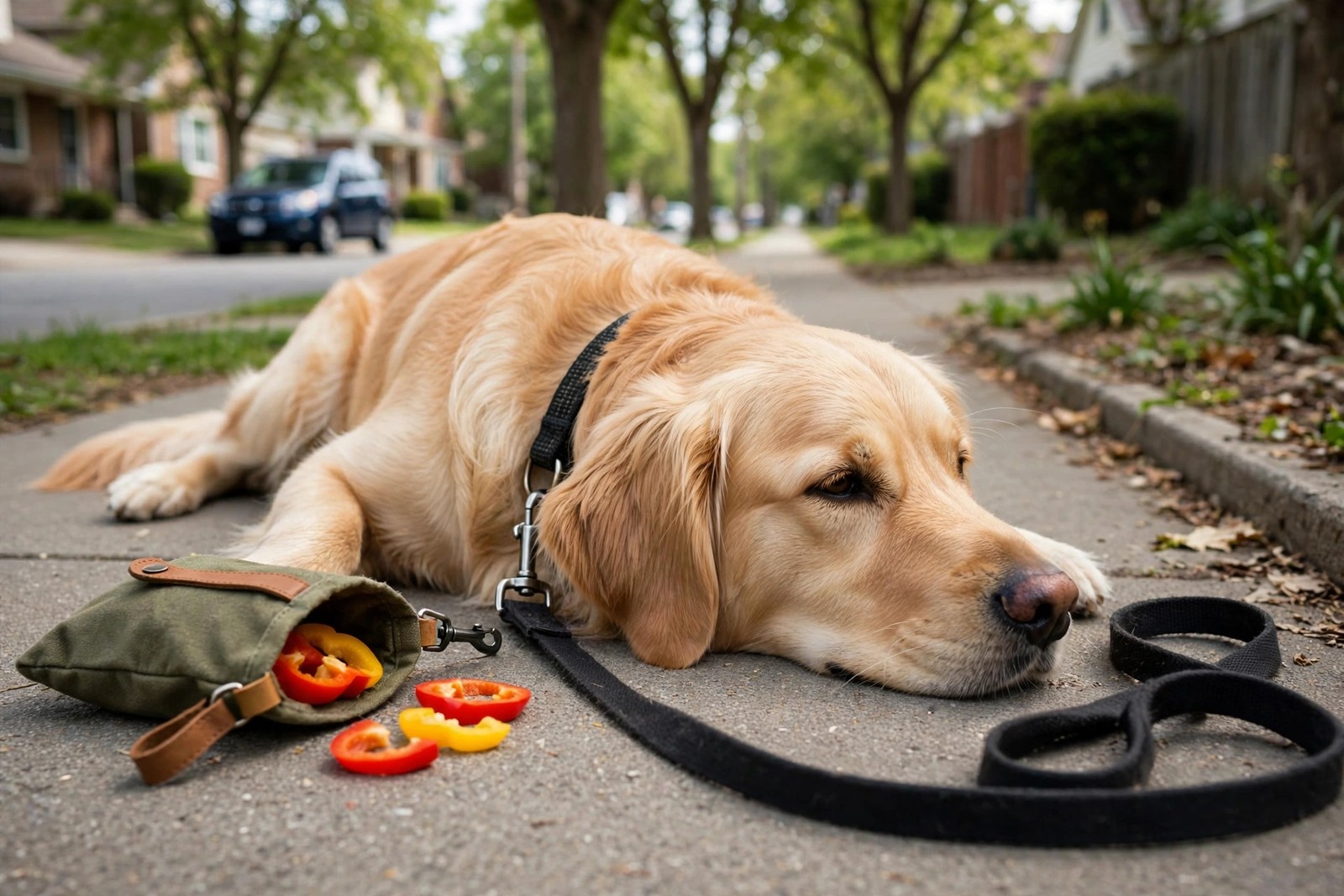
Bell peppers are among the crunchier vegetables a dog can share, served raw or only just cooked, with ripe red ones carrying the richest nutrition of the colours. Preparation is the whole skill: stem and seeds out, flesh cut into strips or pieces your dog can chew without gulping, and hot peppers left out of the question entirely — they are a different food, and an irritating one for a dog's mouth and stomach.
What Owners Need to Know
Colour is a guide to ripeness rather than safety. Green peppers are unripe and slightly bitter, yellow and orange sit between, and red peppers, fully ripe, taste sweetest and are the most nutritious of the set — all of them are fine for dogs in sensible amounts. The skin and fibre are the part some stomachs object to: a dog new to peppers may answer a generous first serving with gas or a loose stool, which is a portion problem, not a poisoning. Light cooking softens the flesh for dogs who struggle with raw crunch, while raw strips suit confident chewers and make a clean, low-calorie training extra.
Pepper seeds and stems come off before serving, not because the seeds are toxic, but because the stem is tough, bitter and hard to digest. Wash the pepper first, especially if it will be served raw, and check bought pre-cut trays for onion or seasoning mixes hiding alongside the strips — those additions, not the pepper, are the hazard.
A Workable Routine
A simple pepper routine, in order:
- Choose firm peppers and wash them well
- Remove stem and seeds, then cut the flesh to suit your dog's size
- Offer a few pieces first and watch for gas or loose stool that day
- Serve raw for crunch or lightly cooked for a softer texture
- Keep peppers an occasional extra beside a complete main diet
- Never substitute hot peppers, chilli sauces or seasoned pepper mixes
Peppers keep their place in the routine when they stay occasional — a few pieces at a time, noticed, rather than a daily bowlful nobody is counting.
Keeping It Going
Judge peppers against your own dog's baseline: his usual stool, appetite and comfort after meals. A dog who stays settled on small servings has earned peppers a place on his treat list; a dog who reliably turns gassy has given you his answer, and the vegetable comes off his menu without drama. Write the verdict down where anyone who feeds him can see it, especially if a sitter or family member shares meals. Consistency is easier when the portion rule lives in one place, and Care Teams in KinsLe provides it: pepper servings can be assigned to whoever feeds that day, each completion is stamped with its time, and nobody guesses whether today's pieces were already given.