
Bones you can see, not just feel
On a healthy dog you feel ribs under a thin fat cover; on an underfed dog you can see them, especially when he moves or breathes, and the outlines of the hip bones and shoulder blades sharpen into view. The spine may become prominent along the back, with a hollowed look between ribs and hips. From above, the waist pinches in dramatically, and from the side the belly tucks up steeply, giving a wasp-waisted outline quite different from the lean, athletic tuck of a fit sighthound.
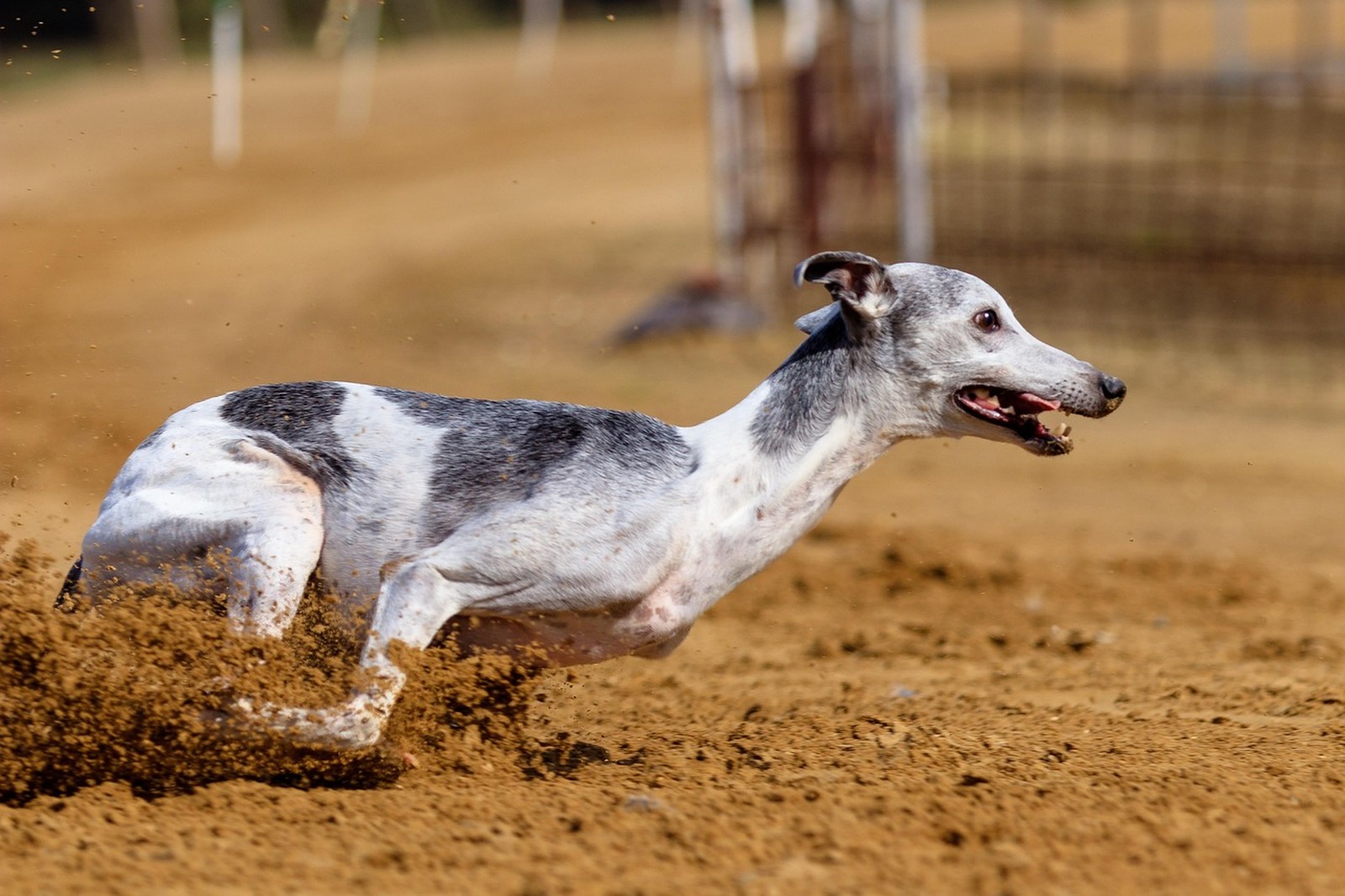
Breed and coat set the baseline — a racing-fit Whippet is supposed to show the last ribs, and a thick double coat can hide a thin dog completely — so judge change in your own dog. Muscle loss is a telling companion sign: a thinning top line, narrower hindquarters, and a head that looks bonier as the muscles over the skull waste.
Energy, coat, and appetite signals
Food is fuel, and too little of it eventually shows in output. Some underfed dogs become flat and unwilling — shorter walks, more sleeping, less interest in play — while others go the opposite way and become restless, hyper-focused hunters of anything edible. Coat quality drops as the body rations nutrients: expect dullness, dryness, excess shedding, and flaky skin on a dog whose coat used to shine on the same grooming routine.
Appetite behaviour is a loud clue. A dog who is genuinely short of food scavenges bins, raids counters, eats non-food items, gulps meals in seconds, and may guard his bowl fiercely because food feels scarce. Occasional naughtiness means little — plenty of well-fed Labradors steal — but a new pattern of desperate food-seeking alongside visible weight loss should always be taken seriously.
The scale and the bowl audit
Regular weighing turns suspicion into evidence: a steady downward trend in an adult dog eating a measured ration means the ration, his needs, or his health needs review. Audit the bowl first. Check the amount actually served against the guide for his ideal weight — scoops shrink in busy households just as they grow in generous ones, a new lower-energy food may have replaced the old without the volume changing, and a second dog may be quietly stealing half of every meal in a shared feeding area.
Life changes raise needs without announcing themselves: a growth spurt in a young dog, a big jump in exercise, cold weather for a dog living outdoors, pregnancy or nursing, and recovery from illness all demand more food than the ration set months earlier.
When thin means vet first, not just more food
Do not simply pile in extra food if your dog is losing weight while eating everything offered, drinking much more than usual, vomiting or passing loose stools regularly, or if he is a puppy failing to gain, an older dog fading, or any dog who has become lethargic. Weight loss with a good appetite is a classic sign that something medical — from parasites and gut disease to organ or hormonal problems — may be preventing him using the food he gets, and that needs diagnosis before diet. A vet will weigh and condition-score him, set a target, and advise a safe rate of increase, since a dog who has been short for a long time should be refed gradually, in smaller frequent meals, rather than with one huge bowl.
Once the plan exists, its success depends on unglamorous consistency — the extra meal actually happening daily and the larger ration surviving busy weekends — and KinsLe Care Teams keeps that on track by assigning each of your dog's recovery meals to a named person and logging every completed feed.