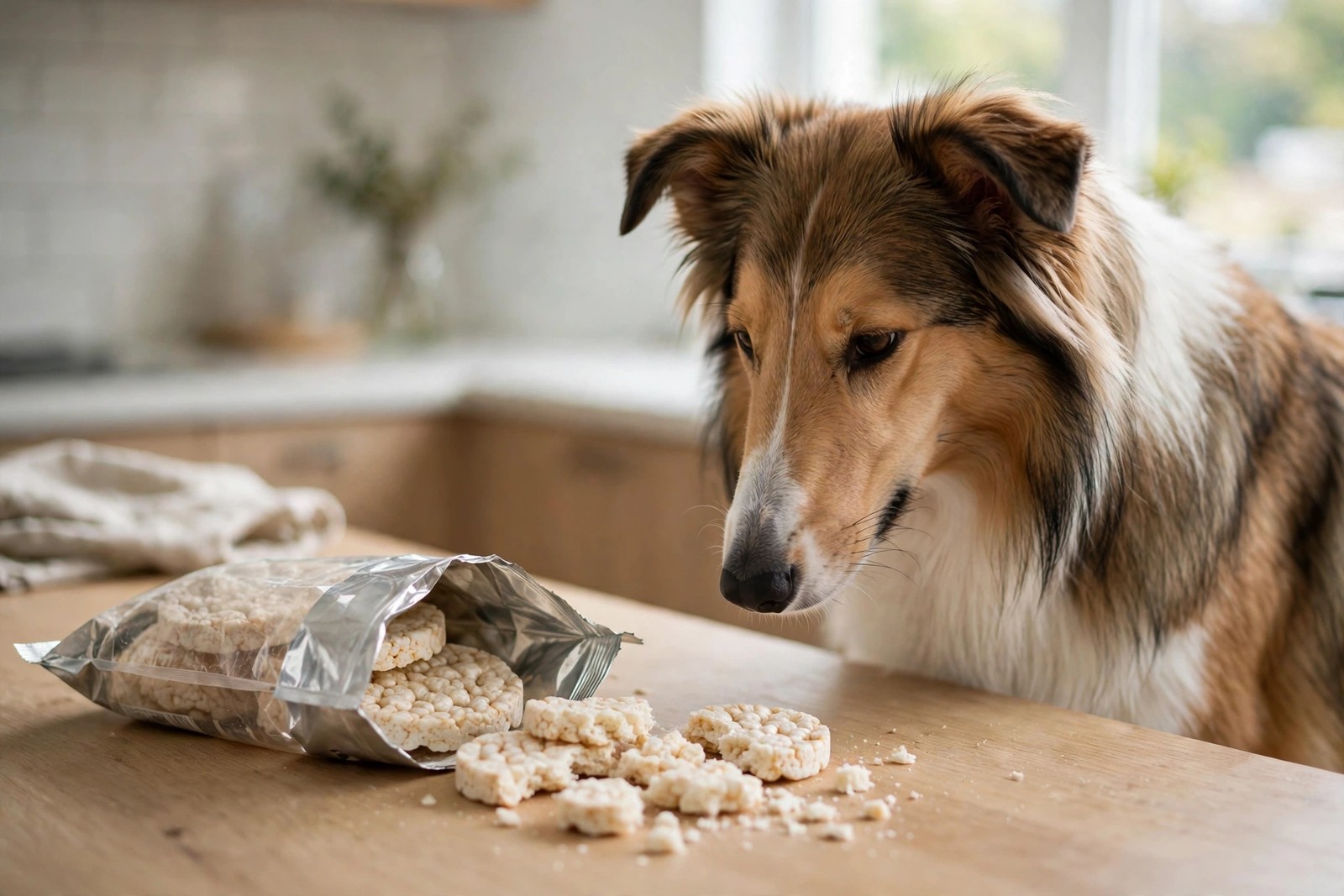
Yes, a piece of plain, unsalted rice cake is safe for most dogs as an occasional crunchy extra. Break one cake into bite-sized pieces rather than handing over the whole disc, and keep the total to 1 cake in a day for a large dog or half a cake for a small dog. Rice cakes offer crunch rather than nutrition. The honest description is textured air, and that low value is exactly why the portion discipline matters less for calories and more for habit.
Reading the Packet Before the First Piece
Plain is a strict word here. The suitable cake contains rice and nothing worth naming, with no added salt. Salted cakes, cheese-flavoured cakes, caramel cakes and chocolate-coated cakes all fail the test, and the flavoured coatings are the versions most often left within reach on a desk or in a lunchbox. Check the ingredient list even on a packet that looks plain, because some varieties add salt without advertising it on the front. Mini rice snacks aimed at children are often flavoured and salted, so treat them as unsuitable unless the label proves otherwise. When the label is unclear, the answer is no. A dog loses nothing by missing a rice cake.
Why Pieces Beat a Whole Disc
A whole rice cake invites a greedy dog to bite off a slab that is too large, and dry puffed rice can clump as it meets saliva. Broken pieces force chewing, slow the snack down and let you stop after a few pieces. Offer a piece at a time rather than scattering a handful, and have water nearby, because dry snacks make dogs thirsty. Supervise puppies and fast eaters closely, since both groups gulp first and chew later. Rice cake also crumbles into dust that settles in beards and bedding, so feed it on a hard floor you can sweep. Owners sometimes reach for rice cake during an upset stomach because plain rice is a familiar bland food. A rice cake is not the same thing. It is dry, low in moisture and low in substance, so ask your veterinarian for feeding advice during illness instead of improvising with snacks.
Rice Cake and the Weight-Watch Trap
Rice cake tempts owners of dogs on a weight plan because each piece feels like nothing, and that feeling misleads in both directions. The calories in half a cake are genuinely small, so rice cake does not wreck a careful plan by itself. The trap is frequency. A dog fed a piece at every coffee break learns to patrol the kitchen all day, and the patrol collects other extras along the way. Tie the pieces to one defined moment, such as the end of a training session, and the snack stays an event rather than an atmosphere. For a dog that needs a longer-lasting occupation, a stuffed feeding toy or a raw vegetable stick the dog must work through gives more chewing time for a similar place in the day.
Storage and Sensible Uses
Keep the opened packet sealed in a dry cupboard and use it within the date on the pack, because stale cakes turn tough and lose the crisp texture dogs enjoy. Do not store the packet beside flavoured varieties in a way that invites a mix-up by a helpful family member. Rice cake pieces earn their place as a light training extra for a dog on a weight plan, as a low-mess travel snack or as a crunch topper crumbled over a meal for a dog that loves texture. Rotate them with vegetable pieces and ordinary treats so this one snack does not become a daily expectation. Add the rice cake allowance, half a cake for the small dog or 1 cake for the large dog, to the shared duties in KinsLe Care Teams so whoever feeds next can see the limit at a glance.