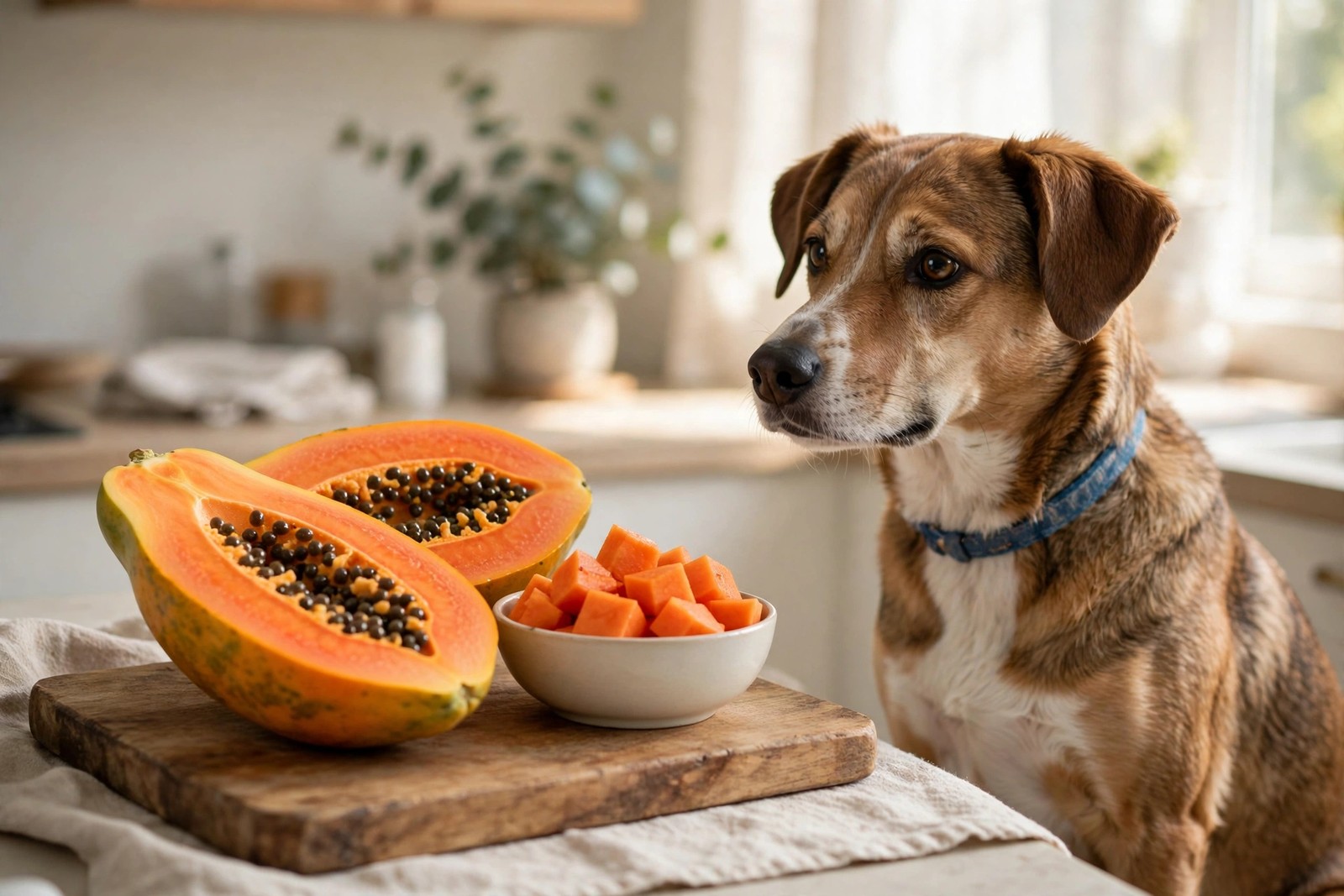
Yes, dogs can eat ripe papaya flesh in small amounts once the black seeds are scooped out and the skin is discarded. Serve 2 to 3 small cubes for a small dog or up to a quarter cup for a large dog, once or twice a week. Papaya brings fibre, vitamins and a natural enzyme that helps break down protein, yet it is still a sugary fruit, so the portion stays small and a larger helping can loosen the stool.
Why Ripeness and Preparation Matter
A ripe papaya feels slightly soft, smells sweet at the stem end and shows orange flesh with no green patches. Underripe fruit is firmer, blander and harder on the stomach, so wait until the fruit ripens on the counter before you share any. Wash the outside first, because dirt and residue on the skin can transfer to the flesh as the knife passes through. Cut the fruit in half lengthways, scoop out every black seed with a spoon and slice the skin away completely. The seeds are not a treat to save for the dog. They taste bitter, they pass through poorly in quantity and they have no place in the bowl. Skin is tough, difficult to digest and a poor texture for a dog that gulps, so both parts go in the bin rather than the bowl.
Serving Papaya Without Overdoing It
Cut the flesh into cubes no wider than your thumbnail for small dogs, because soft fruit invites gulping rather than chewing. Offer the first cube on its own and watch the response over the next day before papaya joins the regular treat rotation. A loose stool after the first try usually means the portion was too generous, so halve it next time rather than abandoning the fruit. Papaya works well mashed over a normal meal, frozen in small cubes on a hot day or mixed with plain cooked vegetables for variety. Keep every version plain. Never serve papaya dried with added sugar, canned in syrup or blended into a sweetened smoothie, because each version concentrates the sugar that the fresh portion controls.
Papaya for Puppies, Seniors and Sensitive Stomachs
Puppies can taste a single small cube once they eat solid food confidently, but their sugar margin is smaller and their stools loosen faster, so keep puppy servings rare. Senior dogs often do well with papaya because the soft flesh asks nothing of worn teeth, and the fibre can help a slower gut. A senior that takes medication should still meet any new fruit one change at a time, so a reaction has only one suspect. Dogs with a known sensitive stomach should start with half the small-dog serving and wait a full day before a second taste.
Storage and the Reaction Watch
Refrigerate cut papaya in a sealed container and use it within 2 days, because the soft flesh turns quickly and starts to ferment. Whole ripe fruit also belongs in the fridge once it is fully orange, and any piece that smells sour or shows mould goes out whole rather than trimmed. Freeze extra cubes in a single layer for later use, and thaw only the amount you plan to serve that day. After a first serving, watch for soft stool, gas or a reduced appetite, and stop the fruit if any of those signs appear twice. A dog that raids the bin for discarded skin or seeds needs a prompt call to the veterinarian if vomiting, drooling or stomach pain follows. Households with several helpers benefit from one shared record of which extras each dog received, because papaya given at breakfast and again at dinner stops being a small portion. Keep that shared record current by logging each papaya serving as a completed duty in KinsLe Care Teams, where the timestamp shows the whole household that this dog has already had the fruit today.