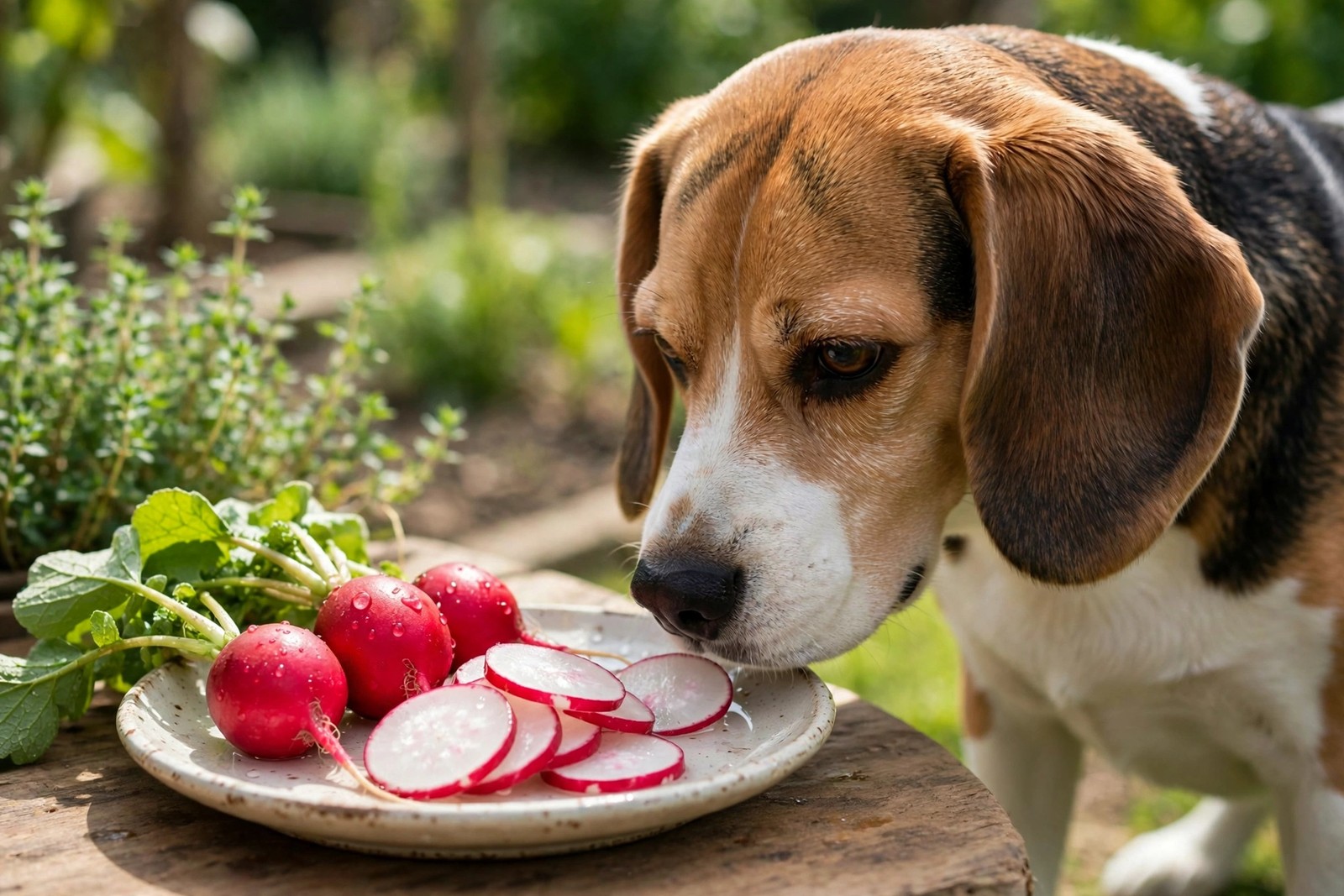
Yes, dogs can eat radishes in small amounts, washed well and sliced thinly. Serve 2 to 3 thin slices for a small dog or a small handful of slices for a large dog. Radishes are crunchy, watery and low in calories, which makes them a reasonable texture treat for a dog that enjoys them. The peppery bite is the dividing line. Some dogs crunch radish happily, while others taste the heat, drop the slice and walk away, and both responses are normal.
Preparing Radish So the Dog Can Manage It
Wash the roots thoroughly, because radishes grow in soil and gritty skin spoils the snack. Trim the root tip and the leafy top, then slice the flesh thinly rather than offering chunks. A whole small radish is a hard round shape that a keen dog can gulp, and gulped hard vegetables are a choking risk for smaller dogs. Thin slices force chewing and let you control the total piece by piece. Skip pickled radish entirely. Pickling brine brings salt and vinegar, and some pickled versions include chilli, garlic or sweeteners that a dog does not need. Radish leaves are sometimes offered by gardeners, but they are peppery and can irritate the stomach, so the root alone is the sensible share. Home growers should also keep dogs from digging up and eating large amounts unsupervised, because quantity is where this vegetable turns from harmless to uncomfortable.
What a Greedy Helping Does
Radish fibre ferments in the gut, and a bowlful rather than a few slices commonly produces gas, stomach noises and a loose stool. Introduce radish on a day when you can watch the result, starting with one slice. A dog that produces repeated gas or soft stool after a small serving has given you a clear answer, and radish should leave that dog's rotation. Dogs with a history of sensitive digestion should meet radish rarely or not at all. Never use radish as a filler to stretch a meal for a hungry dog, because the bulk arrives without meaningful nutrition and the digestive cost follows. As a training reward, radish only works for a dog that genuinely likes it. Forcing a peppery slice as payment for a recall teaches the dog that recalls pay poorly.
Growing Radishes With a Dog in the Garden
Radishes grow fast, sit near the surface and tempt a digging dog more than most vegetables. A dog that pulls one radish and crunches it has eaten a slice-sized amount and will usually suffer nothing worse than some wind. A dog left to excavate a whole row is eating the bowlful this article warns against, plus soil, leaves and possibly fertiliser granules. Fence the vegetable patch or supervise garden time while radishes are in the ground, and wash any garden-pulled radish thoroughly before it counts as the day's serving. Dogs also learn quickly where the tasty roots live, so one successful dig tends to repeat. A firm boundary in the first week of the crop saves a season of replanting and stomach upsets.
Storage and Better Uses
Keep unwashed radishes in the fridge crisper and use them within a week, washing and slicing each portion as you serve it. Sliced radish dries and toughens in the fridge, so cut fresh slices rather than storing a prepared bowl. Radish earns its place as a crunchy garnish over a meal, as one element in a small rotation of vegetable treats or as a garden snack shared under supervision. Rotate the crunch with carrot sticks and cucumber slices so no single vegetable becomes a daily habit. Record whether this dog accepted radish, refused it or reacted to it in KinsLe Pet Passport, because a written preference saves the next feeder from repeating an experiment the dog already answered.