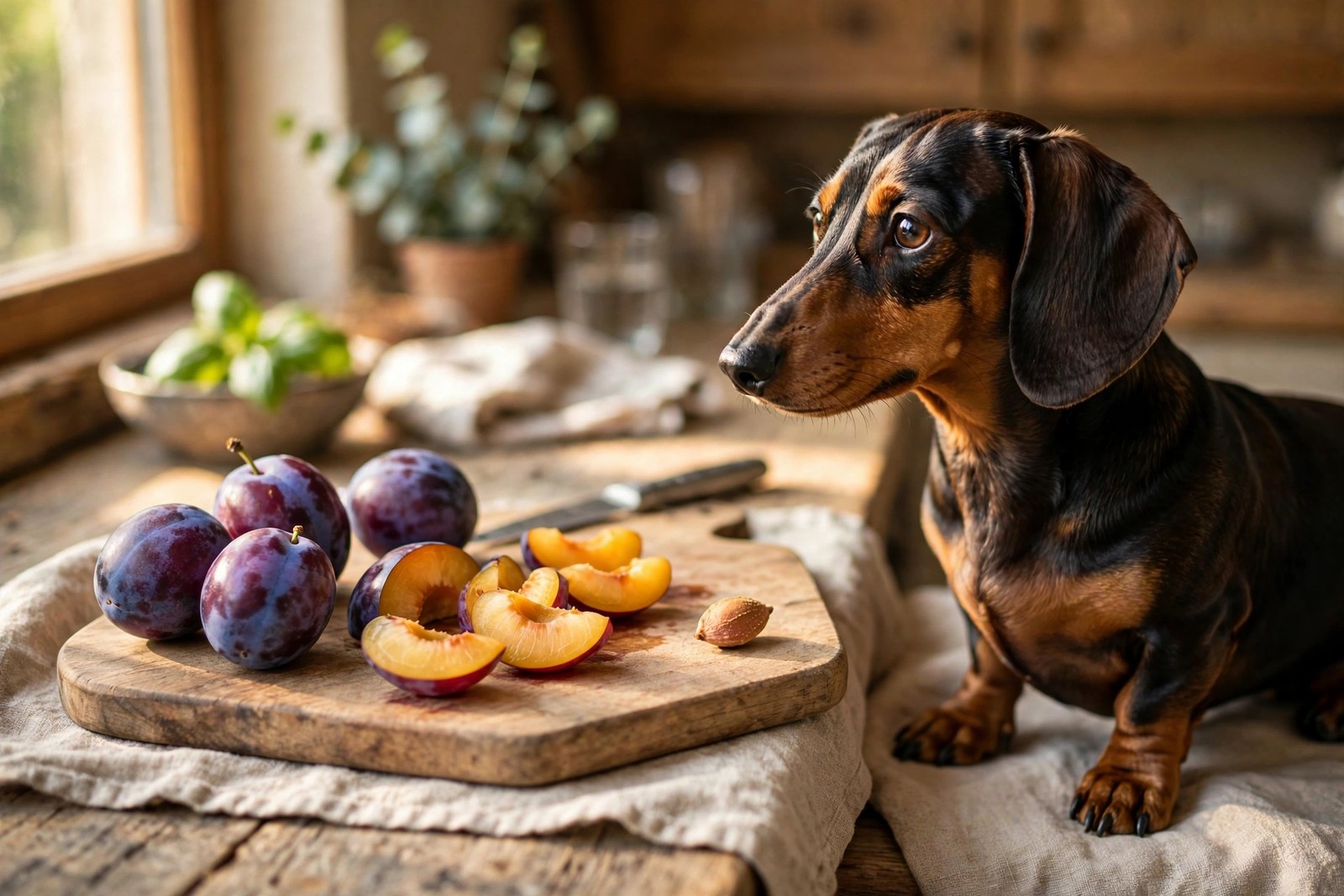
Yes, with the pit completely removed, dogs can eat a small amount of ripe plum flesh. Serve 3 to 4 small pieces for a medium or large dog and 1 to 2 pieces for a small dog. The flesh itself is the safe part. Everything attached to it demands respect, because the pit, stem and leaves contain cyanide compounds, and the stone is also large and hard enough to block the gut of a smaller dog.
Cutting a Plum the Safe Way
Wash the fruit first, then stand it on a board and slice the flesh away from the stone in sections rather than twisting the halves apart over the dog bowl. Cutting in sections lets you see the whole stone and confirm that no fragment stays in the flesh. Check each piece before serving, because a chipped stone can leave a sharp sliver behind. Discard the stone straight into a bin the dog cannot raid, and never let a dog carry a whole plum away to work on alone. That unsupervised version is the accident this question really asks about. A dog left with a whole plum will chew through the flesh and then crunch or swallow the stone, which turns a safe treat into an emergency. Dried plums sold as prunes are a poor substitute. They concentrate the sugar, they often arrive in sticky portions that cling to teeth and they remove none of the portion discipline the fresh fruit needs.
Portion Logic and the Sugar Question
Ripe plum flesh is sweet, soft and easy to overfeed because dogs tend to love it. Start with a single piece, wait a day and check the stool before plum becomes a regular extra. Soft stool after a small serving means the next serving shrinks or the fruit leaves the menu for this dog. Dogs that need careful weight control should meet plums rarely, and dogs with a sensitive stomach should meet them rarely too. Offer plum as a standalone taste rather than mixing several new fruits in one day, because a mixed experiment leaves you unable to name the culprit when the stool loosens. Keep windfall plums in the garden picked up daily in season. A dog grazing fallen fruit eats stones along with flesh and may also eat fruit that has started to ferment.
Plums From the Tree and Plums From the Shop
Garden plums add two risks that shop plums do not. The first is volume, because a dog under a laden tree can eat fruit after fruit, stones included, while nobody counts. The second is fermentation, because fallen fruit left in warm grass starts to ferment, and a dog grazing that fruit takes in alcohol along with sugar. Pick up windfalls daily in season, fence the tree if the dog patrols it and treat a wobbly, disoriented dog after garden access as an urgent call to the veterinarian. Shop plums arrive one punnet at a time, which makes the piece count easy to hold. Underripe shop plums are also a poor choice, because firm sour flesh is harder on the stomach than ripe flesh, so wait for the fruit to soften before sharing.
Storage and Warning Signs
Refrigerate cut plum pieces in a sealed container and use them within 2 days, because the cut flesh browns and softens quickly. Whole ripe plums keep in the fridge for a few days, and unripe fruit ripens better on the counter away from the dog. If a dog does swallow a stone, watch for vomiting, drooling, loss of appetite, stomach pain or straining to pass stool, and call your veterinarian promptly if any of those signs appear. Mention the stone directly when you call, because a possible blockage changes the urgency. For weekends away, write the cut-away-from-the-stone method and the piece count into a KinsLe Care Pass, so the sitter prepares plums exactly as you do instead of improvising at the fruit bowl.