
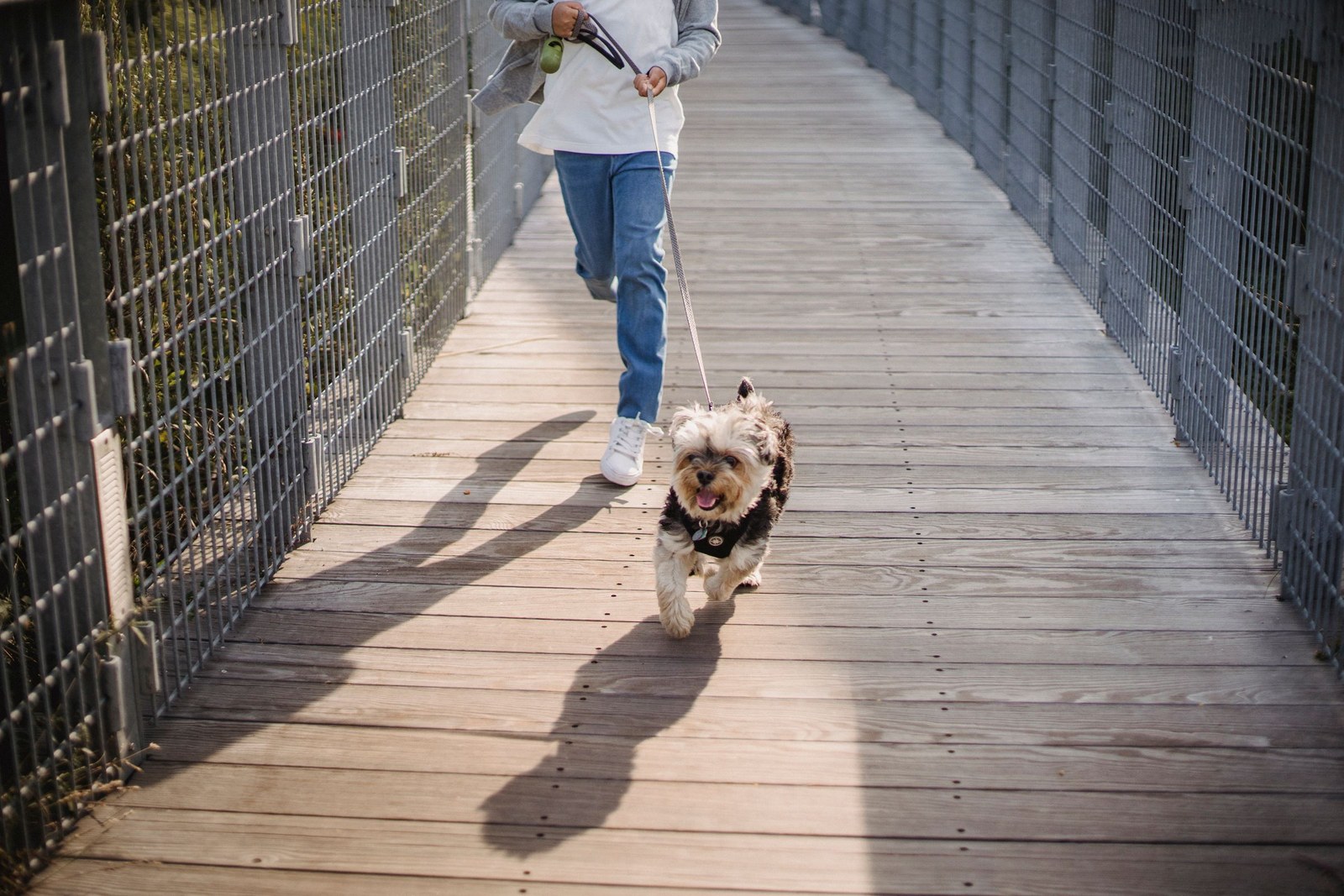
For most dogs, walk first and feed after. Exercising on a full stomach is uncomfortable for any dog, and for large, deep-chested breeds it raises a genuine risk, so the comfortable order is: head out, let your dog do their business and burn their energy, come home, let them settle — then serve the meal.
Why a full stomach and exercise don't mix
A stomach full of food and water is heavy, sloshing cargo during running, sharp turns, and excited play. At best that means sluggishness, grass-eating, or bringing the meal back up on the pavement. At worst, in susceptible breeds, vigorous activity around mealtimes is associated with gastric dilatation-volvulus — bloat — where the stomach twists, which is a life-threatening emergency.
Breeds with deep, narrow chests carry the highest risk: Great Danes, Standard Poodles, German Shepherds, Boxers, Dobermans, setters, and similar builds. For these dogs the rule is stricter — avoid vigorous exercise for at least an hour before and after meals, and feed two or three smaller meals rather than one large one.
The pre-walk treat question
A small treat before you head out is completely fine. A biscuit for sitting nicely while the harness goes on, or a few training treats during the walk, will not meaningfully fill the stomach. What you want to avoid is anything meal-sized — half a bowl of kibble "to keep them going" before a run at the park is exactly the pattern to skip. Puppies are a partial exception to the schedule itself: they eat three or four small meals a day, so walks naturally fall between meals; just keep post-meal activity gentle for half an hour or so.
A routine that works for most households
A simple daily rhythm looks like this:
- Morning walk first thing — most dogs need the toilet before anything else anyway.
- Home, water, ten to fifteen minutes of settling, then breakfast.
- Evening walk before dinner, again giving a short cool-down before the bowl goes down.
- A brief final toilet outing later in the evening, kept calm and short.
Dogs thrive on this predictability. Within a couple of weeks your dog will be waiting by the door at walk time and by the kitchen at meal time, entirely unbothered that the two are separate events.
What if your schedule flips?
Shift workers and busy households cannot always keep textbook timing, and that is okay — the principle matters more than the clock. If you must feed first, keep the following walk gentle and on-lead rather than a ball-chasing sprint, and leave as much gap as you can. If your dog is a slow, sniffy ambler rather than an athlete, the risk is lower than for a dog who tears around a field. Adjust the strictness to your dog's breed, age, and exercise intensity, and ask your vet if your dog has any history of digestive trouble.
Bring timing questions to Kinny
The walk-then-feed pattern works best when it is automatic, including on the days someone else walks the dog. KinsLe's built-in AI assistant, Kinny, can take timing questions from you or from a sitter or family member covering for you — how long a deep-chested dog should settle after a walk before eating, or how gentle a walk must stay when feeding had to come first — so meals and exercise stay comfortably spaced even when the household schedule gets chaotic. When a working day rearranges the usual order, Kinny, inside KinsLe, can field your follow-ups about walk-and-meal timing, with replies taken from KinsLe Answers entries.