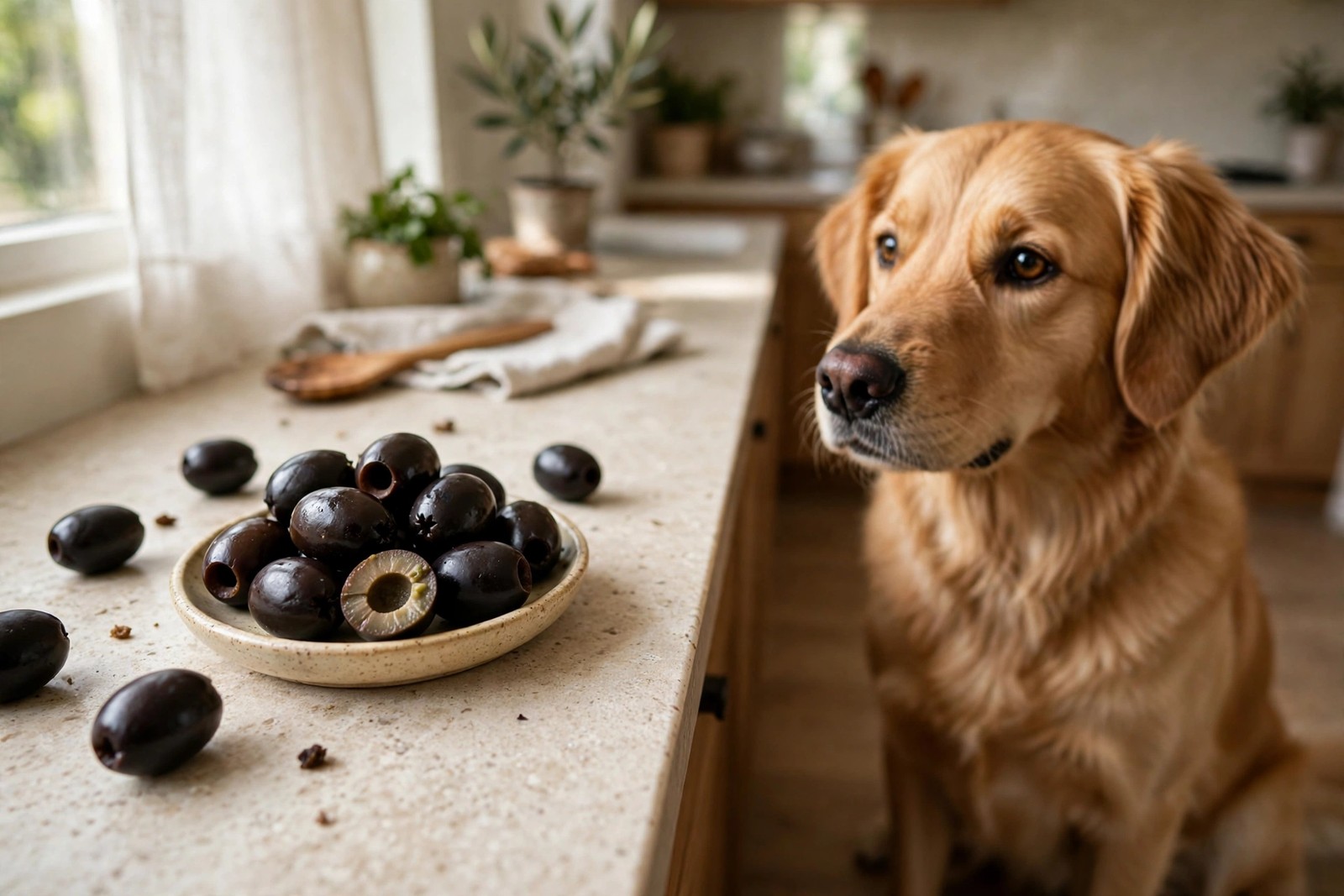
A plain black olive, pitted and offered once in a while, is not poisonous to dogs, and that is nearly the best that can be said for it. Olives are a brined, fatty, salty food designed for human taste, and a dog gains nothing from them that a dozen safer treats do not provide better. The honest answer is that an olive can stay a human food, with a single prepared piece as the rare exception rather than the start of a habit.
What Is Actually in the Olive
Black olives are ripe olives that have been brined or cured, and the curing is the issue. The flesh carries a meaningful load of salt from the brine, plus enough fat to make olives surprisingly calorie-dense for their size. A quick rinse under the tap removes surface brine and is worth doing, but it does not turn an olive into a low-salt food, because the salt has soaked into the flesh during curing. Dogs that are managing weight, or that follow a vet-directed low-salt diet for heart or kidney reasons, should skip olives altogether rather than negotiate portions. For a healthy dog, one olive chopped into pieces is a taste; a small bowl of them is a salt and fat serving no dog needs.
The Stone Is the Serious Risk
Every condition above assumes the stone is out. An olive stone is a hard, smooth, swallowable hazard: dogs crunch it expecting softness and can crack a tooth on the resistance, gulp it whole and choke, or swallow it and risk a gut blockage that needs veterinary surgery. Pitted olives from a jar solve this only if you check each one, because packing lines occasionally miss a stone. Cut every olive before it goes near the dog, both to confirm the stone is gone and to slow down a dog that inhales treats. Stuffed olives add their own problems — garlic-stuffed olives are a firm no, because garlic is toxic to dogs — and olives marinated in oil, herbs and garlic belong in the same category.
Better Answers to the Begging Face
Olives usually reach dogs through one route: a person eating them at a table or from a salad, with a dog working the room. The practical fix is to decide in advance what the dog gets during human snack time, so the decision is not made under eye contact. A few slices of cucumber, a small piece of plain cooked meat or a portion of the dog's normal treats all answer the moment without opening the olive question nightly. If olives do feature, keep the jar on the human side of the counter and treat dropped olives as a retrieve-fast item, stone and all, rather than a finders-keepers treat.
When One Olive Is Not the Whole Story
A dog that raids a buffet bowl and eats a pile of olives, stones included, needs monitoring rather than reassurance. Watch for repeated vomiting, drooling, a painful or swollen belly, or straining without producing stool, and call your vet promptly if any of those appear, because they are the signs that a stone is not moving. Note how many olives are missing if you can; that number genuinely helps the vet judge the risk. Households prevent most of these incidents with one written rule everyone follows. KinsLe's Care Teams lets you set that rule inside the feeding plan, with duties assigned to named helpers and each completion timestamped, so a guest or sitter follows the same olive policy you do.