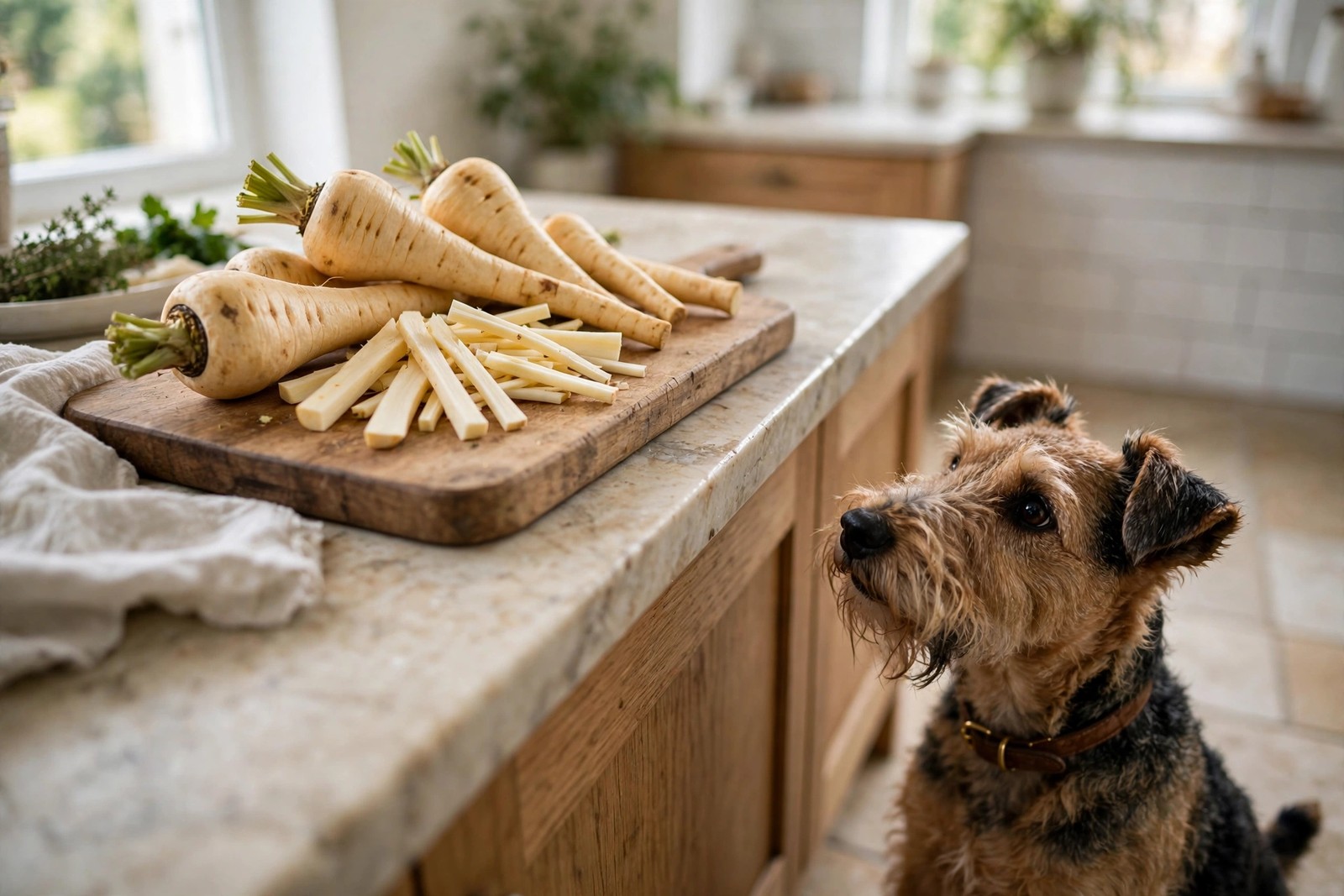
Yes, dogs can eat parsnips in small amounts, raw in thin sticks or cooked plainly with no added fat. Serve 2 to 3 thin sticks for a small dog or a few spoonfuls of cooked parsnip for a large dog. Parsnips are starchy and mildly sugary, so they sit in the treat category rather than the vegetable staple category. A greedy helping at one sitting commonly returns as gas and a loose stool later that evening.
Preparing a Parsnip a Dog Can Handle
Scrub the root well or peel it, because soil clings to the creases and the skin can taste bitter. Trim both ends, then cut the flesh into sticks thin enough that the dog must chew rather than swallow whole. Thick raw chunks are hard, dense and awkward for small jaws, so size matters more with parsnip than with softer vegetables. Cooking softens the root and makes it gentler to digest. Steam or boil plain pieces until tender, let them cool fully and serve them without butter, oil or seasoning. Raw sticks suit a dog that crunches happily and has a settled stomach, while cooked parsnip suits puppies, seniors and any dog that tends to gulp.
The Roast Dinner Trap
If parsnip reaches your dog, it will usually be as a leftover, and leftovers are where the plain rule breaks. Roasting in fat coats each piece, honey and sweet glazes add sugar the root does not need and pan juices from seasoned meat carry salt and onion flavour. None of those versions belong in the bowl. If you plan to share, lift a few pieces out before the fat and glaze go on, cook them separately and keep them apart from the family portion. Gravy is never a safe carrier for the dog's share. Store the dog's plain pieces in a separate small container so nobody mixes the two batches later in the week.
Parsnip Alongside Other Root Vegetables
Owners often rotate parsnip with carrot and sweet potato, and the three roots behave differently in the bowl. Carrot is crisper, lower in starch and easier for most dogs raw. Sweet potato is denser and usually served cooked, so its portions shrink further. Parsnip sits between them, with a firmer raw bite than carrot and a milder sweetness than sweet potato. Rotate one root at a time rather than mixing all three into one meal, because a mixed bowl hides the culprit when gas or loose stool follows. A dog that handles cooked parsnip well but struggles with raw sticks has usually told you the cooking, not the root, makes the difference, so serve that dog the cooked version without retesting the raw one each month.
Portions, Storage and Watching the Response
Keep raw parsnips in the fridge crisper and use them within a week, washing each root as you prepare it. Cooked plain parsnip keeps in a sealed container in the fridge for up to 3 days, and it freezes well in small portions for later meals. Introduce parsnip on a quiet day, then watch the stool and the dog's comfort over the next 24 hours. Repeated gas, a swollen-looking belly or repeated loose stool means the root does not suit this dog, and it should leave the rotation. Dogs that need to lose weight should meet parsnip rarely, because a starchy root adds calories faster than leafy or watery vegetables. Before a family roast, settle the plain-only rule and the portion in the thread for this pet in KinsLe Messenger, so the person carving, the person clearing plates and the person feeding the dog all work from the same instruction.