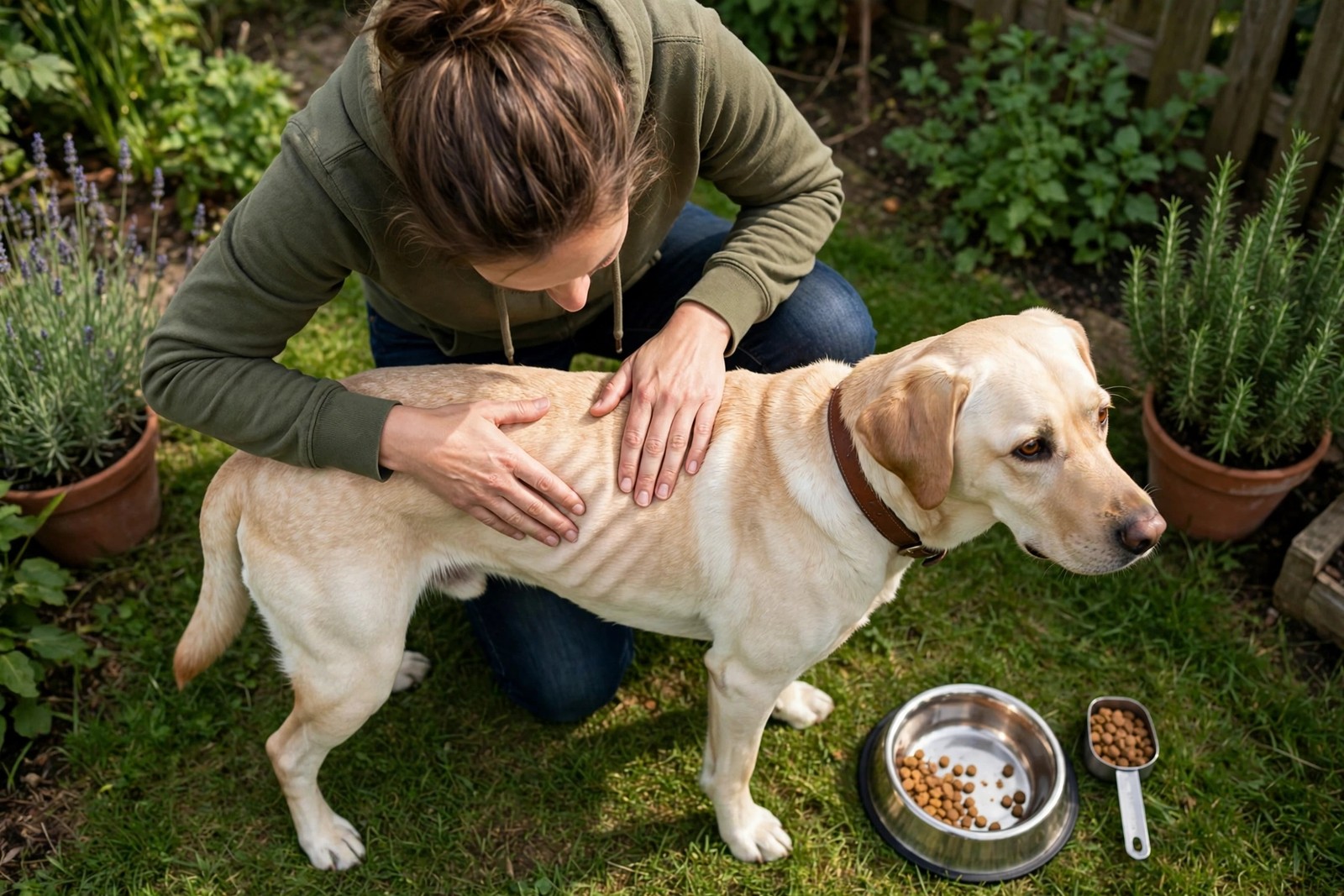
The packet guide is only a starting point. Two dogs of the same weight can need very different amounts depending on age, neuter status, activity, and build, so the reliable test is body condition: what your hands and eyes find on the dog in front of you, checked the same way each month.
The Rib, Waist, and Tuck Check
Stand your dog squarely and run both flat palms lightly over the ribcage. At a healthy weight you feel individual ribs easily under a thin layer of fat, similar to feeling your knuckles when your hand is flat. If you must press firmly to find ribs, there is likely too much cover. If ribs, spine, and hip bones are obvious to the eye as well as the hand, especially in a short-coated dog, there is likely too little.
Look from above: the outline should narrow into a waist behind the ribs, then widen slightly at the hips. A straight or bulging barrel shape suggests overfeeding. Look from the side: the abdomen should tuck upward behind the ribs rather than hanging level or sagging. Deep-chested and long-backed breeds will not match a generic chart exactly, so photograph the top and side views monthly and compare your dog with their own earlier shape.
Weigh and Watch the Trend
A single weight tells you little; a trend tells you almost everything. Weigh on the same scale monthly — at the vet, a grooming visit, or by holding a smaller dog on home scales — and write it down. Steady gain in an adult who is not growing, or steady loss in a dog eating eagerly, both deserve a portion review and, if the trend continues without explanation, a vet conversation.
Appetite alone is a poor gauge. Many dogs will eat a second meal with enthusiasm every day of their lives, while a dog losing weight despite a good appetite, drinking much more, or leaving food they once loved needs a veterinary check rather than simply a bigger bowl.
Adjust in Small, Measured Steps
If the check says too much, first count everything: main meals, treats, chews, training rewards, table scraps, and anything a second household member adds. Treats and extras often explain the mystery. Reduce the total in a small step, keep meals measured with a scoop or scale rather than by eye, and recheck condition in three to four weeks.
If the check says too little in an otherwise bright, healthy dog, increase the measured portion gradually and recheck on the same schedule. Puppies, pregnant or nursing dogs, and hard-working dogs have genuinely higher needs and grow or change quickly, so check them more often and ask your vet to confirm the target condition at routine visits.
Stop the Double-Dinner Problem
The commonest hidden cause of overfeeding is not greed, it is duplication: one person feeds at six, another assumes it never happened, and the dog happily accepts both. Agree one measured amount, one feeding rota, and a visible done signal. Underfeeding happens the opposite way, when everyone assumes someone else fed the dog on a busy evening.
That shared clarity is where KinsLe Care Teams fits this problem directly: feeding becomes an assigned duty for a named person, the portion is written on the task, and completion is timestamped, so the next person can see the meal already happened instead of guessing.