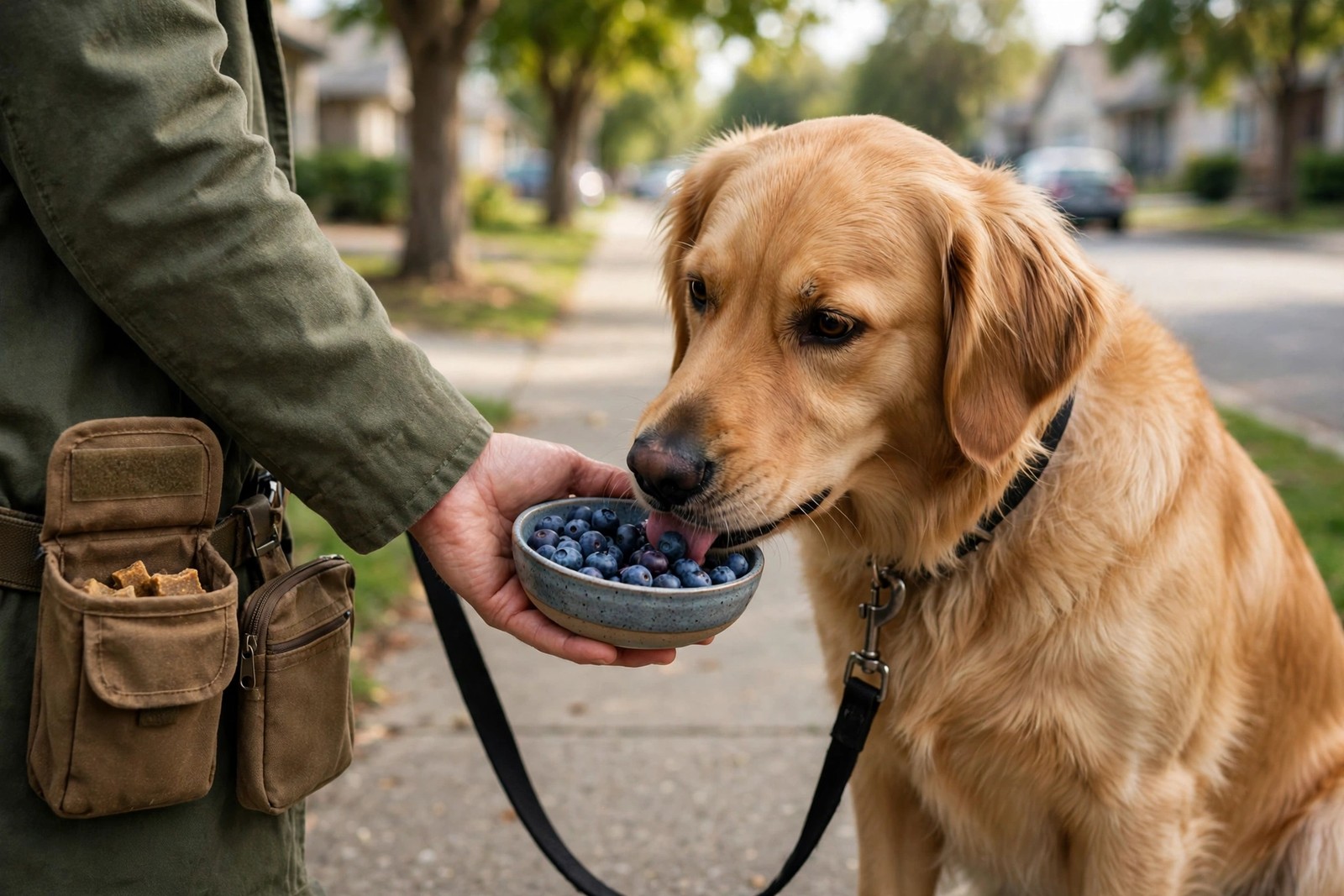
Blueberries suit dogs as a small, occasional treat, rinsed and offered a few at a time. Their size makes them a neat training reward — no chopping, no crumbs — and a welcome change from processed treats, provided they stay a minor part of the day beside a complete dog food. Introduce them a little at a time, as with any new food, so a stomach that disagrees can be identified before the handful grows.
What Owners Need to Know
Size is the first consideration. A whole blueberry is small, but a very small dog or an eager puppy can still gulp one down awkwardly, so halve large berries for little mouths and hand them over one by one rather than scattering a bowlful. Frozen berries are firmer and colder than fresh; let them soften a little for small dogs. The berries themselves are the safe part of the blueberry family — muffins, flavoured yogurts and pancake mixes built around them can carry sugar, sweeteners including xylitol, and other ingredients a dog should not have, so share the fruit, never the product.
Watch the first outings of any new treat against your dog's normal pattern. A settled stomach, normal stool and undiminished appetite for his real meals mean the berry has passed its trial; repeated soft stools mean blueberries stay an occasional one-or-two, or come off his list.
Practical Steps That Help
Serve blueberries with the same small routine each time:
- Rinse fresh berries and check them over before serving
- Halve large berries for small dogs and puppies
- Offer a small handful at most, counted as part of the day's treats
- Use single berries as tiny training rewards instead of larger biscuits
- Introduce them gradually and watch for stomach upset
- Keep sweetened blueberry products, including muffins and yogurts, off the menu
Making It Part of Everyday Life
A treat pouch is where blueberries earn their keep: a few berries mixed into a training session reward focus without the heaviness of a biscuit at every repetition. At home, the risk is drift — one person's occasional handful becomes three people's daily habit, and the treat quietly stops being occasional. Agree the household rule once and note how your dog responded, so a sitter works from the same page. That consistency is simpler with Care Teams in KinsLe: approved treats for each pet can be assigned as duties to family members, completions carry a timestamp, and the blueberry handful stays occasional instead of growing by stealth.