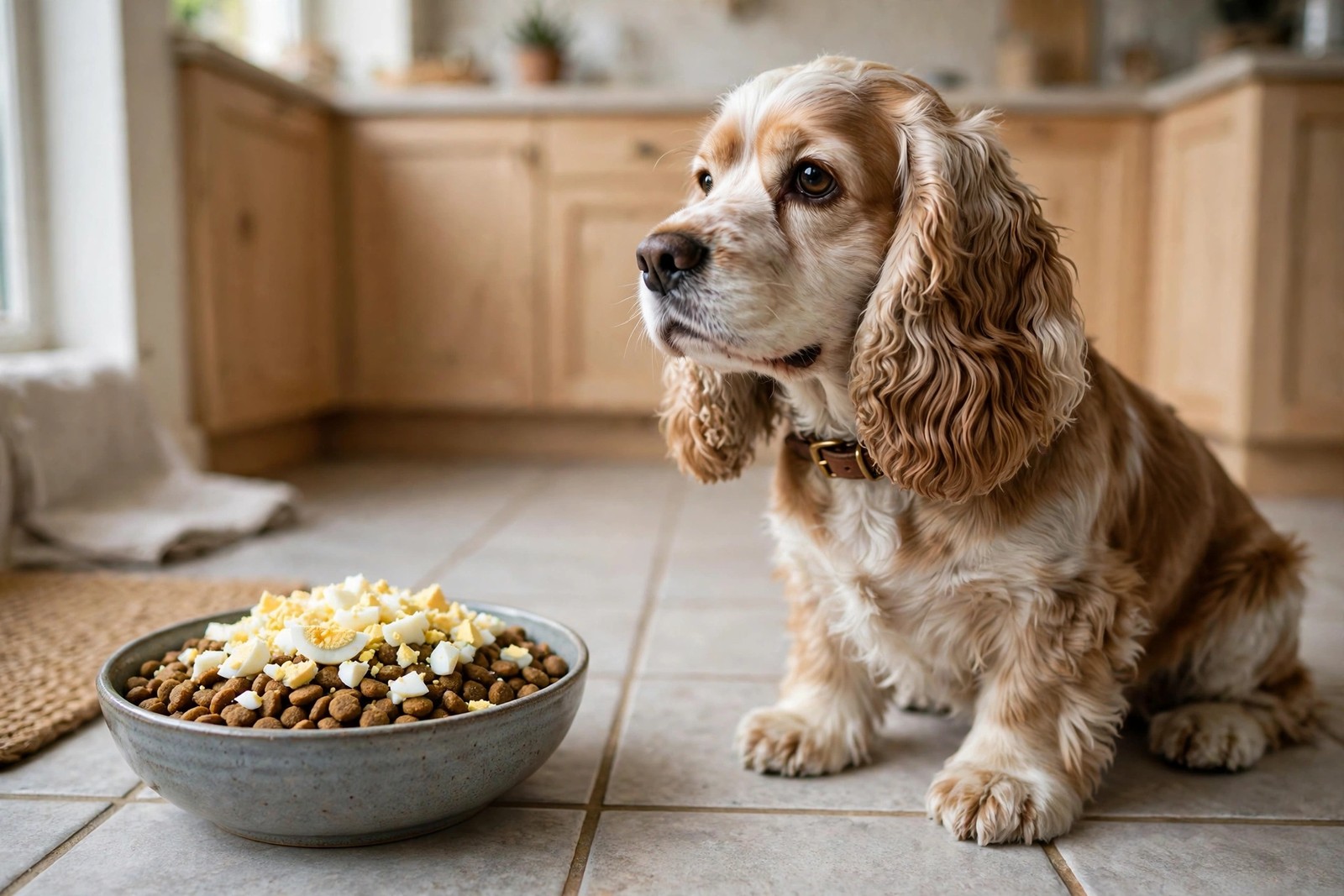
Yes — cooked eggs are a sound occasional extra for most dogs. An egg brings complete protein, healthy fats, and a flavour dogs tend to love, all in a neat single-serving package. The preparation decides whether it is a good idea: cooked plain and portioned sensibly, yes; raw, fried in butter, or seasoned for the table, no.
Boiled, scrambled, but always plain
Hard-boiled eggs are the easiest route — no pan fat, easy to chop, and portable for training walks. A batch keeps in the fridge for several days, peeled or unpeeled, so one cooking session covers the week's toppers without daily effort. Warming a chopped egg very slightly before serving releases more of its smell, a useful trick for an elderly dog whose appetite and sense of smell have both faded and who needs encouragement to finish a meal. Scrambled works too if you cook it in a dry non-stick pan or with the lightest film of water, then let it cool; eggs cooked for people usually carry butter, milk, salt, and pepper, none of which a dog needs. Remove the shell for most dogs. Finely crushed shell appears in some home-feeding approaches, but whole shell pieces can be sharp, and adding shell changes the mineral balance of the meal in ways worth discussing with your veterinarian first. Never offer raw egg: it can carry bacteria that sicken dogs and people handling it, and raw egg white contains a protein that interferes with absorption of a B vitamin when fed regularly — cooking removes both concerns.
Portion by the dog, not the egg
One egg is a snack for a large dog and a meal-sized event for a toy breed. As a working approach, small dogs do well with a few chopped spoonfuls, medium dogs with half an egg, and large dogs with a whole egg, offered a couple of times a week at most as a topper mixed through regular food rather than as a separate course. Rich food surprises stomachs, so the first serving should be a taste, with stool checked over the following day before eggs join the rotation. Dogs managing weight, pancreatitis history, or kidney issues should only get eggs if your veterinarian agrees, because the fat and protein load matters more for them.
Reading a bad reaction
Loose stool after a first egg usually just means the portion was generous; cut back or stop. Repeated itching, face rubbing, ear flare-ups, or vomiting after eggs on separate occasions points somewhere more specific and deserves a veterinary conversation, with eggs paused meanwhile. Seek prompt care for repeated vomiting, blood in the stool, or a dog who refuses food altogether.
Log egg days in KinsLe's Care Teams as an assigned topper with the portion written in, and the timestamped record shows the whole household that today's egg is already accounted for.