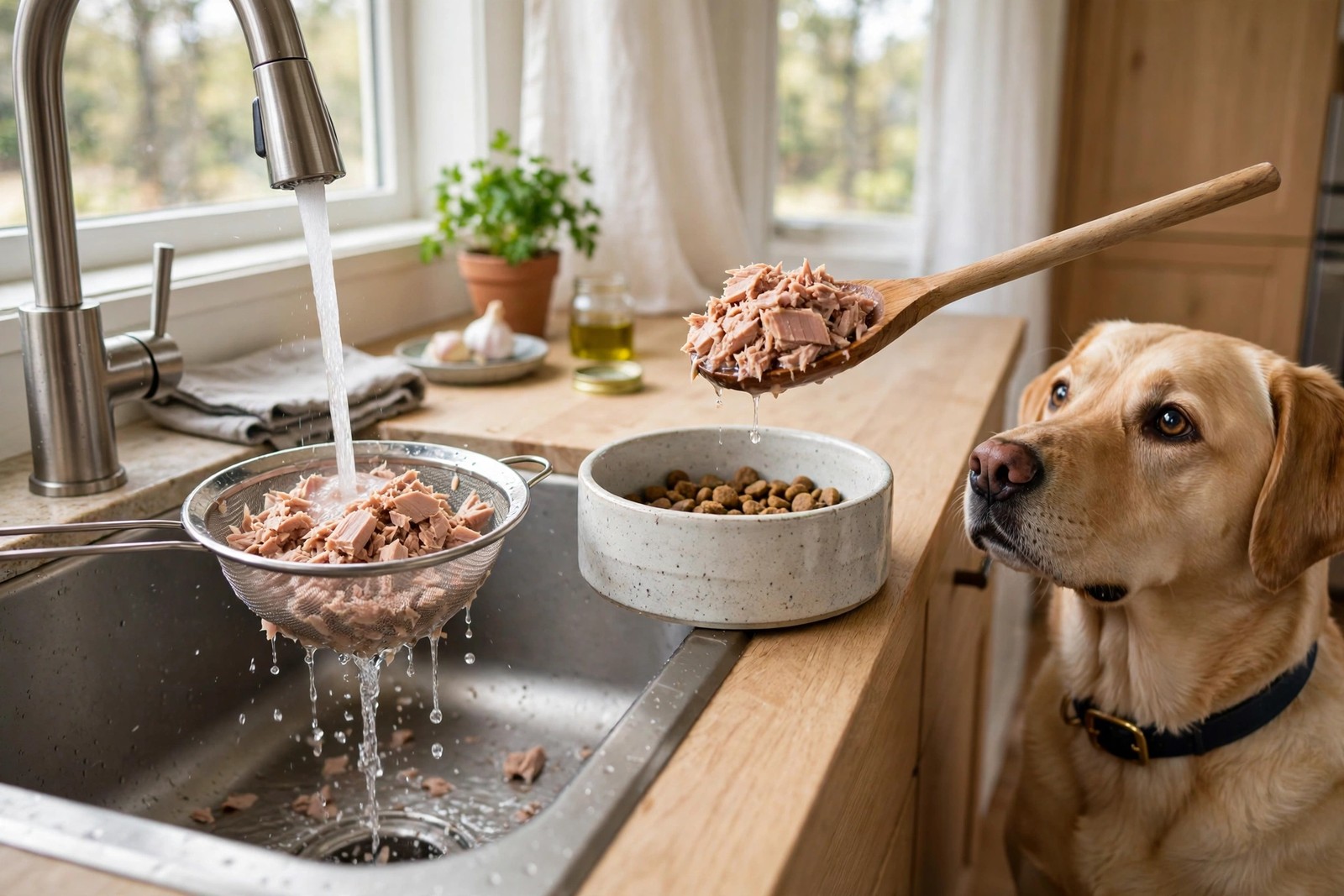
Yes, a dog can eat canned tuna in water as an occasional topper, and the strong smell makes it a powerful persuader for a dog that is bored with its bowl. Occasional is the load-bearing word in that sentence. Tuna is a large, long-lived fish, and fish of that kind typically accumulate more mercury than small, short-lived fish, so tuna earns a strict frequency limit that a dog's ordinary foods do not need. Given rarely and in a small, rinsed portion, it is a treat; given daily, it becomes a slow problem.
Mercury and the Frequency Rule
Mercury builds up in the body over time, which is why the risk from tuna is about pattern rather than a single serving. A small flaked portion once in a while presents a very different picture from tuna mixed into every dinner, and the safe habit is to treat tuna the way you would treat a rich dessert: enjoyed, noted and not repeated on a schedule. Albacore, sold as white tuna, typically carries more mercury than light tuna, so light tuna in water is the better choice when both are in the cupboard. Puppies and small dogs, whose bodies are smaller and still developing, should get tuna least often of all, and a dog that needs tempting at every meal needs a vet conversation about appetite rather than a permanent tuna ration.
Salt, Water-Packed and the Quick Rinse
Choose tuna canned in water, not oil: the oil-packed version adds fat and calories a topper does not need, and brine-packed versions add the most salt. Even in water, canned tuna is saltier than fresh food, so tip the portion into a sieve, rinse it briefly under running water and drain it well before flaking it over the meal. That rinse will not remove salt from inside the flakes, which is another reason the portion stays small, but it strips the salty canning liquid that would otherwise soak into the whole bowl. Dogs following a vet-directed low-salt diet should skip tuna entirely, since there is no rinsing routine that makes it a low-salt food.
What Tuna Cannot Do as a Food
Tuna is protein and flavour, but it is not a complete dog food, and a fish-heavy routine drifts out of balance in ways a single meal never reveals. A dog fed mostly tuna misses the nutrient spread a complete diet provides, and strong fish flavours can also train pickiness, as a dog that has learned dinner improves with tuna starts refusing the unimproved version. Keep tuna as an accent — a tablespoon for a small dog, a few spoonfuls for a large dog, flaked through a normal meal — and let the balanced food underneath do the nutritional work. If the tin was opened for the dog rather than shared from a human meal, refrigerate the rest promptly and use it within a couple of days.
Making Rare Mean Rare
In a shared household, tuna's problem is repetition by different hands: the dog gets a spoonful on Tuesday from one person and another on Thursday from someone who never heard about Tuesday. The dog's total quietly becomes a weekly habit that nobody individually chose. Write the serving down once, with the date, and the pattern stays honest. KinsLe's Care Teams provides exactly that record by letting you assign the tuna topper as a named feeding duty with a timestamped completion, so every helper can see when the last rare portion happened before deciding the dog is due another.