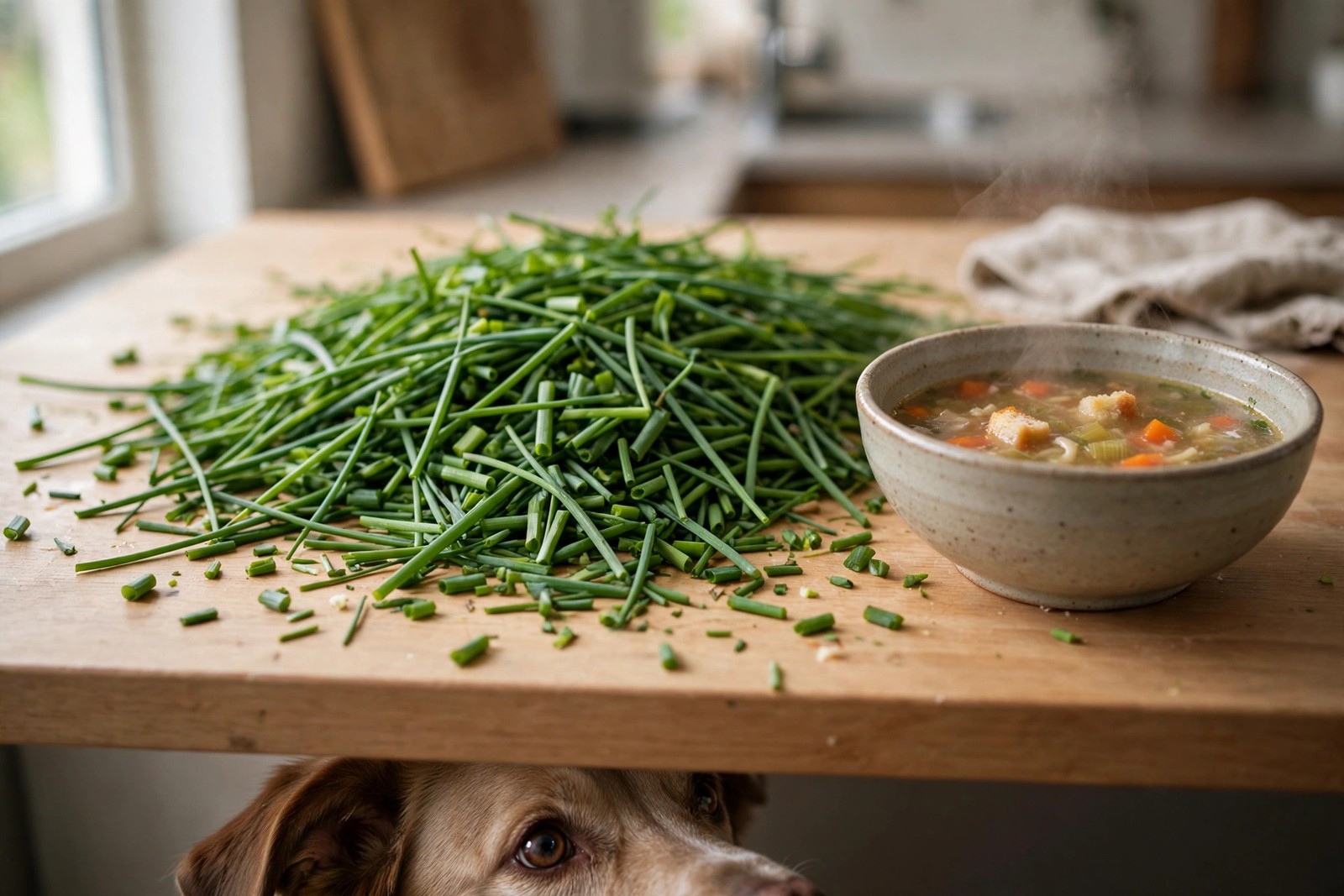
Chives are not a harmless garnish where dogs are concerned, and a dog who begged successfully at the soup table needs a measured response rather than a shrug. Chives belong to the allium family, the group that includes onions, garlic, and leeks. Alliums contain compounds that can damage a dog's red blood cells, and the harm can develop over days rather than announcing itself during the meal. That delayed pattern is exactly why a dog who seems fine after eating chives still deserves your attention and a call to your vet.
First Steps in the First Hour
Move the soup, the chive pot, and any remaining cut chives out of reach. Note three facts while they are fresh: how much your dog ate, when the eating happened, and whether the chives were fresh, cooked in the soup, or dried. Cooking does not remove the concern, so cooked chives count the same as raw ones. Call your vet for guidance and give those facts plainly. Call straight away if your dog ate a large amount relative to body size, if your dog is small, elderly, or a puppy, or if you cannot judge the amount at all. Never try to make your dog vomit at home unless a vet directs you to do so, because the wrong intervention can add harm to a situation the vet may prefer to manage in another way.
Signs Worth Watching For
During the first day, watch for vomiting, diarrhoea, drooling, a reduced appetite, or a dog who seems sore in the belly. Across the following days, watch for the signs that point toward red blood cell damage: unusual tiredness, weakness, reluctance to exercise, pale gums, rapid breathing or panting at rest, a racing pulse, and urine that turns dark or reddish. A dog showing any of those later signs needs veterinary attention promptly, even if the chive meal feels like old news. Tell the vet about the chives at once rather than waiting for the vet to work toward the question, because that single fact changes the shape of the examination.
Why Small Dogs and Puppies Come First
Allium risk scales with body weight, so a bunch of chives that barely registers for a large dog can matter a great deal to a small one. Puppies add a second concern, because their systems are still developing and their reserves are smaller. Dried and powdered chives concentrate the plant into a smaller volume, and a dog who raids a herb jar may eat more allium than a dog who mouths a few fresh snips. When you describe the event to your vet, describe the form as well as the amount, because form and body weight together drive the guidance you receive.
Chives Hide in Ordinary Food
Soup is one route. Chives also arrive snipped over baked potatoes, folded into scrambled eggs, mixed through sour cream dips, and scattered on takeaway dishes that a begging dog may sample from a low table. Dried chive blends sit in spice racks at nose height in some kitchens. A household that treats chives as an onion-family food stores them with the same care: sealed, high, and out of the bowl in every form. Check garnished leftovers before you share any part of a meal, because the green flecks on top are easy to overlook and they are the ingredient that carries the risk here.
Keeping Every Carer on the Same Watch
A delayed reaction needs more than one pair of eyes, and shifts in a household can leave gaps if the watch lives in one person's memory. Writing down the amount, the time, the signs to look for, and the vet's guidance turns a worry into a shared rota. Because symptoms may arrive days later, schedule twice-daily checks for the whole household inside KinsLe Care Teams, naming who examines gums and energy each morning and evening, so a change noticed on day three reaches the vet immediately.