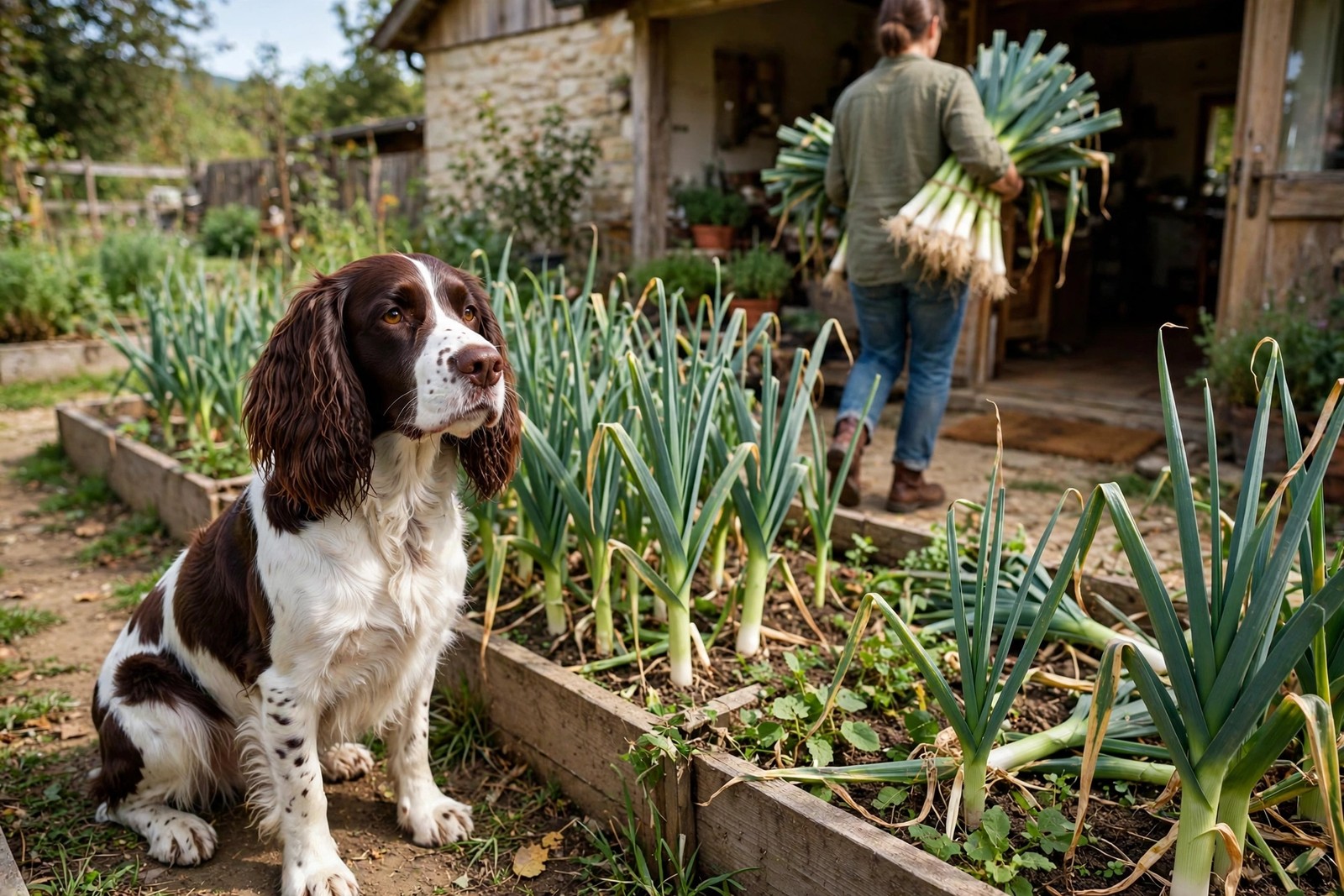
No — dogs must never eat leeks, raw or cooked, and both the white bulb end and the green leafy top count. Leeks belong to the allium family with onions, garlic and chives, and they share the family's harmful chemistry: compounds that oxidatively damage a dog's red blood cells. Damaged cells break down faster than the body replaces them, and the result is anaemia. Leeks are sometimes described as the mild allium, and mild describes their flavour for humans, not their safety for dogs. There is no part of the plant, no cooking method and no portion size that turns a leek into dog food.
Why the Signs Arrive Days Later
Allium damage is slow, and that delay catches owners out. A dog that has raided leeks may show some early stomach upset, vomiting or diarrhoea, and then seem to recover while the blood damage quietly builds over the following days. The signs to watch for across that window are growing tiredness, weakness, pale gums, faster breathing or heartbeat, loss of appetite, and urine that turns dark or reddish. Waiting for those signs before seeking help wastes the safest window, which is the day of the eating itself. If your dog has eaten leeks in any real quantity, from a vegetable patch, a compost heap or a dropped pan of leftovers, call your veterinarian the same day and describe how much was eaten and in what form, then follow the monitoring advice you are given.
Where Leeks Hide
The obvious leek is the one on your chopping board, but dogs more often meet leeks cooked into food. Leek and potato soup, stocks and stock cubes, quiches, gratins, stir-fries and Sunday-roast leftovers all carry leeks in a form a dog will happily eat and an owner may not register as an ingredient. Washing a leek does not help a dog, because the harmful compounds run through the plant's flesh rather than sitting on its surface, and cooking, drying and powdering leave them intact. In the garden, a growing leek bed is a digging temptation, and a compost heap rich in peelings and tops is an allium mixture in its own right. Fence the bed, lid the compost, and treat fallen trimmings during cooking as something to sweep up promptly rather than leave for the dog to find first.
Keeping the Rule Intact When Others Cook
Leeks slip through when knowledge does not travel. A relative making soup in your kitchen, a house-sitter following a recipe, or a child sharing a plate at knee height can each undo a rule they never heard. State the rule plainly to anyone who feeds your dog or cooks around it: no leeks, no leek soup, no stock-based gravy poured over the dog's dinner. Keep raw leeks in the fridge or a closed cupboard rather than a vegetable rack at nose height, and keep cooked leftovers behind a closed fridge door rather than cooling on a low worktop. Do not try to make your dog sick at home unless a veterinarian directs it, and keep the packaging, recipe or a sample of the dish so the amount can be judged. The leek rule deserves the same emphasis as the onion rule in every household conversation, because leeks are too often treated as the gentle exception that somehow proves a dog can have a little. When care passes to someone else for a weekend, a KinsLe Care Pass carries the leek ban in the written instructions, so the allium rule does not depend on a last-minute phone call.