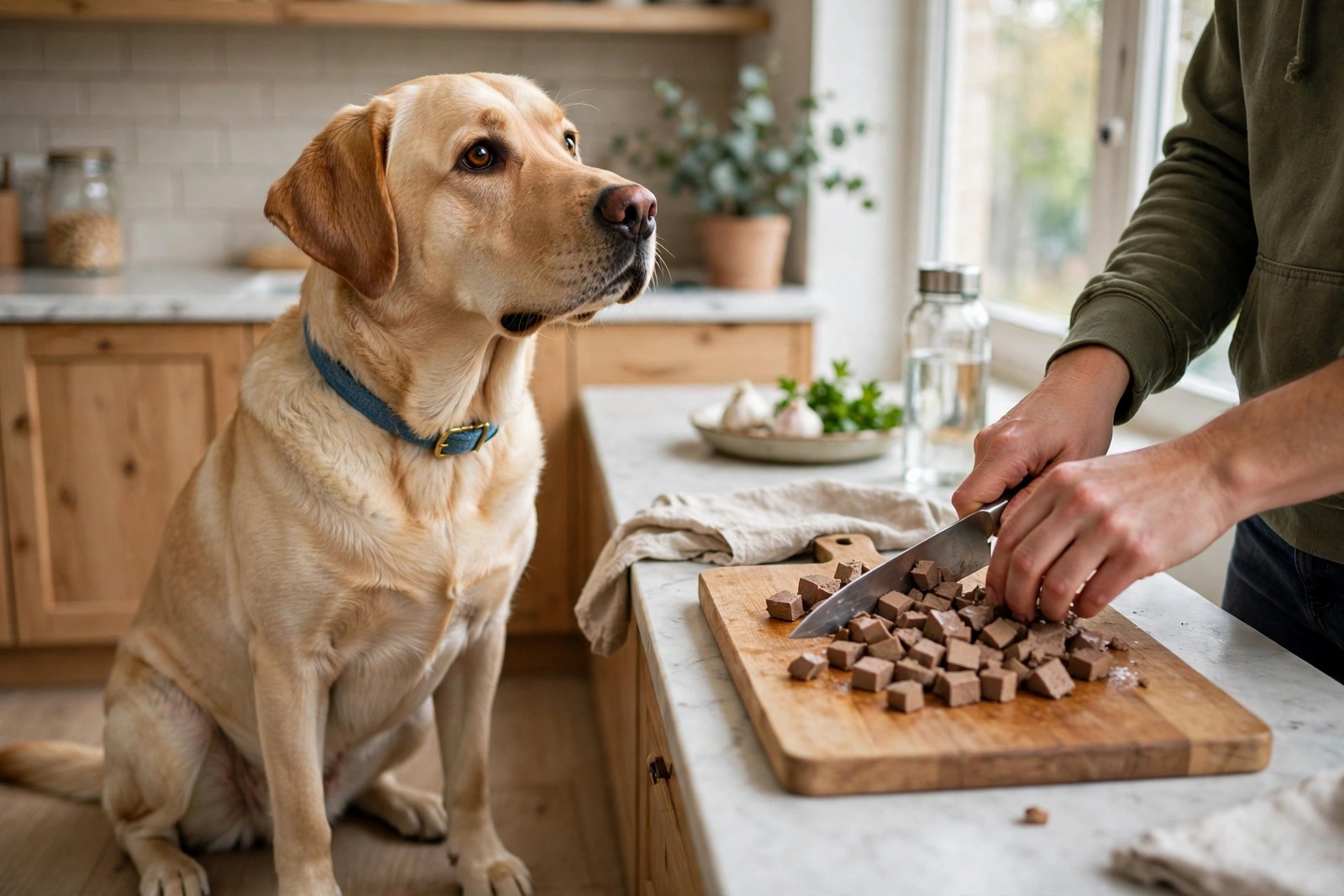
Yes — dogs can eat cooked liver, and many dogs find it intensely appealing, which is exactly why it needs rules. Liver is a rich natural source of vitamin A, and vitamin A is stored in the body instead of being flushed out daily. Serve 1 tablespoon of chopped cooked liver for a small dog or 2 tablespoons for a large dog, no more than twice a week, and treat those servings as a ceiling rather than a target.
Why Vitamin A Sets the Limit
A little vitamin A supports vision, skin, and the immune system, and a complete dog food already supplies it in balanced amounts. Liver added on top is a concentrated extra, and because the vitamin accumulates, the problem pattern is not one big serving but a generous handful offered day after day for months. Too much vitamin A over time can affect bones and joints, causing stiffness and pain, and it can upset digestion along the way. This is also why liver-based treats count toward the same budget: a dog receiving dried liver strips daily plus cooked liver twice a week is getting more than the twice-a-week figure suggests. Puppies need no liver top-ups at all, because a growth diet already carries carefully set vitamin levels and extras unbalance it first in the smallest bodies.
Preparing Liver Plainly and Safely
Boil, bake, or gently fry liver in its own juices with nothing added: no onion, no garlic, no butter, no gravy, and no seasoned coatings. Cook it through until no raw centre remains, let it cool, and chop it into small pieces that match your dog's size. Chicken liver is milder and softer, while beef liver is firmer and slices cleanly, and both follow the same portion rules. Raw liver is a poorer choice because it carries the usual raw-meat bacterial risks for the dog and for the hands preparing it. Refrigerate cooked liver in a sealed container and use it within 3 days, or freeze it in tablespoon-sized portions and thaw one portion in the fridge when you need it.
Using Liver Without Overusing It
Liver's strong smell makes it a powerful training reward, and the trick is to cut the pieces far smaller than feels generous. Pea-sized cubes deliver the full flavour hit, so a tablespoon of liver can reward a whole short training session instead of disappearing in two mouthfuls. Rotate liver with plainer rewards on other days, and keep it out of the daily routine so it stays special and stays within the vitamin budget. Rich food also loosens stools in many dogs, so a first serving should be half the suggested amount, with the full portion offered only after a normal stool the next day. Dogs that gulp should get their cubes scattered on grass or fed one at a time, because soft liver pieces are easy to swallow whole and hard to judge once they are gone.
Who Should Skip It or Ask First
Owners whose veterinarian has put a dog on a controlled diet for liver, kidney, or weight problems should ask before adding liver, because its richness can cut across a careful feeding plan. A dog that becomes stiff, reluctant to move, or sore over weeks of heavy liver feeding needs a veterinary visit, not a smaller portion and a wait-and-see week. Occasional measured liver, by contrast, needs no worry at all. KinsLe's Care Teams lets you mark which days are liver days in your dog's feeding duties and who served them, so a well-meaning second helper cannot add an unrecorded helping on the same evening.