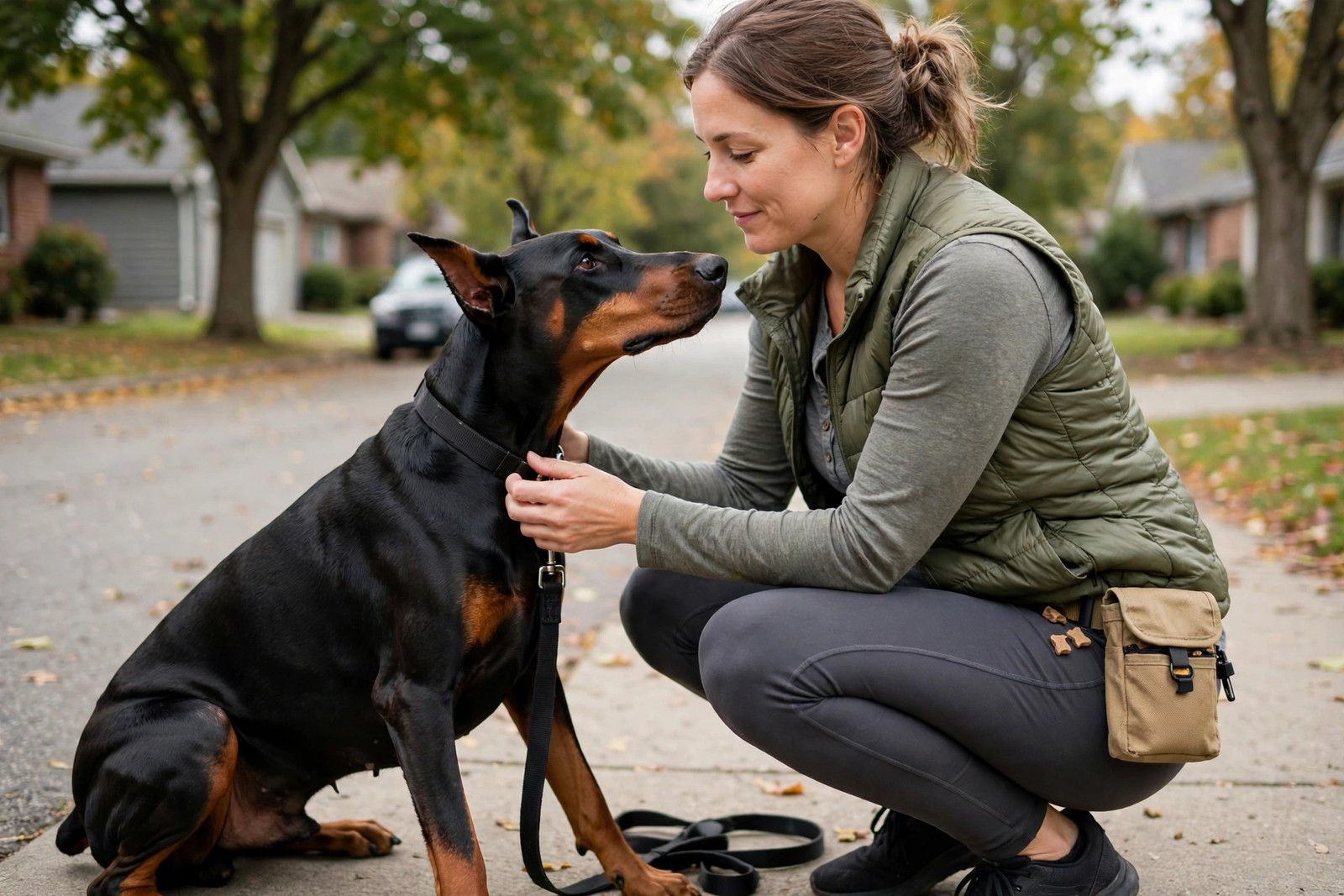
An adult Doberman typically weighs 30 to 45 kg (66 to 99 lb). Females usually fall at 30 to 40 kg (66 to 88 lb), and males usually fall at 34 to 45 kg (75 to 99 lb). Height, bone and muscle mass shift an individual dog within that span, and a tall male with dense muscle can sit near the top while staying lean. A short female can sit near the bottom while carrying too much fat. The scale gives you a starting point for a conversation about condition, and your hands finish that conversation.
What a Fit Doberman Looks and Feels Like
A Doberman in good condition carries a deep chest, a tucked abdomen and visible muscle over the shoulders and thighs. The short, sleek coat hides very little, and that honesty helps you. Run flat hands along the ribcage and expect to feel individual ribs under a thin fat cover with light pressure. Pressing hard to find ribs points to extra fat, and ribs that show sharply through the coat with hip bones jutting point the other way. Look down from above for a waist behind the ribs, and look from the side for a belly line that rises toward the rear legs.
Muscle fools owners in both directions with this breed. A young male who trains daily can weigh more than a heavier-looking pet dog because muscle weighs more than the same volume of fat. A neutered older dog can hold a steady scale weight while muscle fades and fat replaces it. Recheck feel every month, and pair the scale reading with a photograph taken from above and from the side under the same light.
Feeding and Activity for a Working Build
Dobermans were developed for demanding work, and an adult with a full exercise life needs measured meals that match genuine output. Split the daily ration into two meals, weigh the food on a kitchen scale for a fortnight, and learn what the correct portion actually looks like in the bowl. Training treats count toward the day, and a busy training week can add a quiet surplus that shows up as a softer rib feel within a month.
Adjust in small steps and reassess after two weeks rather than cutting sharply after one reading. A dog who clears fences and runs beside a bicycle needs more fuel than a dog whose day holds two pavement walks. Cold weather, a new training class and recovery from rest all change the requirement, and the rib check tells you whether your adjustment landed.
When the Number Deserves a Vet Visit
Book a vet visit when weight climbs or drops without a change you can explain, and book promptly when appetite, thirst or energy changes alongside the scale. Sudden loss in a Doberman deserves attention rather than a wait-and-see month. Vets who know the breed may also discuss heart health at routine adult checks, and they can advise whether screening suits your dog given age and family history. That conversation belongs to an examination room, and no chart at home can stand in for it.
Weigh a Doberman the same way each time, in the morning before breakfast and after a toilet break, and record the figure beside a note about training load that week. Muscle gain during a conditioning block can lift the scale while the rib feel improves, and that pairing tells you the gain is the kind you want. A rising scale with a softening rib feel tells the opposite story, and the pair of records separates the two without guesswork.
A Doberman well above 45 kg (99 lb) who also feels soft over the ribs needs a portion review and a vet check rather than praise for size. A dog below the range who eats eagerly and feels bony needs the same professional look. KinsLe Care Teams helps a household share that follow-through, since one person can book the appointment while another logs the monthly weights and both see each completed task marked done.