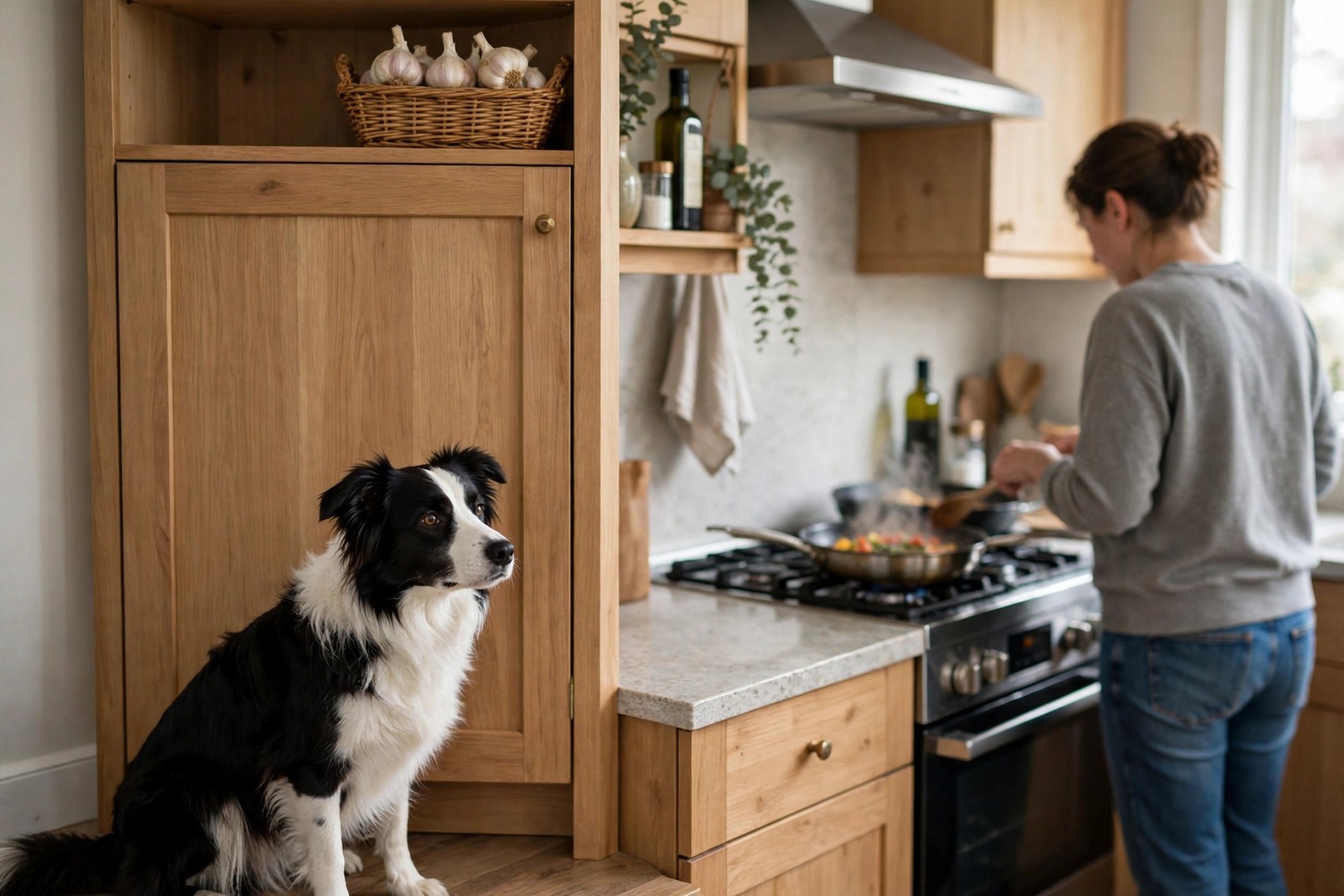
No — dogs must never eat garlic in any form, raw, cooked, dried or powdered. Garlic belongs to the allium family alongside onions, leeks and chives, and it is one of the most concentrated sources of the compounds that harm dogs. Those compounds oxidatively damage red blood cells, and damaged cells are then removed from circulation faster than the body can replace them. The result can be anaemia, and it develops gradually rather than in the minutes after a meal.
Why the Damage Shows Up Late
A dog that has eaten garlic often looks completely well at first, and that delay is the trap. Stomach upset, such as vomiting or diarrhoea, can appear early, but the blood damage typically takes several days to show. Watch over the following days for unusual tiredness, weakness, pale or yellowish gums, faster breathing or heart rate, reduced appetite, and urine that looks dark or reddish. Because the early picture can look harmless, waiting for obvious signs before acting gives the damage a head start. If you know or suspect your dog has eaten a real quantity of garlic, call your veterinarian the same day, even if your dog seems fine, and pass on what was eaten, in what form, roughly how much, and when.
Powder Is Stronger, Not Safer
Drying and powdering garlic concentrates it, so a teaspoon of garlic powder carries far more of the harmful compounds than the same spoon filled with fresh pieces. Cooking does not destroy those compounds either, which means garlic bread, seasoned meats, sauces, stir-fries and stock all count as garlic. Garlic also hides in places owners rarely suspect, including gravy mixes, marinades, sausages, baby food used to tempt a sick dog, and supplement or flea-remedy folklore that presents garlic as natural and therefore harmless. Natural is not the same as safe for a dog's blood, and no home remedy justifies the risk. There is no safe home dose to calculate, and smaller dogs simply have less margin than larger ones.
Keeping Garlic Out of Reach at Home
Treat garlic like a household chemical rather than a vegetable. Keep bulbs and jars in a closed cupboard instead of a countertop basket, because a counter-surfing dog can strip and eat a whole bulb, papery skin and all. Store garlic powder with the same care, and wipe up seasoning spills during cooking instead of leaving them for a helpful tongue. Gardeners should fence off garlic beds and keep harvested bulbs off the ground, and peelings belong in a secured food-waste bin rather than an open compost caddy a dog can raid. When visitors cook in your kitchen, mention the rule before plates reach the floor, since well-meaning guests often toss a dog a seasoned offcut without a second thought.
If Your Dog Eats Garlic Anyway
Do not try to make your dog sick at home unless a veterinarian specifically tells you to, and do not offer milk, bread or other folk fixes in the hope of soaking anything up. Note the time, keep the packaging or a sample of the food so the form and amount can be judged, and call your veterinarian or a poison advice line promptly. Keep other dogs away from the same food until you know it is clear, because a shared stolen dish usually means more than one dog has eaten. For households where several people cook, KinsLe Care Teams keeps the garlic ban attached to the feeding plan itself, where a new helper encounters it before opening a cupboard.