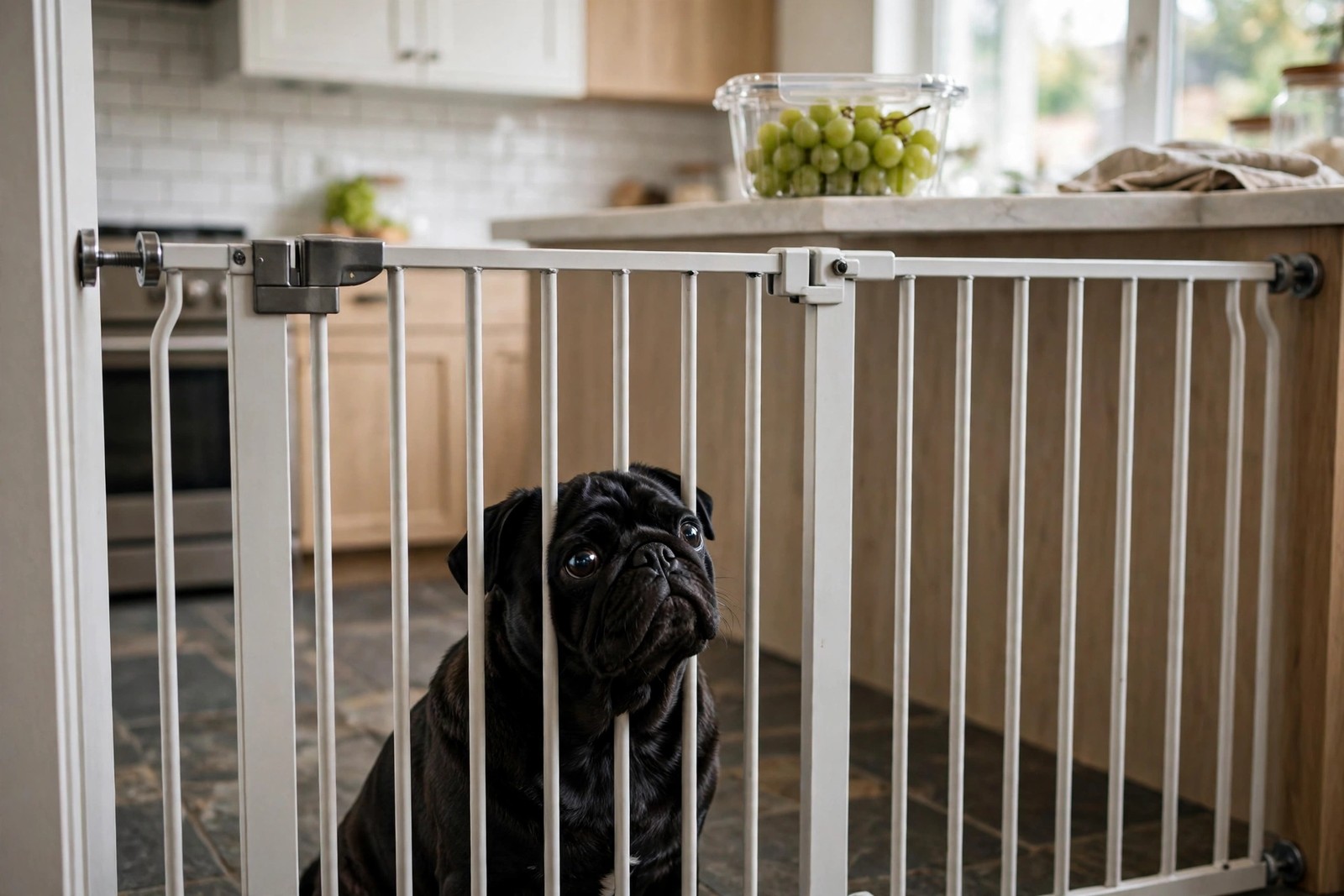
No — dogs must never eat grapes. The same rule covers raisins, sultanas, and currants, which are all dried forms of grape. Grapes are one of the few common foods where the correct response is not 'watch and wait' but immediate action, because they can cause sudden kidney failure in dogs and nobody can predict which dog, or which grape, will trigger it.
Why there is no safe amount
With most risky foods, size and quantity soften the danger. Grapes do not work that way. Dogs have become seriously ill after small amounts, while the toxic element and the pattern behind individual sensitivity are still not fully pinned down, so veterinarians treat every ingestion as significant. A large dog who eats one grape and a small dog who eats one grape both earn the same phone call. Baked goods count too: raisin bread, fruit cake, cereal with raisins, and mince pies can all deliver the hazard in a form children may not recognise as a grape product at all. The same caution extends to grape juice splashed from a glass, wine, and salads or slaws studded with halved grapes at a barbecue, where a dropped piece disappears under the table long before an adult notices it is gone. Halving grapes for a toddler does not make them any safer for the dog waiting underneath.
What to do in the first minutes
Call your veterinarian or an emergency animal clinic straight away, even if your dog looks completely normal — early treatment is where outcomes are decided, and signs can take time to develop. Tell them roughly how many grapes or raisins were eaten, when, and your dog's size. Follow their instructions exactly, and do not make your dog vomit unless a veterinary professional specifically tells you to. Afterwards, watch for the signs vets ask about: vomiting, loss of appetite, unusual tiredness, tummy pain, drinking or urinating much more or noticeably less. Any of those after a known ingestion means urgent care, not monitoring at home.
Keeping grapes out of reach in a real house
Fruit bowls on low tables, lunchboxes left in open school bags, and snacks dropped by toddlers are the usual routes in. Store grapes high or in the fridge, sweep up drops after parties, and brief visitors directly — many well-meaning guests simply do not know. Vineyards and garden vines need the same respect during harvest, since fallen fermenting fruit attracts dogs.
Put the rule where everyone can act on it: in KinsLe's Care Teams, grapes sit on your dog's never-feed list as a shared duty every member confirms, so a new babysitter, grandparent, or dog walker inherits the rule automatically instead of learning it by accident.