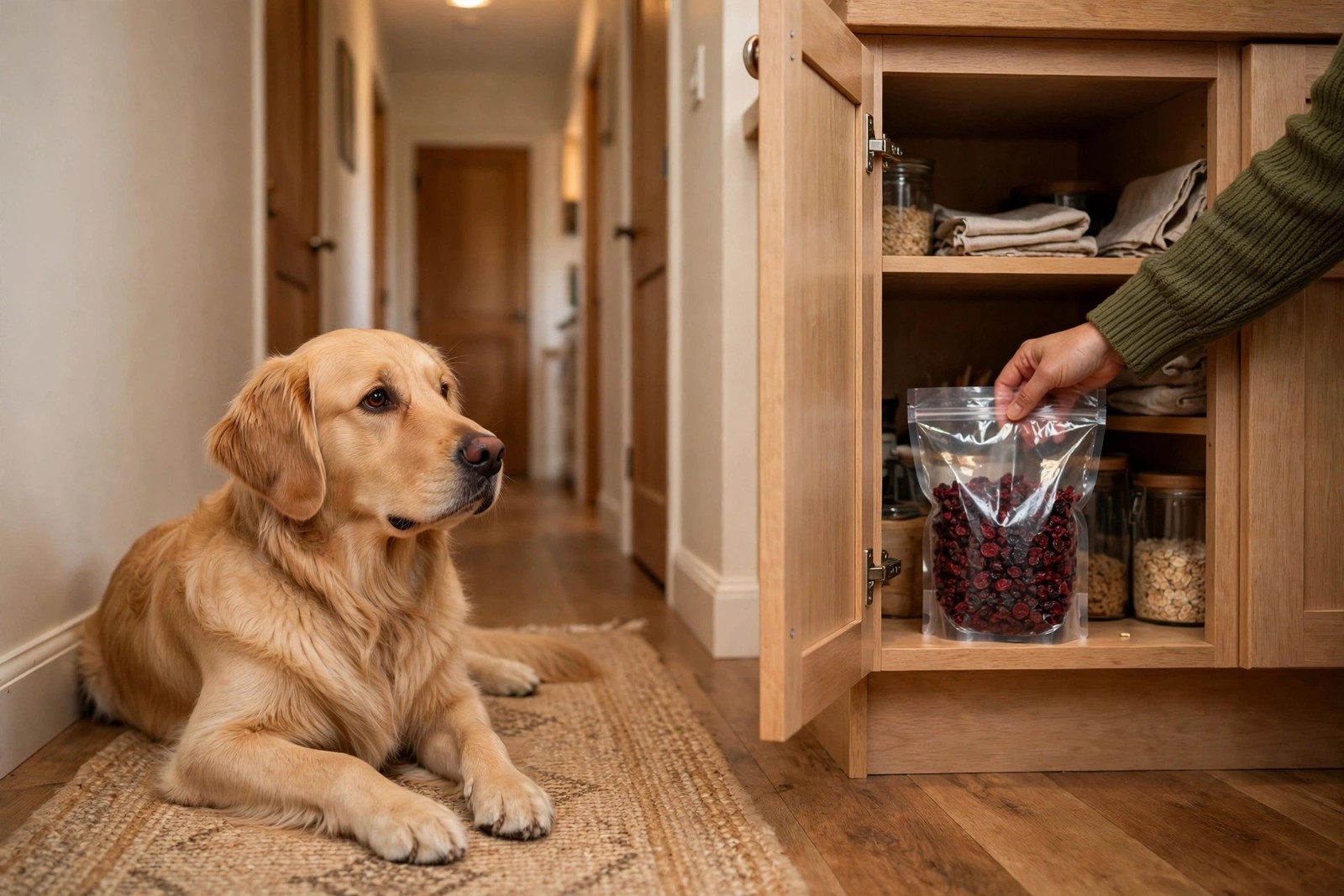
Only with caution, and only a couple. A plain dried cranberry is not toxic to dogs, and a dog that steals one from the floor has not been poisoned. The caution comes from everything around the berry: most dried cranberries are sold heavily sweetened, and dried cranberries travel in mixes that can contain genuinely dangerous fruits. If the bag lists cranberries and nothing else, offer 1 berry to a small dog or 2 berries to a larger dog, occasionally, and leave it at that.
Why Most Bags Are Sweetened
Fresh cranberries are famously tart, enough that most people will not eat them raw, so producers sweeten dried cranberries with sugar or concentrated fruit juice and often add a light oil coating to stop the berries clumping in the bag. The result is closer to a sweet than to a fruit: a small handful carries a concentrated sugar load with none of the water that fresh fruit provides. For a dog, that means empty calories delivered in a form that sticks to teeth, offered in pieces so small that owners rarely count them. A dog does not need the sugar, gains nothing nutritionally from two sweetened berries, and may learn to haunt the baking cupboard where the interesting bag lives. Unsweetened dried cranberries exist and are the only version worth considering, and even they earn treat status rather than a health halo.
The Mix Problem Is the Real Hazard
Dried cranberries are rarely sold alone in a dog's environment. They are baked into flapjacks and muffins, folded into stuffing, and above all blended into trail mixes and mixed dried fruit bags alongside raisins and currants. Raisins and currants can seriously damage a dog's kidneys even in small amounts, and in a mixed bag they are dark, wrinkled, and similar in size to the cranberries beside them. Nobody can reliably sort a mix berry by berry, and a dog gulping spilled mix from the floor does not sort at all. The rule that keeps dogs safe is blunt: no mixes, ever, and if a dog eats an unknown quantity of a mix that may have contained raisins or currants, call your veterinarian promptly rather than trying to judge the handful yourself.
The Urinary Myth Worth Retiring
Cranberry has a reputation in urinary health that leads some owners to feed cranberries to a dog that is straining to urinate or passing blood. That reputation is not a treatment, and a dog showing urinary signs needs a veterinarian, because straining can signal infection, stones, or a blockage that becomes urgent, especially in males. Feeding berries while waiting days to see whether they help is the one genuinely risky use of an otherwise harmless fruit. Cranberries as an occasional treat are fine; cranberries as a home remedy are a delay your dog pays for.
Buying, Storing, and Serving
Read the ingredient list before the front of the packet: cranberries alone passes, while sugar, syrups, juice concentrates, and flavourings all fail. Store the bag sealed in a closed cupboard, because a dog that raids a whole sweetened bag faces a miserable bout of vomiting and diarrhoea from the sugar load alone, and that raid is worth a call to your veterinarian for advice. Serve the counted berries as they are, at room temperature, rather than softening them in sweet liquids or baking them into sugary dog treats at home. Fresh or frozen cranberries, offered plain, are tart enough that most dogs refuse them after one investigative bite, which settles that option by itself. KinsLe's Care Pass lets you put the baking-cupboard rule into the instructions for a sitter: dried fruit bags stay sealed, mixes are never shared, and any raid gets reported to you the same day.