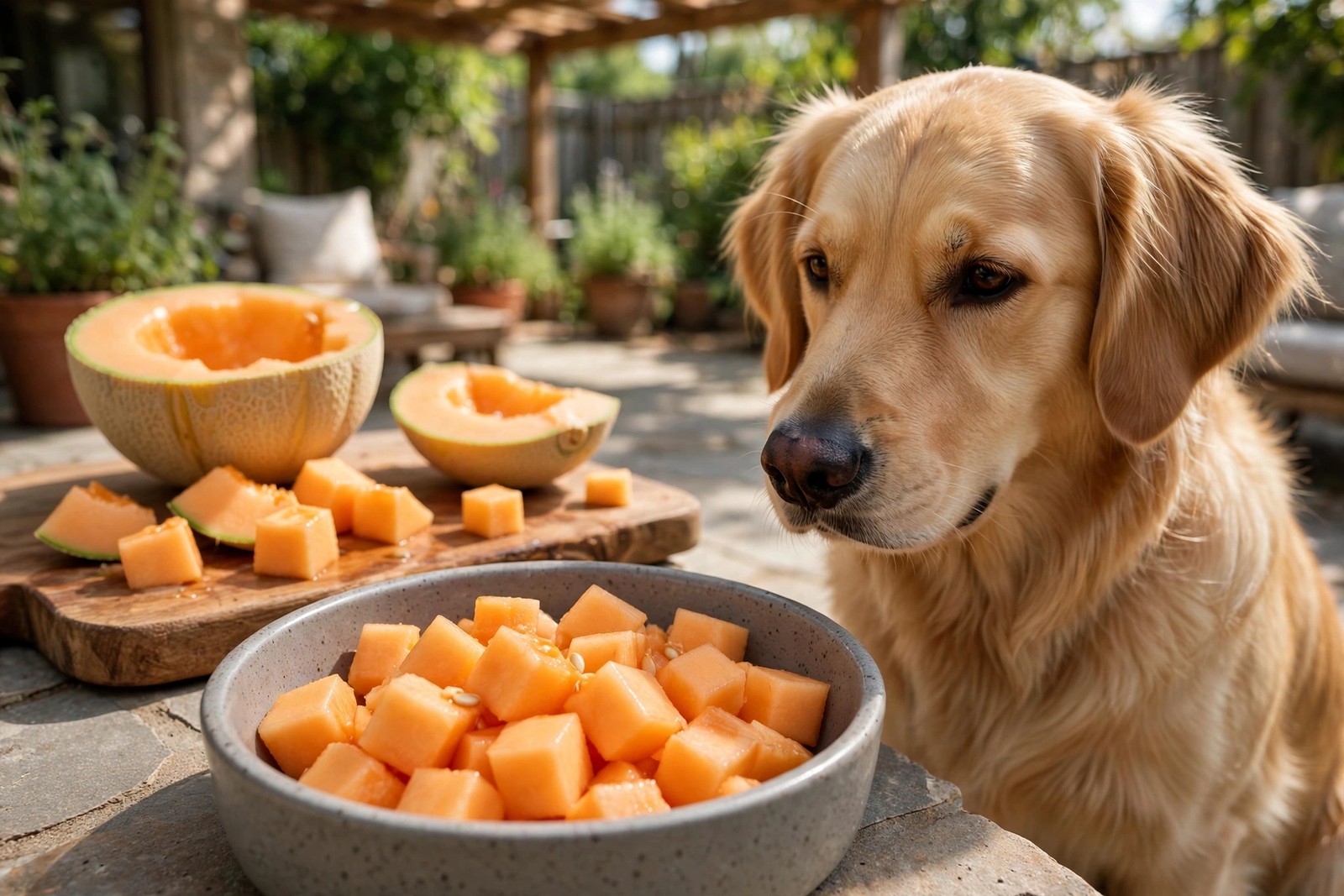
Yes, cantaloupe is safe for dogs and genuinely well liked: ripe melon is soft, sweet and full of water, and a few cubes make a refreshing treat on a warm day. The flesh is the only part that belongs in the bowl, though. The rind and seeds come off as a rule, the portion stays small because melon sugar is still sugar, and the whole fruit gets a proper wash before the knife goes in, for a reason specific to this melon's rough skin.
Scrub the Rind Before You Cut
A cantaloupe's netted rind is a textured surface that traps soil and bacteria as the melon grows, ships and sits in a shop display. When a knife passes through an unwashed rind, it can carry whatever sits on that surface straight into the flesh you are about to serve. Scrub the whole melon under running water with a clean brush before cutting, even though the rind itself is destined for the bin. The same habit protects the human servings. Once cut, work promptly and refrigerate leftover flesh in a covered container, because cut melon left warm on a counter is an inviting place for bacteria to multiply, for the dog's portion and yours alike.
Rind and Seeds: Why Both Come Off
The rind is tough, fibrous and hard to digest, and a dog that works through a discarded wedge can swallow a piece big enough to irritate or, in a small dog, obstruct the gut. Bin rind in a lidded container rather than the compost caddy a dog can reach. The seeds are softer and a few swallowed seeds will usually pass, but a mouthful of seeds and the stringy centre they sit in can upset the stomach, and scooping them out takes seconds. Cut the cleaned flesh into cubes sized for your dog: small dice for a small dog, larger cubes for a big dog that chews, and thin slices for a dog that tends to gulp, so nothing goes down in one smooth swallow.
Sugar, Portions and Warm-Day Uses
Cantaloupe's sweetness is natural, but a dog's body does not care where sugar came from. A few cubes — roughly a small handful for a medium dog, less for a small one — deliver the pleasure without making melon a meaningful share of the day's calories. Dogs that are overweight, and dogs managing blood sugar under a vet's direction, should have melon rarely and in token amounts, with the vet's guidance ahead of any general rule. Frozen cubes make a slow, hydrating treat on a hot afternoon for a dog that crunches contentedly, while a dog that gulps frozen food whole is safer with fresh cubes and a bowl of water nearby. Melon is a supplement to water on a warm day, never a substitute for it.
Fitting Melon Into the Day's Treats
Melon usually appears when a person is cutting one, which means it appears at kitchen-counter height with a hopeful dog in attendance — the classic setup for uncounted extras repeated by everyone who passes. Decide the dog's cubes once, put them in the dog's bowl rather than handing them over one by one at the board, and let that be the melon's whole contribution to the day. KinsLe's Care Teams helps by letting you record the fruit treat as an assigned duty marked complete with a timestamp, so the next person slicing melon knows the dog's portion has already been happily eaten.