
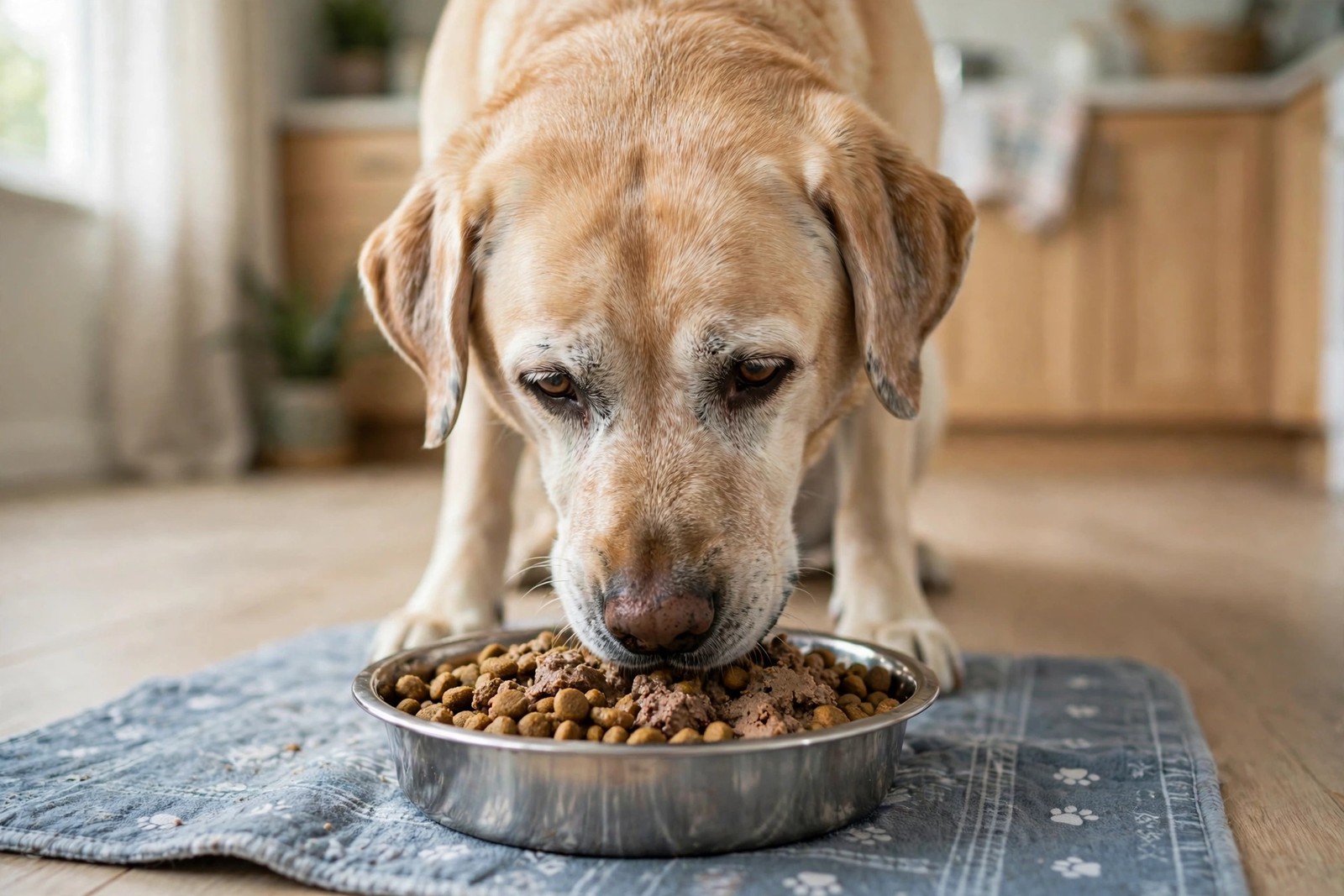
Yes — for most healthy dogs, a wet-and-dry mix is a very good meal: more aroma and flavour than kibble alone, a softer texture for older mouths, and extra moisture for dogs who drink little. The skill is not in the mixing. It is in the maths and the fridge discipline that come with it.
Calories: the point most owners get backwards
Wet food is typically around 70 to 80 percent water, so gram for gram and cup for cup it carries far fewer calories than dry kibble, which is concentrated by design. Wet food is not the calorie-dense partner in the bowl — kibble is. Overfeeding still happens with mixes, but for a different reason: owners add a generous serving of wet food on top of the full kibble ration they were already feeding, so the dog quietly gets a meal and a half. A small dog who only needed a spoonful of wet food as a flavour boost may also fill up on water-rich food and leave the balanced kibble behind if the proportions swing too far the other way.
Build the bowl as shares of one ration
Use the feeding guides on both packs, which each describe a full day fed on that food alone, and split them. For example, half the daily dry amount plus half the daily wet amount makes one full day, split across meals. A common practical mix is roughly three-quarters kibble share to one-quarter wet share, stirred through so a picky dog cannot simply lick the wet food off the top. Keep that split steady for at least two weeks, weigh your dog, and adjust the total by about 10 percent at a time if they gain or lose — ribs should be felt easily under a thin fat cover, not seen from across the room or buried.
Introduce any brand-new food gradually over five to seven days, increasing its share a little each day, and expect softer stools if you rush it.
Freshness rules change once food is wet
Dry kibble forgives being left down; a wet mix does not. Serve it, give your dog a calm window to eat, then pick up what is left within about 30 minutes and wash the bowl — the moist residue grows bacteria quickly, especially in a warm kitchen. Store opened cans in the fridge with a cover for only a few days, follow the maker's guidance, and take the chill off a serving briefly before offering it, as many dogs reject fridge-cold food. Do not leave mixed food in a slow feeder or puzzle toy for hours as a compromise; use dry kibble alone for those.
When to check with your vet first
Ask before mixing if your dog eats a prescription diet, because diluting it with another food can undo the balance the diet was prescribed for. The same applies to dogs with kidney disease, a history of pancreatitis, diagnosed food allergies, or puppies on a growth diet where calcium and energy balance matter. Deep-chested breeds prone to bloat do better with calm, smaller meals than one huge mixed feast.
In a busy household the bowl is rarely the problem — the second, well-meant bowl is, which is where KinsLe's Care Teams earn their place: feeding duties for your dog's exact wet-dry ratio can be assigned to one person per meal and marked complete with a timestamp, so everyone can see what was served and when.