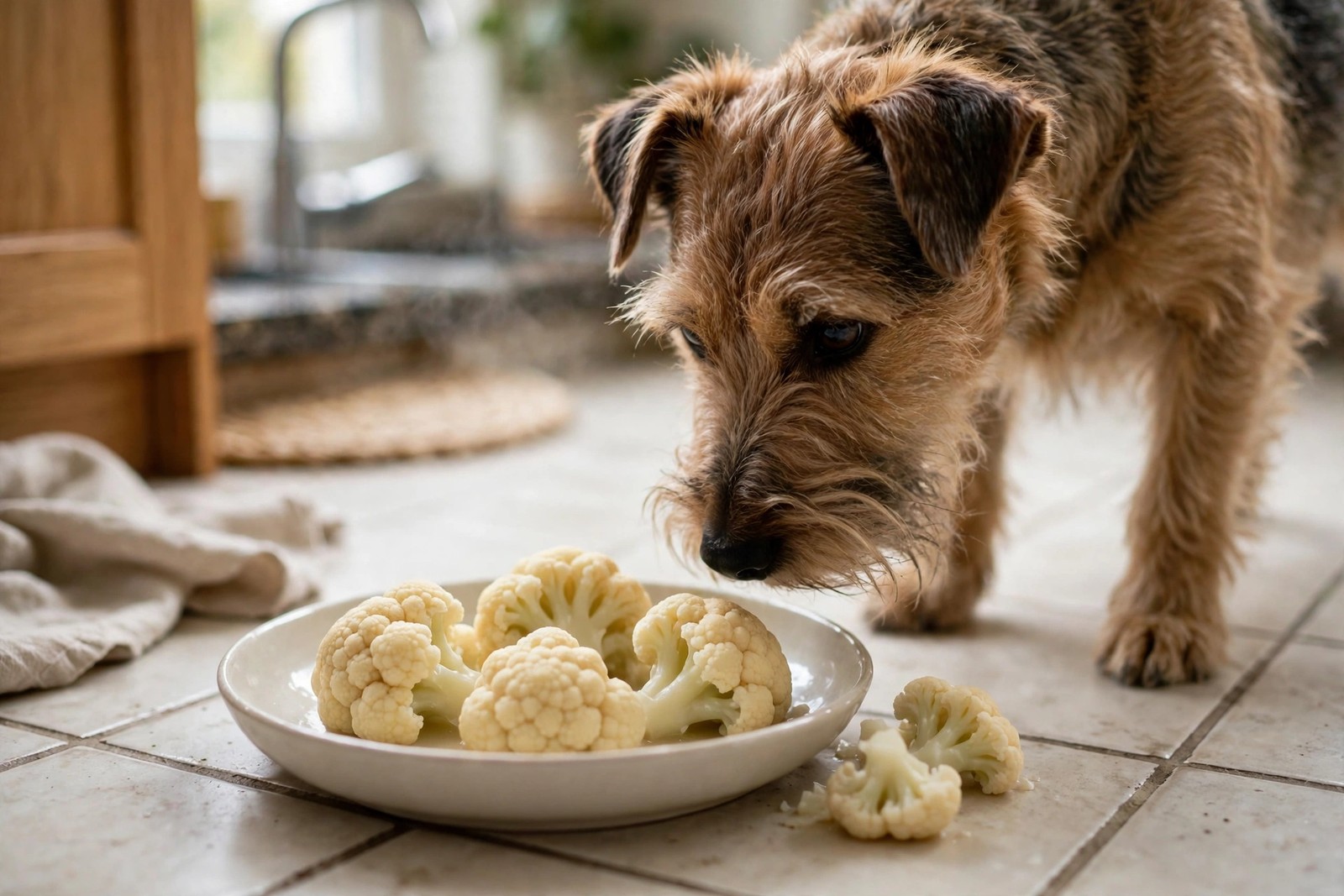
Yes, dogs can eat cauliflower in small amounts, served plain, raw or lightly cooked. It is one of the milder cabbage-family vegetables, which makes it a reasonable occasional treat, but its reputation for gentleness has a limit that shows up quickly: portion size.
Florets, Stems, and Preparation
Serve the florets, broken or cut into pieces your dog can chew comfortably. The central stem and thick stalks are dense and fibrous; sliced thin and cooked until soft they are acceptable, but in raw chunks they invite the bite-off-and-gulp problem that causes gagging in enthusiastic dogs. Raw florets are crunchy and suit careful chewers. Light steaming is the better default for most dogs, since it softens the texture, makes the vegetable easier to digest, and slightly reduces the gas effect. Frozen florets thawed or lightly cooked are equally fine. What never qualifies is cauliflower as served at a family table in dressed form: cheese sauce adds fat and salt, battered and fried pieces add oil and seasoned coating, and roasted cauliflower usually arrives with garlic, onion, or spice blends.
Why Small Amounts Is Not Just a Slogan
Cauliflower contains fermentable fibers and cabbage-family compounds, so the gut produces gas in proportion to the serving. A few florets pass quietly for most dogs. A bowlful, offered because the dog seemed to love the first floret, commonly ends in flatulence, stomach gurgling, and sometimes loose stool that evening. Start with one floret, wait a day, and treat two or three florets as a full serving for a medium or large dog, with one small floret for a small dog. Dogs with sensitive digestion, and dogs recovering from any stomach upset, should wait until their normal food is going through uneventfully before cauliflower is tested at all.
Cauliflower Rice and Other Forms
Plain cauliflower rice, the grated raw or lightly cooked form, mixes easily through regular food and is a practical way to add bulk to a reduced portion for a dog on a weight plan, a tablespoon or two rather than a scoop. Mashed plain cauliflower can soften a meal for a senior dog that finds kibble alone uninteresting. Pickled cauliflower is not suitable, because pickling brings vinegar, salt, and often garlic or chili. If you are sharing from a mixed vegetable bag, check the whole mix for onion and garlic pieces before any of it reaches the bowl, since the cauliflower itself is rarely the problem ingredient in a prepared mix.
Knowing When to Retire It
Some dogs produce impressive gas on a single floret, and for them cauliflower is simply not a fit, with green beans or cucumber offering the same crunchy role without the aftermath. Repeated loose stool at any portion is the other stop signal. For dogs that tolerate it, keep cauliflower an occasional rotation vegetable rather than a daily fixture, which also keeps it interesting. Adding the portion and the plain-only rule to your dog's feeding notes in KinsLe through Care Teams means everyone, including whoever cooks Sunday dinner, knows cauliflower reaches the bowl steamed and counted, never sauced and heaped.