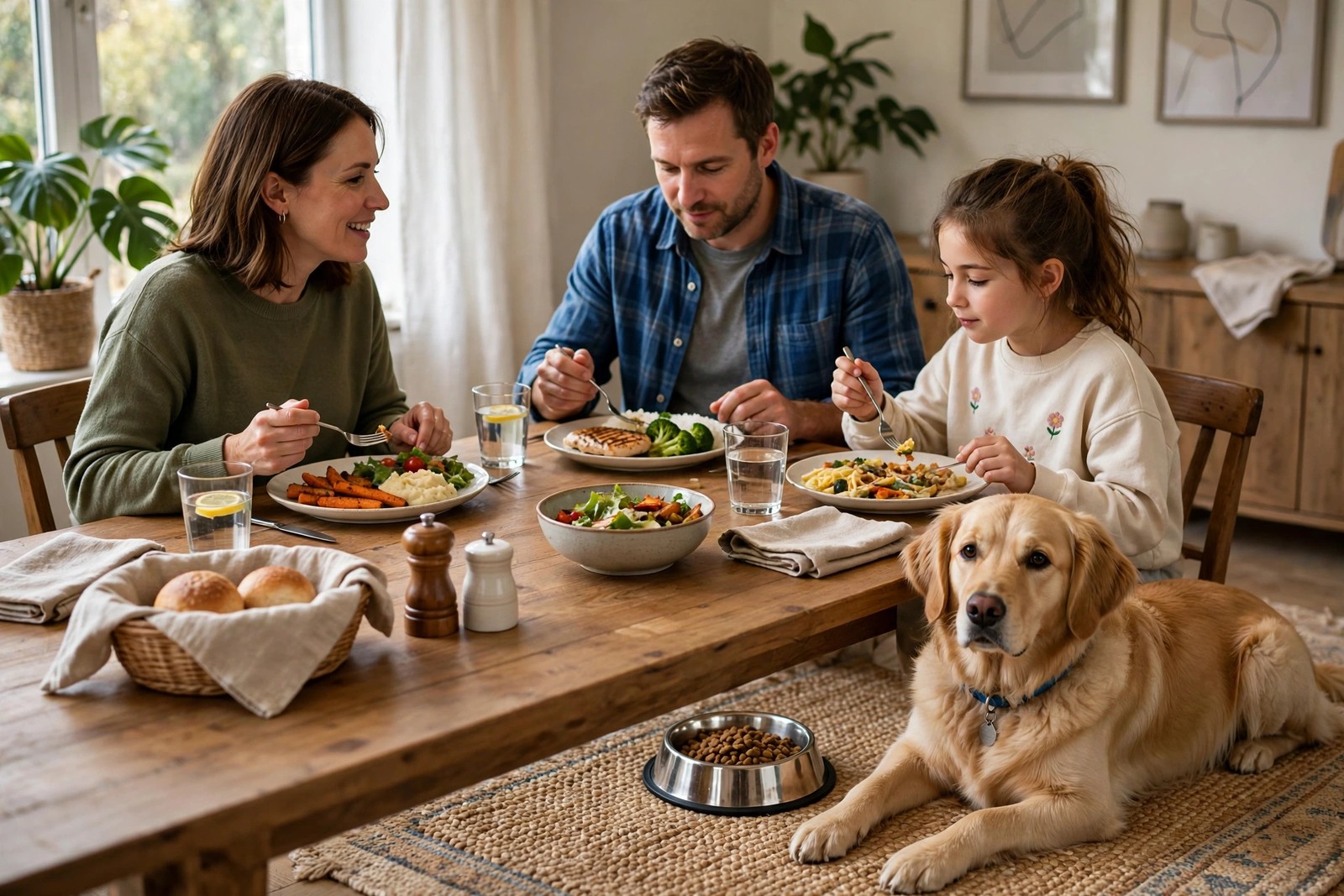
Human food should stay an occasional treat, not a daily diet, and the reason is balance rather than any single scary ingredient. A complete dog food is formulated so that an ordinary bowl covers a dog's needs — protein, essential fats, calcium, trace minerals, and vitamins in proportions worked out for dogs. Human meals are built for human needs and human taste, which in practice means more salt, more fat, more seasoning, and a nutritional profile that drifts further from a dog's requirements the larger its share of the day becomes.
How a daily habit quietly goes wrong
The slide is gradual. A dog who fills up on toast crusts, pasta, and sandwich offcuts eats less of their own food, so the balanced portion shrinks while the extras carry no such guarantee. Over months that pattern shows up as weight gain from calorie-dense scraps, a dull coat, or genuine shortfalls in nutrients that table food supplies poorly — calcium being the classic gap in meat-and-leftovers diets. Home-cooked dog diets done properly do exist, but they are deliberately formulated, often with veterinary input and added supplements; they are not the same thing as sharing whatever the family ate, however wholesome that dinner was. Life stage sharpens the point: a growing puppy has narrow margins for mineral imbalance while bones are forming, and a senior dog with early kidney strain has little room for the salt that seasons almost every family meal, so the two dogs least able to absorb dietary drift are the ones owners most often indulge.
What an occasional treat can look like
Treats from the kitchen work best when they are plain, known-safe, and counted. Small pieces of cooked chicken or turkey, plain egg, cucumber coins, carrot batons, green beans, or a spoonful of plain pumpkin can all rotate as toppers or training rewards, displacing a little of the regular meal rather than stacking on top of it. Keep the day's extras small in relation to the whole diet, introduce one new item at a time, and stop anything that reliably loosens the stool.
The never list does not take days off
Frequency rules do not soften the foods that are dangerous outright: onion and garlic in any form, grapes and raisins, chocolate, cooked bones, alcohol, caffeine, macadamia nuts, and anything sweetened with xylitol. These hide inside ordinary meals — gravy rich with onion, sauces, marinades, desserts — which is another reason 'a bit of what we had' is riskier than a deliberate, plain, dog-chosen extra. Persistent vomiting, diarrhoea, tremors, or sudden tiredness after a table raid means a prompt call to your veterinarian.
Agree the plan once in KinsLe's Care Teams — regular food as the base, named safe extras as assigned treats, duties timestamped — and your dog stops receiving three different answers to the begging question from three different people.