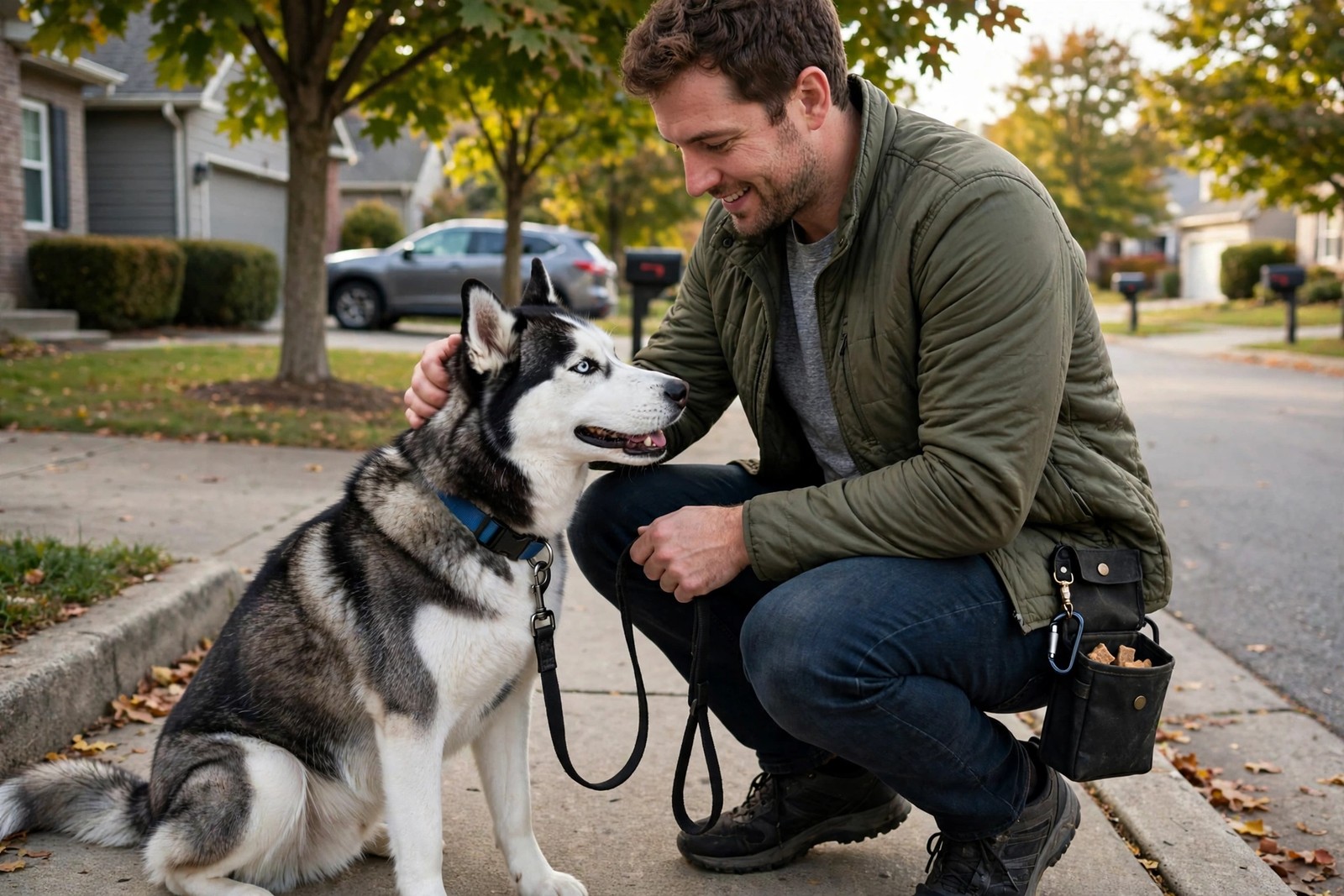
An adult Siberian Husky typically weighs 16 to 27 kg (35 to 60 lb). Females usually fall at 16 to 23 kg (35 to 51 lb), and males usually fall at 20 to 27 kg (44 to 60 lb). People expect a larger dog from the photographs, and the surprise at a first weighing is a breed ritual. A Husky is a medium endurance athlete, built light for distance work, and a correct dog looks almost slight once the coat comes out in spring. Judge by frame and feel, and let the scale correct the story the coat tells.
Reading a Body That Changes With the Seasons
Huskies blow their undercoat in dramatic seasonal sheds, and the dog who looked powerful in winter can look narrow in summer at an identical weight. Condition checks must therefore run on touch rather than outline. Drive your fingers through the coat to the ribs and expect a thin fat cover over bone you can feel clearly with firm pressure. From above, look past the coat for a waist behind the ribs, and from the side look for a distinct tuck behind the chest.
During a heavy shed, weigh the dog and record the coat state beside the reading. A stable weight across a shed proves the change was hair, and a genuine drop during a shed deserves the same vet attention it would deserve in any month. Photographs help only when you compare dogs in similar coat, and even then your hands carry the deciding vote.
The Efficient Husky Metabolism
Huskies were developed to pull loads over distance on modest food, and many adults maintain condition on portions that surprise owners of comparable breeds. Appetite also swings with season and workload in this breed, and a Husky who eats lightly during warm months or rest weeks may be regulating rather than ailing. Track the trend over a month instead of reacting to single meals, and keep measured portions steady through the swings so your records stay readable.
Weight creep in Huskies usually follows a workload drop: the running season ends, the dog moves to a smaller home, or family exercise fades in winter darkness. Restore activity gradually, trim portions in small reviewed steps, and keep protein quality high for a dog rebuilding muscle. Persistent weight loss with a good appetite, changed stools or a dull coat warrants a vet visit, and a vet can investigate digestion, parasites and other possible causes.
Work, Weight and the Household Roster
A Husky in harness work, bikejoring or serious hiking needs feeding matched to output, reviewed weekly during heavy training blocks. Rest days need the resting ration, and alternating the two honestly keeps condition stable across a season. Note workload beside weight in your log, since the pair together explain readings that look odd in isolation.
Neutering changes the energy picture for many Huskies, and owners often miss the shift because appetite stays theatrical while requirement quietly falls. Recheck rib feel monthly for the first season after neutering and trim portions in small steps if softness arrives. Winter working dogs and summer resting dogs can be the same animal in one household, and feeding both seasons from one fixed scoop ignores the obvious. Let the log arbitrate: weight, rib feel and workload written together make the seasonal adjustment a calculation rather than an argument.
Several people often share a Husky's exercise, and shared exercise blurs feeding decisions fast. Through KinsLe Care Teams, run days, rest-day rations and the monthly hands-through-the-coat check each hold a named owner, and the timestamped record keeps an efficient athlete fuelled correctly.