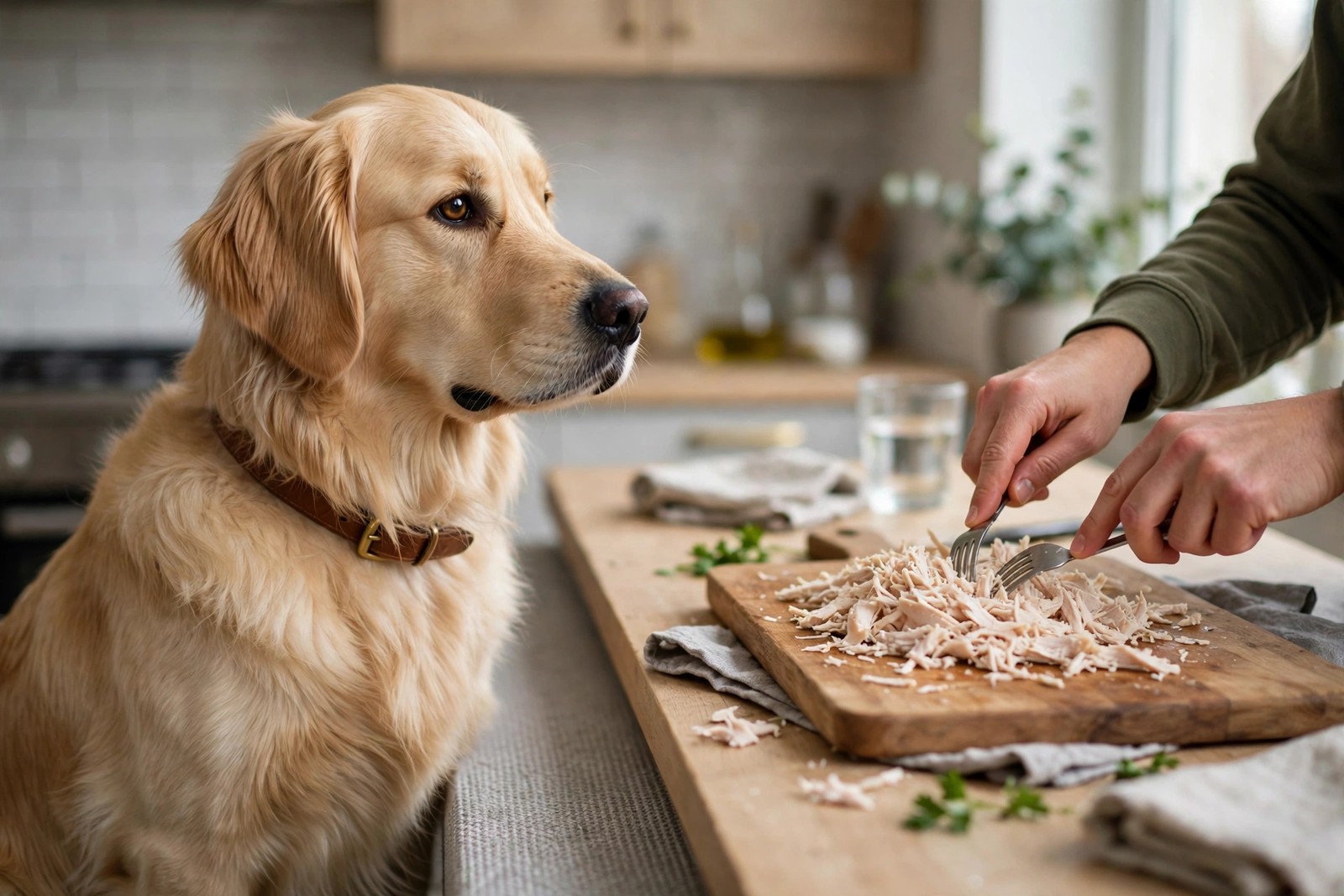
Yes — plain cooked chicken suits most dogs well. The conditions matter more than the meat itself: boneless, skinless, thoroughly cooked, and completely unseasoned. Chicken prepared for people often fails on the last point, carrying salt, garlic, onion, butter, or spicy sauces that do not belong in a dog's bowl.
Why the bones and skin stay off the menu
Cooking changes chicken bones. Raw bones flex a little; cooked bones dry out, turn brittle, and can break into sharp points that threaten the mouth, throat, and gut. That applies to leg bones, wing tips, and the carcass left after roasting — none of it goes to the dog, however hopefully they watch the bin. Skin carries most of the fat, so a greasy portion can trigger loose stool or vomiting in a dog used to lean food, and fatty scraps are a poor choice for dogs prone to tummy trouble. White breast meat, poached or baked plain, is the simplest option.
Ways chicken actually earns its place
A few shredded tablespoons over regular food can persuade a picky eater through a fussy patch, and pea-sized pieces make a high-value training reward that most dogs work harder for than a dry biscuit. Vets often suggest plain boiled chicken with plain rice for a short spell after mild stomach upset, but that bland pairing is a temporary measure, not a balanced diet — if you are feeding it beyond a day or two, or your dog keeps having episodes, check in with your veterinarian rather than extending it on your own. Puppies, seniors, and dogs with kidney or weight concerns can usually enjoy small amounts too, counted as part of the day's food rather than added on top of full meals.
Portions that fit the dog in front of you
Think in bites, not bowls. A toy dog needs only a few small cubes; a large dog might get a modest handful as a topper. Start with less than you think on the first day, watch the stool over the next day, and increase only if everything stays firm and normal. Refrigerate cooked chicken promptly, use leftovers within a few days, and reheat nothing for the dog — serve it cold or at room temperature, cut small enough that an eager dog cannot gulp a slab whole.
When chicken does not agree with your dog
A small number of dogs react badly to chicken itself. Repeated itching, ear trouble, licking at the paws, or soft stool every time chicken appears are worth raising with your veterinarian, who can help you work out whether chicken or something else in the bowl is the trigger. Stop the chicken while you wait for advice, and seek prompt care for vomiting that repeats, blood in stool, a swollen belly, or a dog who goes off food entirely. Keep KinsLe's Care Teams updated with who fed the chicken and when, because that timestamped duty record turns a vague 'he seemed off after dinner' into a clear timeline your vet can actually use.