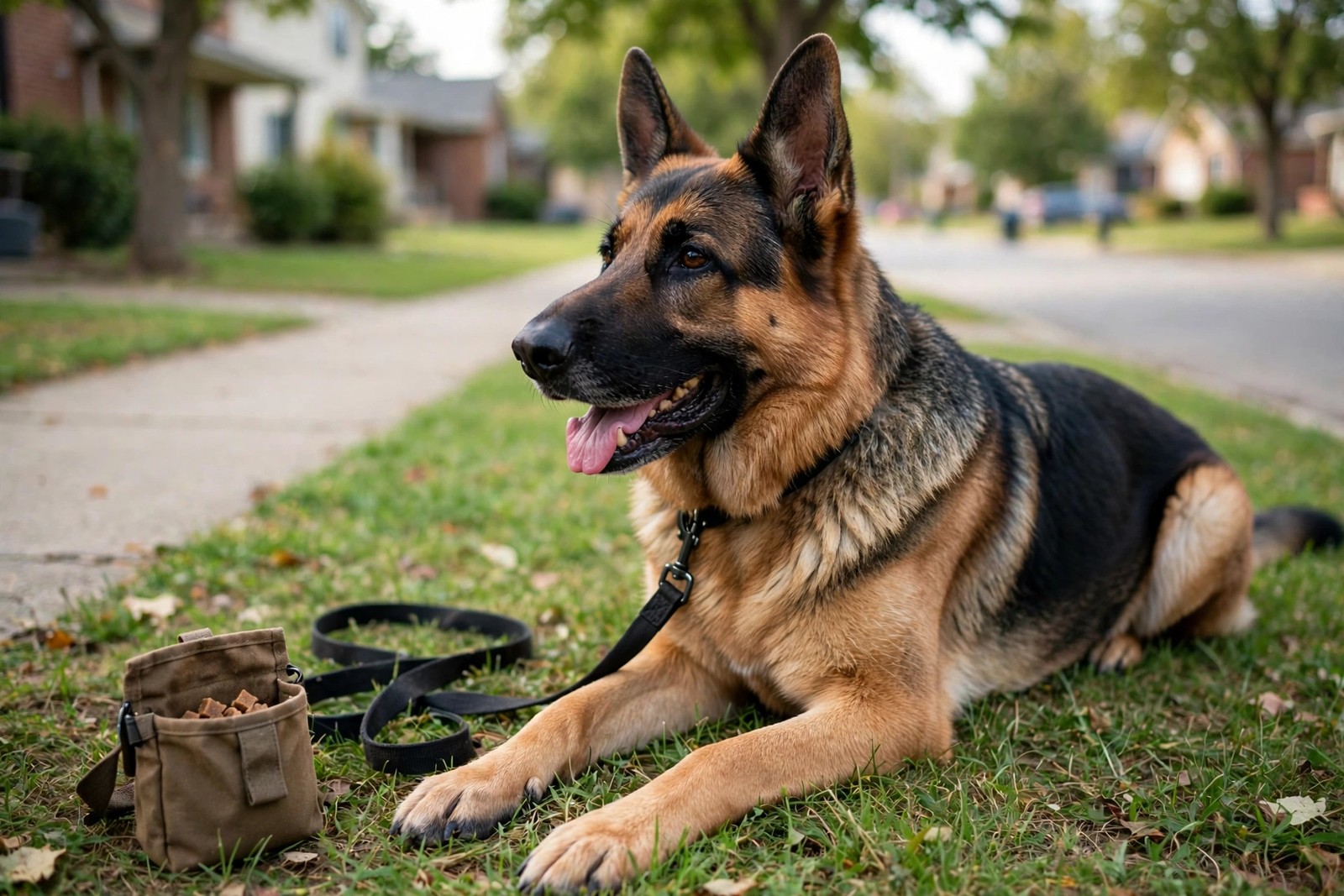
An adult German Shepherd typically weighs 22 to 40 kg (49 to 88 lb). Females usually fall at 22 to 32 kg (49 to 71 lb), and males usually fall at 30 to 40 kg (66 to 88 lb). Few breeds span so widely for honest reasons, and line explains much of the spread. Compact working-line dogs often sit lower in the range with a level back and moderate bone, and larger show-line dogs often sit higher with heavier bone and a different outline. Comparing your dog with a Shepherd from another line misleads, and comparing your dog with last season usually tells the truth.
Reading Condition Through a Double Coat
The Shepherd coat holds air and silhouette even when the dog underneath changes. Push your fingers through the coat to the skin and run them along the ribs, and expect to feel each rib under a thin fat cover with firm, deliberate pressure. From above, part the coat mentally and look for a waist behind the ribs before the pelvis. From the side, look for an abdomen that tucks upward behind the deep chest rather than hanging level with it.
Seasonal shedding fakes weight change in both directions. A dog in full winter coat looks heavier than the same dog in summer coat, and owners sometimes cut food just as the coat drops and the leaner outline was only hair. Hands beat eyes in every season with this breed. A monthly hands-on check during grooming gives you a record your memory cannot distort.
Fuel for an Active, Thinking Dog
Shepherds mature slowly and fill out well into their second year, and a gangly eighteen-month-old under the adult range may simply be unfinished. Feed measured meals, protect joints by keeping youngsters lean rather than bulky, and resist pressure to grow a young dog fast. Adults in training, sport or farm work burn considerably more than pet adults with pavement walks, and portions should follow workload in small, reviewed steps.
Weight that drifts upward often arrives with reduced work after an injury, a house move or a training break. Weight that drifts downward with a healthy appetite deserves a vet visit, and a vet can investigate digestion, parasites and other possible causes. Shepherds also carry breed conversations about hips and elbows, and a vet may discuss screening or imaging for an individual dog based on signs and history.
Keeping the Record Straight
Keep a simple monthly log with date, scale weight, rib feel and current workload. A year of monthly entries reveals a trend that guesswork misses, and the log gives your vet material worth reading at annual checks. Sudden change in either direction matters more than position inside the range, and rapid loss with changed thirst, appetite or stools warrants a prompt appointment rather than a food swap at home.
Track a young Shepherd by curve rather than by target, since adolescents add height first and depth later and can look unfinished for months. A monthly photograph from the side beside a fixed door frame shows height progress, and the rib check shows whether flesh is keeping pace with bone. Dogs from the same litter can finish 5 kg (11 lb) apart in honest condition, and litter comparisons worry owners without informing feeding. Your dog's own curve, appetite and energy carry the useful information, and a vet reviewing that curve can spot a stall or a surge earlier than any single weigh-in reveals.
Several people often share a Shepherd, and shared care drifts without a shared list. In KinsLe Care Teams, feeding, training exercise and the monthly coat-and-rib check each sit with a named person, and timestamps confirm the checks happened rather than nearly happened.