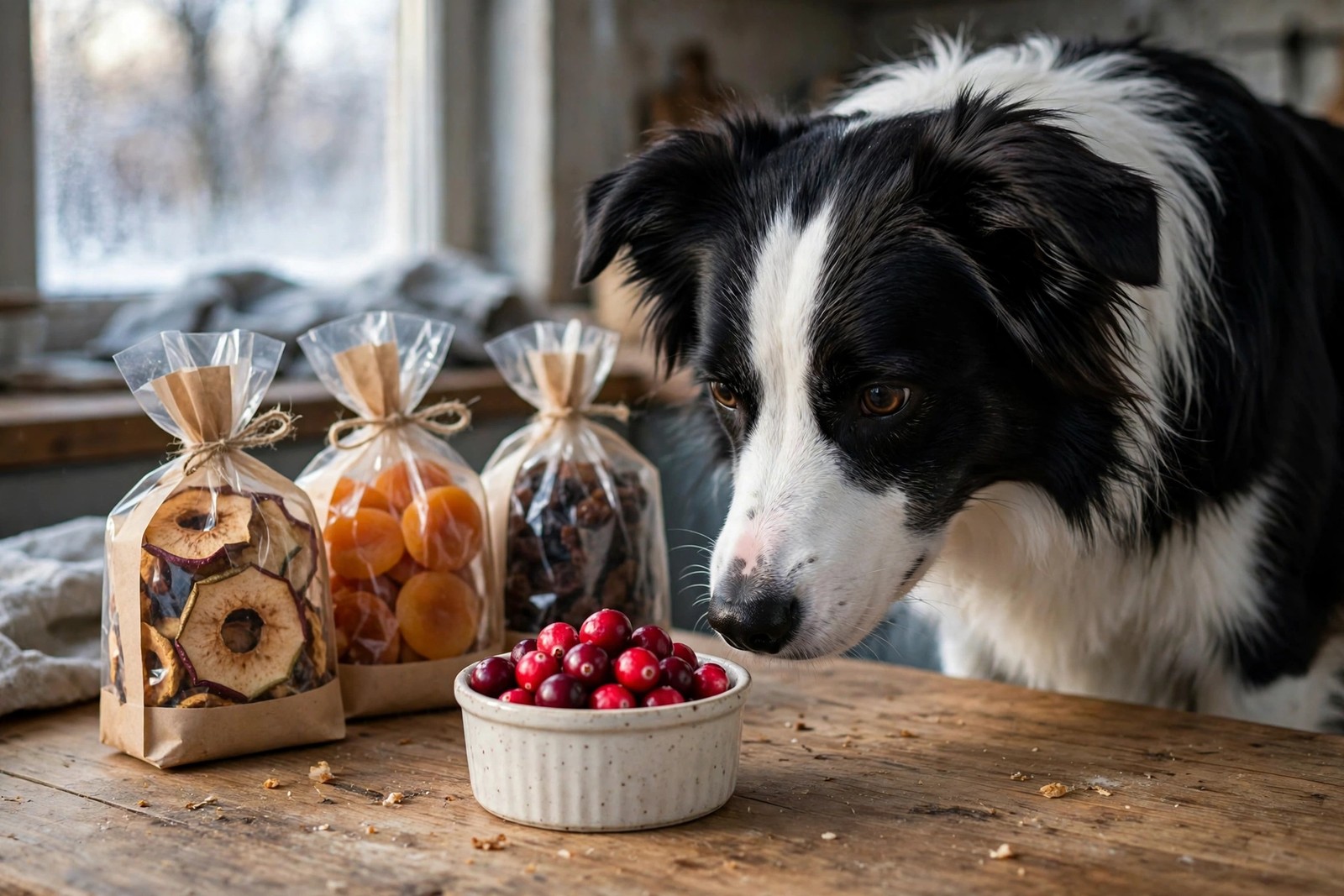
Yes — dogs can eat a few cranberries, fresh or dried, provided they are plain and unsweetened. Cranberries are not toxic to dogs, but they are so tart that many dogs sniff, take one experimental bite, and walk away. That reaction is useful information, not a problem to solve by sweetening the berries into something more appealing.
Fresh, dried, sauce, and juice are four different answers
Fresh cranberries can be offered whole to a larger dog or halved for a small one, washed first. Halving matters for toy breeds, because a round berry is exactly the size to gulp rather than chew, and tartness makes some dogs spit a berry out mid-bite and then try again. Frozen fresh berries last longer as an enrichment game scattered in grass for a dog to hunt, but count them into the same small serving rather than treating frozen as free. Dried cranberries concentrate both flavour and natural sugars into a small, sticky piece, so two or three is a serving, not a scoop. Cranberry sauce from the table is a different food altogether — heavily sweetened, sometimes spiced — and cranberry juice drinks are mostly sugar water. Neither belongs in the bowl. If a product is labelled sugar-free, check it with extra care before sharing anything, because some sweeteners used in human foods, especially xylitol, are extremely dangerous for dogs even in small amounts.
The mix-bag trap
The biggest cranberry risk rarely comes from cranberries. Trail mixes and festive dried-fruit blends routinely combine them with raisins, and raisins can cause serious kidney harm in dogs with no reliably safe amount. Currants and sultanas in holiday baking raise the same concern. A dog who raids a mixed bag needs a call to your veterinarian even if you think the cranberries were the main ingredient — you cannot sort out what was actually eaten after the fact. Whole bags of dried fruit should live in closed cupboards, not in the open bowls and stockings where a counter-surfing dog can reach them during gatherings.
What cranberries cannot do
Cranberries have a popular reputation around urinary health, but a few berries will not treat a urinary infection, and they are not a substitute for veterinary care. A dog straining to urinate, passing blood, asking to go out constantly, or crying when passing urine needs a veterinarian promptly, whatever they have eaten. Likewise, too many tart berries at once can cause the very loose stool owners then blame on illness — introduce two or three, wait, and watch before offering more on another day.
For holiday stays, KinsLe's Care Pass gives your sitter a temporary, scoped view of your dog's feeding notes with no account needed, so 'plain cranberries only, nothing from a mix' is written down where the person actually holding the treat bag can see it.