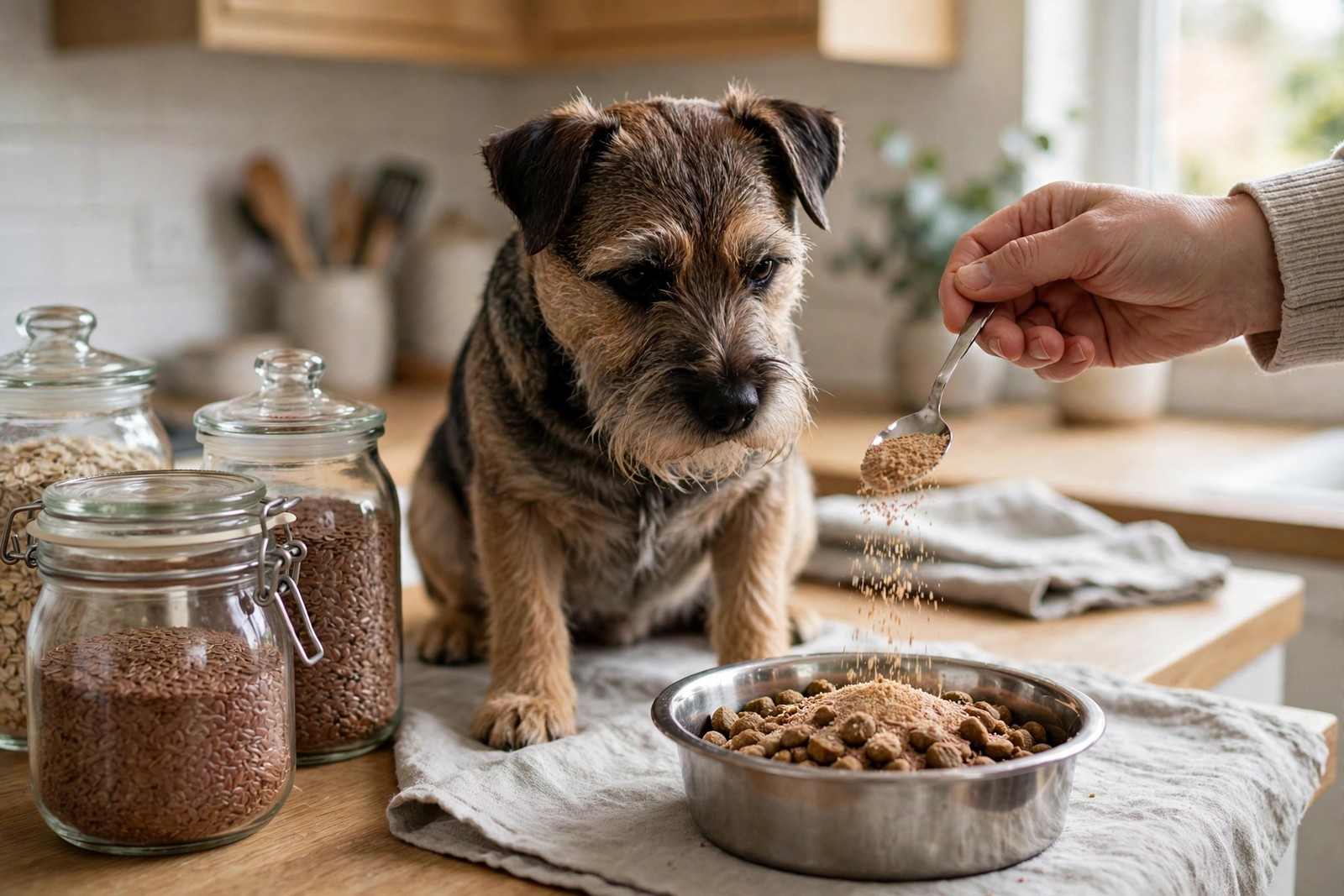
Yes — dogs can eat flaxseed in small amounts, and form decides whether the seed does anything at all. Ground flaxseed is the useful version, because the seed's hard coat is built to survive a digestive tract, and whole seeds mostly pass through a dog intact and unused. Sprinkle ground flaxseed over the meal: a pinch for a small dog, half a teaspoon for a medium dog, and up to 1 teaspoon for a large dog, once a day.
What Grinding Unlocks
Inside the coat, flaxseed carries plant omega-3 oils, soluble fibre, and a modest amount of protein. Grinding cracks the coat and exposes that contents list to digestion, which is why a teaspoon of ground seed and a teaspoon of whole seed are not the same serving even though they weigh the same. The fibre absorbs water and swells, so stir the sprinkle through the food rather than dusting it on top where a dog can snort it off, and keep the water bowl filled alongside. Owners usually add flaxseed hoping for coat shine, and a fair trial is measured in weeks of consistent small servings, not days. If a complete diet already lists flaxseed among its ingredients, as many do, an extra sprinkle is a top-up rather than a necessity, and the case for adding it rests on the individual dog.
Storage Is Where Flaxseed Fails
The same oils that make ground flaxseed useful make it fragile. Once the coat is broken, air and warmth turn the oils rancid, and rancid seed tastes bitter, smells sharp, and has lost the point of serving it. Buy ground flaxseed in small quantities, store it in a sealed container in the fridge, and press the air out of the bag or jar each time you close it. A whole packet kept in a warm cupboard for months is the common failure, and the dog's turned-up nose is often the first honest review. Grinding whole seeds at home in small batches solves the freshness problem neatly, because whole seeds keep far longer than ground. Either way, trust your nose: fresh ground flaxseed smells mild and nutty, and anything bitter or paint-like goes in the bin.
Amounts, Introductions, and Stools
Flaxseed's fibre is the reason introductions should be gradual. Start at half the target amount for three or four days, then move to the full pinch, half teaspoon, or teaspoon once stools stay normal. Too much, too soon typically shows up as soft stool, extra wind, or a dog that leaves the bottom of the bowl where the seed settled. Those signs call for a step back to the smaller amount, not for pushing through. Because the seed adds calories as well as fibre, a daily teaspoon for a large dog also belongs in the day's overall reckoning, especially for a dog whose weight is being managed. Puppies on a growth diet need no seed sprinkled over a food that was already balanced for them.
When Flaxseed Is the Wrong Tool
Owners sometimes reach for flaxseed to fix a dull coat, itchy skin, or persistent digestive trouble, and that is where a supplement becomes a delay. A coat that stays dull despite a good diet, skin that keeps flaring, or stools that never settle are reasons to see a veterinarian, who can look for causes a seed cannot address. Flaxseed also does not suit a dog in the middle of a veterinarian-run elimination trial unless the trial plan includes it, because even a pinch is an ingredient the trial has to account for. Used plainly, as a small fresh sprinkle over a healthy dog's dinner, it needs no drama at all. KinsLe's Care Teams lets you name one person per day for the flaxseed duty in your dog's feeding plan, so the teaspoon lands once and the morning and evening feeders never double it by accident.