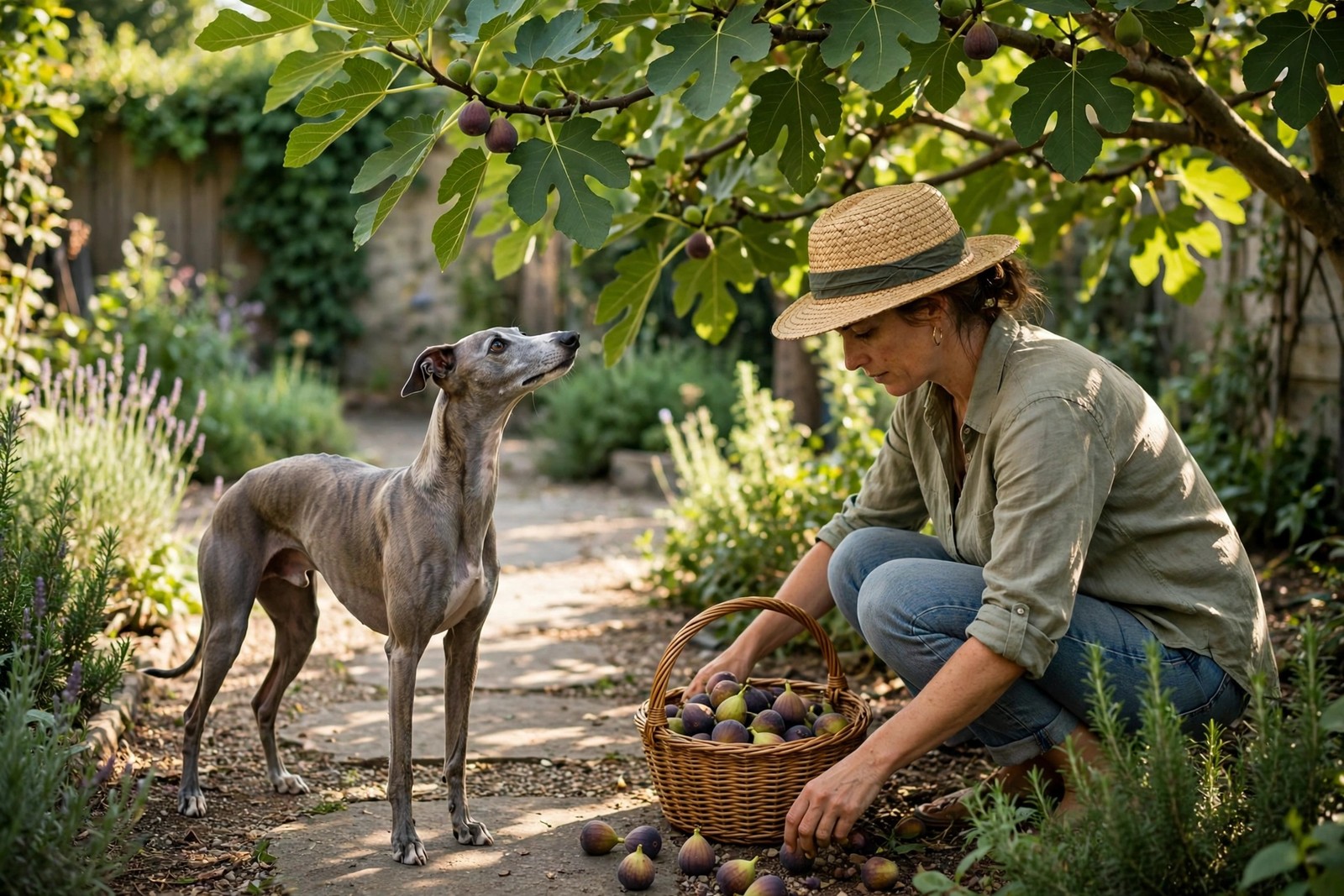
Only a small taste, if at all. The ripe flesh of a fresh fig is not toxic to dogs, and a dog that steals a fallen fig has not eaten a poison. What the flesh does carry is a heavy load of natural sugar and fibre in a very soft package, which is why even modest portions so commonly end in loose stool. If you offer fig at all, peel it, remove the stem, and keep the serving to no more than half of a small ripe fig, occasionally.
Why Figs Upset So Many Dogs
A ripe fig is close to a natural jam: concentrated sugars, soluble fibre, and a soft texture that encourages a dog to swallow several mouthfuls quickly. The digestive system answers that combination with speed, and owners typically see soft or loose stool within the day, sometimes with wind and a gurgly stomach. Figs also contain an enzyme called ficin, present in the flesh and far more concentrated in the sap, which can irritate the mouth and stomach lining in sensitive dogs. None of this makes a taste dangerous for a healthy dog, but it does make figs a poor-value treat: the payback is frequent, the nutritional contribution is mostly sugar, and fruits such as blueberries deliver the treat moment without the digestive sequel. A dog that has already shown a fig reaction once should simply not be offered fig again.
The Tree Is the Bigger Issue
For households with a fig tree, the fruit bowl is the least of it. Fig leaves and the milky white sap that bleeds from broken stems and unripe fruit are irritating to skin, mouths, and eyes, and dogs that chew fig leaves or mouth fallen green figs can end up drooling, pawing at the face, or off their food. Sap on skin can also react in sunlight and leave an angry patch. Manage the tree like the crop it is: pick ripe fruit before it drops, sweep windfalls and fallen leaves rather than leaving them under the canopy, and fence young or low trees if a dog treats the area as a snack bar. Cut branches and prunings go straight to garden waste, never onto a pile a dog can investigate. If a dog chews fig leaves and then drools heavily, vomits repeatedly, or rubs its face raw, call your veterinarian for advice.
Fresh, Dried, and Cooked Forms
Dried figs concentrate everything the fresh fruit does wrong. Removing the water shrinks the fig but keeps the sugar, so a single dried fig carries far more sugar than the same weight of fresh flesh, and the sticky texture clings to teeth. Treat dried figs as a food to skip for dogs rather than a smaller serving of the fresh rule. Fig baked into biscuits, bars, and festive puddings arrives with flour, fat, and more sugar, and none of it improves the offer. Fresh and peeled, in the half-fig limit, is the only version this answer is really about, and even that is permission rather than a recommendation.
Serving the Small Taste Properly
Choose a fig that is fully ripe and soft, wash it, peel away the skin, which can carry traces of sap from picking, and remove the stem end entirely. Cut the flesh into two or three small pieces and offer them in the bowl or as individual rewards, then stop at the half-fig limit even if the dog campaigns for the other half. Serve fig on its own rather than mixed into a meal the first time, so any loose stool the next day has an obvious explanation. Skip fig altogether for puppies, for dogs with weight to lose, and for dogs whose stomachs react to new foods generally. KinsLe's Care Teams lets you schedule a daily fig-season pickup of fallen fruit and leaves as a care duty during the weeks the tree is ripening, so the garden rule holds even when you are away.