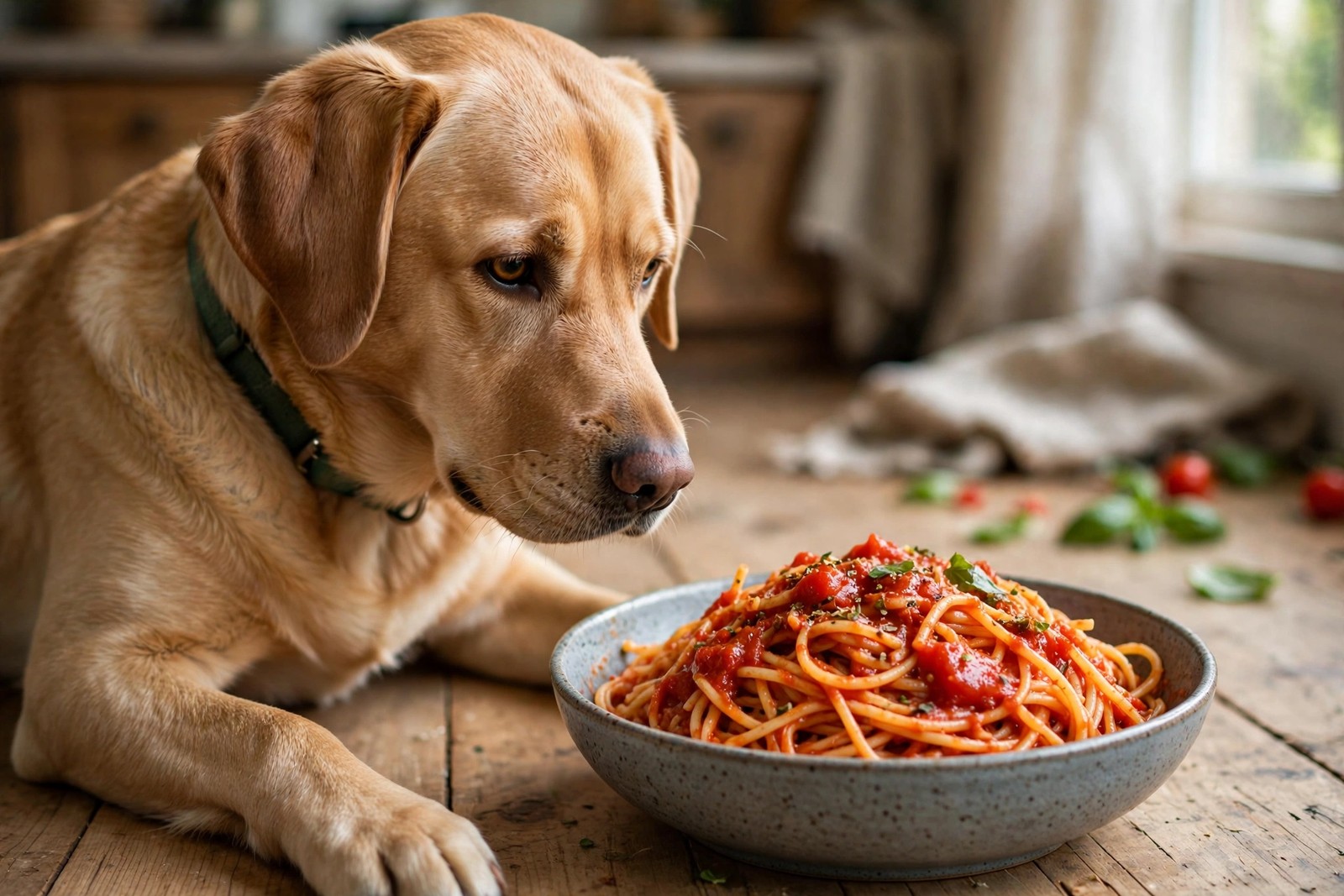
A jar labelled plain pasta sauce sounds innocent, and for the people in the house it is. For a dog, the ingredient list usually tells a less comfortable story: onion and garlic in one form or another, more salt than a dog needs, oils, and flavourings chosen for human palates — which is why the jar belongs with the human food, whatever the front of the label promises.
What Is Actually Inside the Jar
Work down a typical label and the dog-relevant entries appear quickly. Onion may be listed fresh, dried, or as onion powder, and garlic likewise, and the powdered forms pack the same toxic compounds into a far smaller spoonful. Salt levels that taste merely savoury to us are high for a dog eating sauce regularly, and the olive oil or other fats that give a sauce its body add rich calories that can trigger stomach upset in a dog unused to them. Some sauces add sugar, chilli or cheese; a few reduced-sugar products use sweeteners that have no place in a dog's bowl at all. None of these ingredients is there by accident, and together they are the recipe — a plain sauce is simply one without visible chunks, not one without the seasoning base.
Why Plain Tomato Is a Different Question
Owners are sometimes confused because cooked tomato itself, in a small amount, is a very different proposition from sauce. A spoonful of plain cooked tomato carries none of the onion, garlic and salt load that defines a jar of sauce, and it is those additions, not the tomato, that drive this answer. That distinction is worth keeping precise at home: 'tomato-based' on a label tells you the base ingredient, while the rest of the list decides whether a dog may share it. Green or unripe tomato and the plant itself are a separate concern again, so garden access to tomato plants is not the same as a taste of cooked fruit at the table.
Reading a Label the Way a Dog Owner Should
Before any prepared food moves from your plate to the dog's bowl, scan the label with four checks in mind:
- Onion or garlic named anywhere, in fresh, dried or powdered form
- 'Flavourings' or spice blends listed without their ingredients spelled out
- Salt sitting high in the list, which means more of it in the jar
- Sweeteners, chilli or cheese among the ingredients
If either of the first two checks fails, the decision is made: the food stays a human food, and rinsing pasta under the tap does not undo the sauce it arrived in.
If Your Dog Licks a Saucy Plate
A stolen lick or two of sauce is a reason to observe, not to panic. Note what the sauce was, roughly how much disappeared, and when, then watch your dog over the following day for drooling, vomiting, loose stools or unusual tiredness, and mention the episode to your veterinarian if any of those appear or if more than a taste was eaten. Onion and garlic effects can be delayed, so a dog who seems fine an hour later still deserves a watchful evening rather than an all-clear. Knowing the jar's ingredient list — or having the jar itself to read from — is exactly the detail your vet will ask for first.
With Care Teams in KinsLe, the rule can live inside the routine itself: whoever prepares the dog's meals sees 'no pasta sauce' written into the feeding duties, follows it, and logs the finished meal's completion time for everyone else to see.