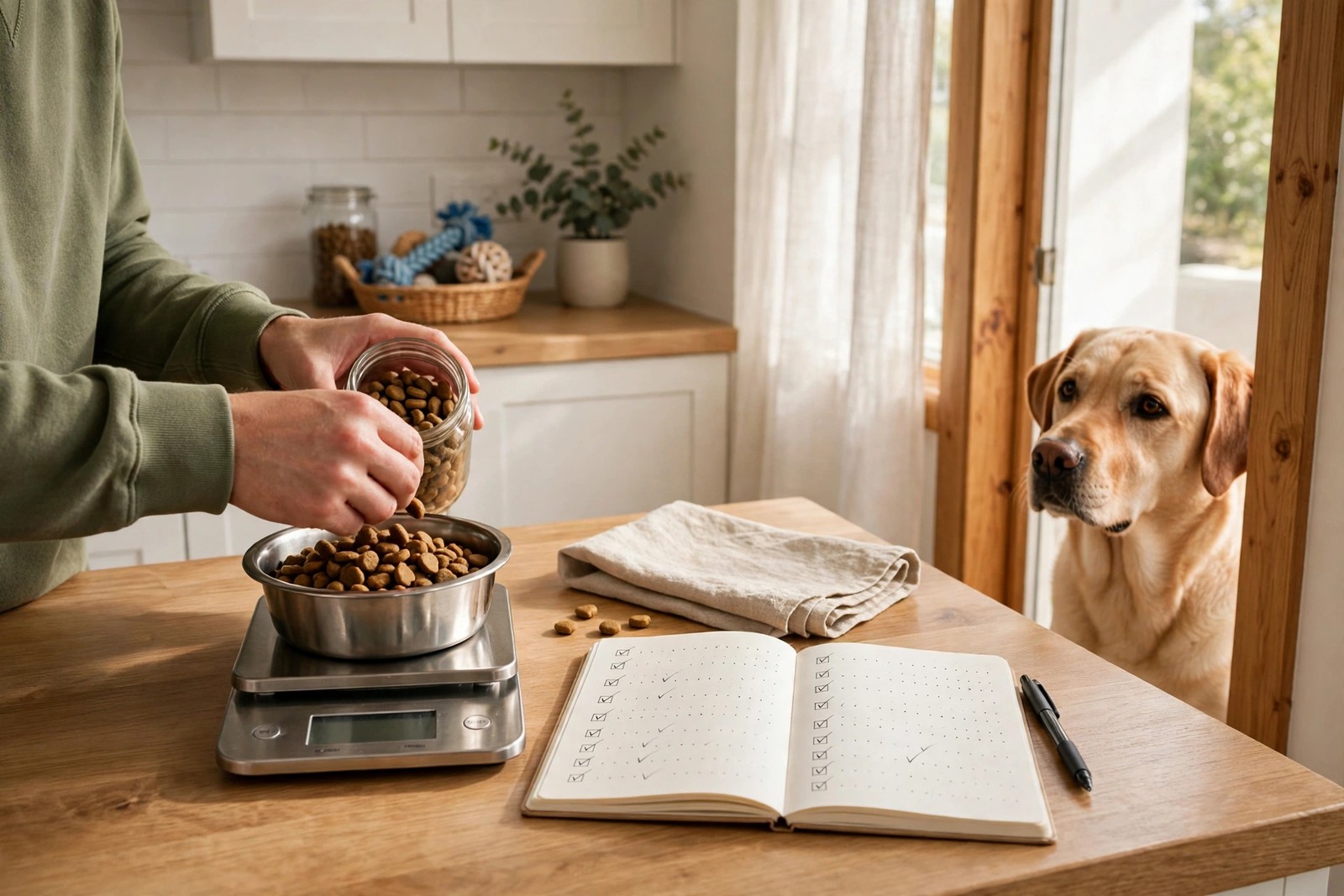
A dog hovering by the bowl minutes after eating looks like a simple problem, but the cause decides the response, and topping up the food answers all of them badly. Work through the ration first, then the household, and treat medical signs as a separate route from the start. Some dogs are also persistent optimists around food, and that possibility only earns its place after the measurable explanations have been checked and ruled out.
Audit the Ration First
Scoops drift. A cup that was level in the first month of a bag becomes heaped by the third, and a growing, active, or recently rehomed dog may be eating a ration set for a smaller or quieter animal. Weigh the food on kitchen scales for a few days and compare the daily total with the feeding guide for your dog's target weight, rather than an amount guessed from the scoop. Then check body condition with your hands. Ribs should be felt easily under a thin covering of fat, with a visible waist from above and from the side. A dog who is underweight on a weighed, appropriate ration needs a vet conversation about the ration itself. A dog in good condition on the correct amount is telling a different story, and the next audit explains it.
Audit Everything Else the Household Adds
Keep a complete log for one week, on paper on the fridge or in a shared note, and record every item that is not the weighed meals: training treats, dental chews, table scraps, food dropped by children, crusts from work surfaces, and raids on another pet's bowl. Treats given during training count, and the tidy solution is to take the day's training rewards out of the weighed ration, so the total stays the total. Double dinners are a recurring discovery in multi-person homes, because a dog who greets each returning adult like a starved animal gets fed by each of them. The log ends the argument, because it shows amounts and times rather than relying on anyone's memory of a busy evening.
When Hunger Becomes a Vet Topic
Book a vet appointment when constant hunger arrives with other changes. The signs that move this out of kitchen management are weight loss while eating eagerly, a clear increase in thirst or in urination, stool that changes in volume or consistency, vomiting, reduced energy, or a sudden appetite change in an older dog. Take the week's log and the weighed ration figures with you, because that record helps the vet judge how much food is truly going in. A vet can then investigate possible causes with an examination and tests where needed. That investigation belongs to the clinic. Guessing at a cause at home, or quietly feeding more to see whether the hunger settles, can mask a pattern the vet needed to see.
Stretching a Meal Without Adding Food
Once the ration is right and medical signs are absent, make the same food last longer. A slow-feeding bowl, food scattered in grass for the dog to search out, or part of the ration delivered in a food toy stretches a two-minute meal into a longer, more satisfying activity. Splitting the same daily total into three smaller meals suits some dogs better than two, provided the weighed total does not creep upward as the meals multiply. Be plain about the limit of these tactics. They slow eating and occupy a food-focused dog, but they do not correct an under-ration, and they do not treat a medical cause. A dog who still begs after a fair ration, a longer meal, and a clean log is not failing the system. That persistence is information, and it belongs in the vet conversation described above.
Put plainly, Care Teams in KinsLe closes the double-dinner loophole, because each meal and treat is logged once by the person who gave it.