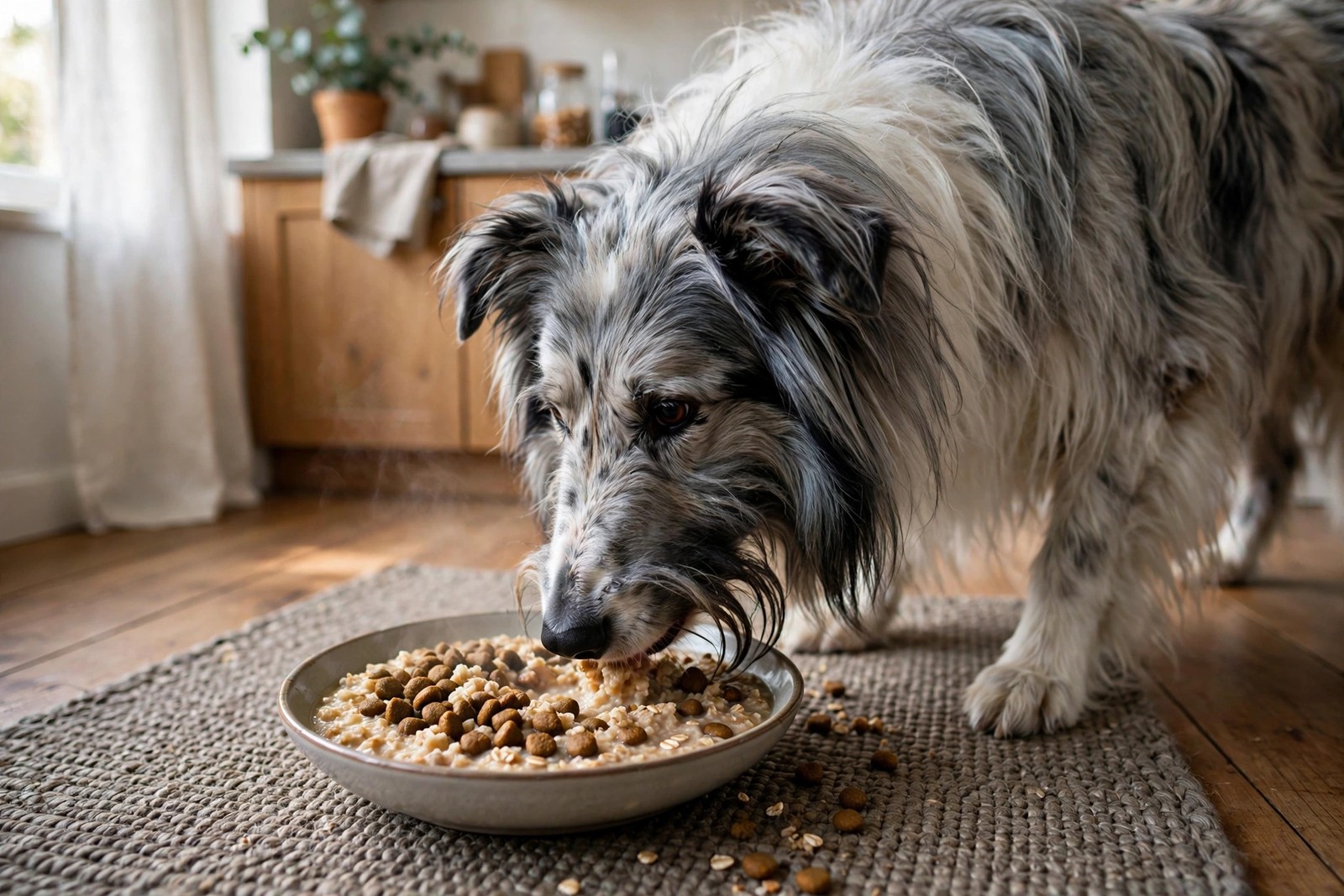
Yes — dogs can eat oatmeal when it is cooked plain in water and served in sensible amounts. Oatmeal brings gentle, soluble fibre and a soft, filling texture that many owners reach for when a dog's digestion needs something bland and steady, or when a wheat-sensitive dog (on veterinary advice) needs a different grain in the bowl. Everything depends on keeping it genuinely plain.
Cooking it the dog's way
Use plain rolled or steel-cut oats and water — nothing else in the pot. Cook until the oats are fully soft and porridge-like, because undercooked and raw oats are hard for a dog to digest and can swell in the stomach, and never serve dry oats scattered on food. Let the finished oatmeal cool to warm, not hot, before it goes down; dogs do not test temperature politely, and a scalded mouth is an avoidable injury. Leftovers keep in the fridge for a few days — reheat gently with a splash of water, check the temperature with a fingertip, and throw away anything that smells sour rather than stretching it.
The instant packet problem
Flavoured instant oatmeal is a different product from plain oats, and most of its varieties fail the dog test. Packets carry added sugar, sometimes dried fruit including raisins, and some sugar-free versions are sweetened with xylitol, which is extremely dangerous to dogs. Maple, cinnamon-spice, and fruit blends also bring flavourings chosen for people, not pets. If a packet is all that is in the cupboard, the correct answer is to skip oatmeal that day. The same applies to oatmeal cookies, granola, and oat-based breakfast bars, where sugar, chocolate chips, raisins, or macadamia nuts can turn a safe grain into a genuinely risky snack. Oat drinks made for people are not a shortcut either — they often carry oils and sweeteners, and pouring them over dry oats reintroduces the uncooked-oat problem from the other direction. The stovetop, plain water, and a few minutes of patience remain the whole method.
Portions and who benefits most
Oatmeal is filling and more calorie-dense than it looks, so serve it as a topper or partial mix-in, not a heaped second breakfast: a spoonful for a small dog, a few spoonfuls for a large one, stirred through regular food. Its fibre can firm up a mildly loose stool and keep a hungry dog feeling fed on a weight-management plan, but a dog whose stool trouble persists, contains blood, or comes with vomiting or appetite loss needs a veterinarian rather than a bigger serving of oats. Because oatmeal adds calories steadily, daily use for a dog who is not deliberately on a fibre plan can quietly undo weight goals over a few weeks.
Schedule it deliberately in KinsLe's Care Teams — oatmeal mornings assigned with 'plain, water only' written into the duty — and the timestamped record keeps a soothing occasional topper from drifting into an unplanned daily habit.