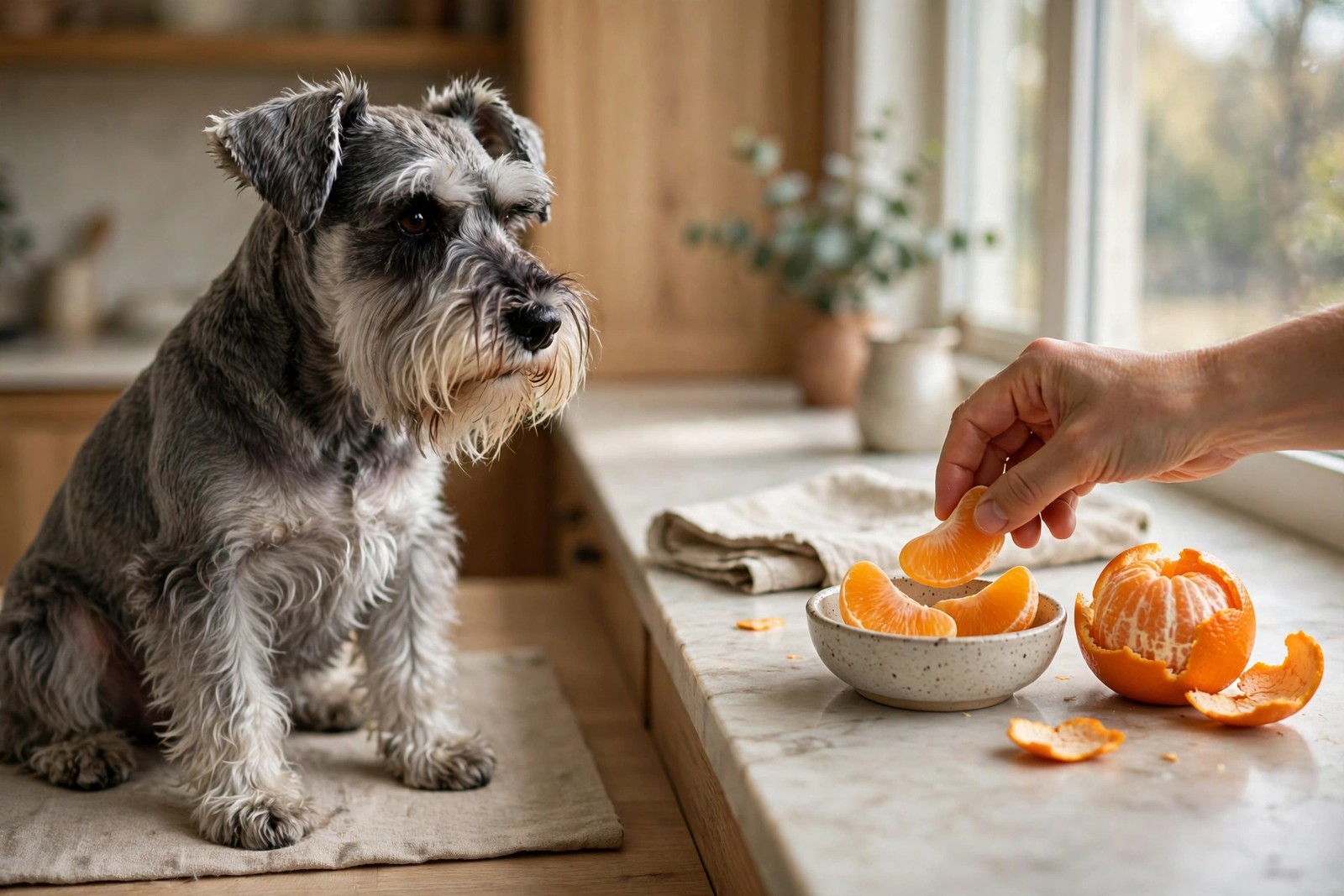
Yes — dogs can eat oranges in small amounts, and the sweet, juicy flesh is a genuine pleasure for many of them. Oranges stand apart from their citrus relatives in this library: a lemon has no dog-friendly version and a grapefruit is best avoided entirely, but an orange prepared properly is a reasonable occasional treat. The preparation is the condition. Peel the fruit completely, pull away the white pith, flick out the pips, and offer one segment for a small dog and up to two segments for a larger dog, with the segment cut into smaller pieces for a dog that tends to gulp.
Why the Peel Stays Banned
Everything removed during preparation is removed for a reason. Orange peel is tough and fibrous, so it resists digestion and can come back up as vomit or, in a small dog, obstruct the gut on its way through. Peel also carries the fruit's concentrated oils, which irritate a dog's stomach in a way the mild flesh does not, and the pith shares the peel's bitterness and fibrous texture. Wash the fruit before you peel it, even though the peel is discarded, because cutting and handling carry surface residue from the skin to the flesh and to your hands. A dog that steals a whole orange and chews through the peel has eaten a different thing from a dog handed two prepared segments, and vomiting, drooling or a lost appetite after such a theft deserves a call to your veterinarian, particularly for a small dog.
Sugar, Acid and the Dogs Who Should Have Less
An orange is a sugary fruit, and its acids are real even where its flesh is mild. Two segments deliver a full treat's worth of natural sugar, which is why the portion stops there and why oranges are occasional rather than daily. Dogs carrying extra weight should have oranges rarely, and dogs whose blood sugar is managed with a veterinarian should have them only in line with that plan. Excess shows up predictably as loose stool or vomiting, and a dog that gets a sour stomach from the stated portion is a dog for whom citrus simply does not agree, whatever the general rule says. Orange juice is not a shortcut to the same treat: it concentrates the sugar and acid, drops the fibre, and is easy for a dog to drink in quantities no owner would serve as segments, so juice stays in human glasses.
Segments, Satsumas and Serving Sense
Smaller citrus fruit follow the same rules in smaller pieces: a satsuma or clementine is a small orange for these purposes, so keep to one or two of its segments in total, always peeled with pips and pith removed. Dried orange slices, candied peel and marmalade are not versions of the treat, because drying concentrates the sugar and candying and preserving add far more. Serve prepared segments in a bowl or from your hand at the counter, and put the rest of the fruit away before you sit down, because a fruit bowl at nose height invites a dog to attempt the whole fruit, peel and all. Store oranges out of reach and bin peel in a lidded caddy, since peel in an open bin keeps its oils and its appeal. A prepared segment also travels well on a hot walk, provided it rides in a sealed box and the portion was counted before you left home. Through KinsLe Messenger, the person who served the orange segments can message the rest of the household at once, so nobody tops up the day's treat total by accident.