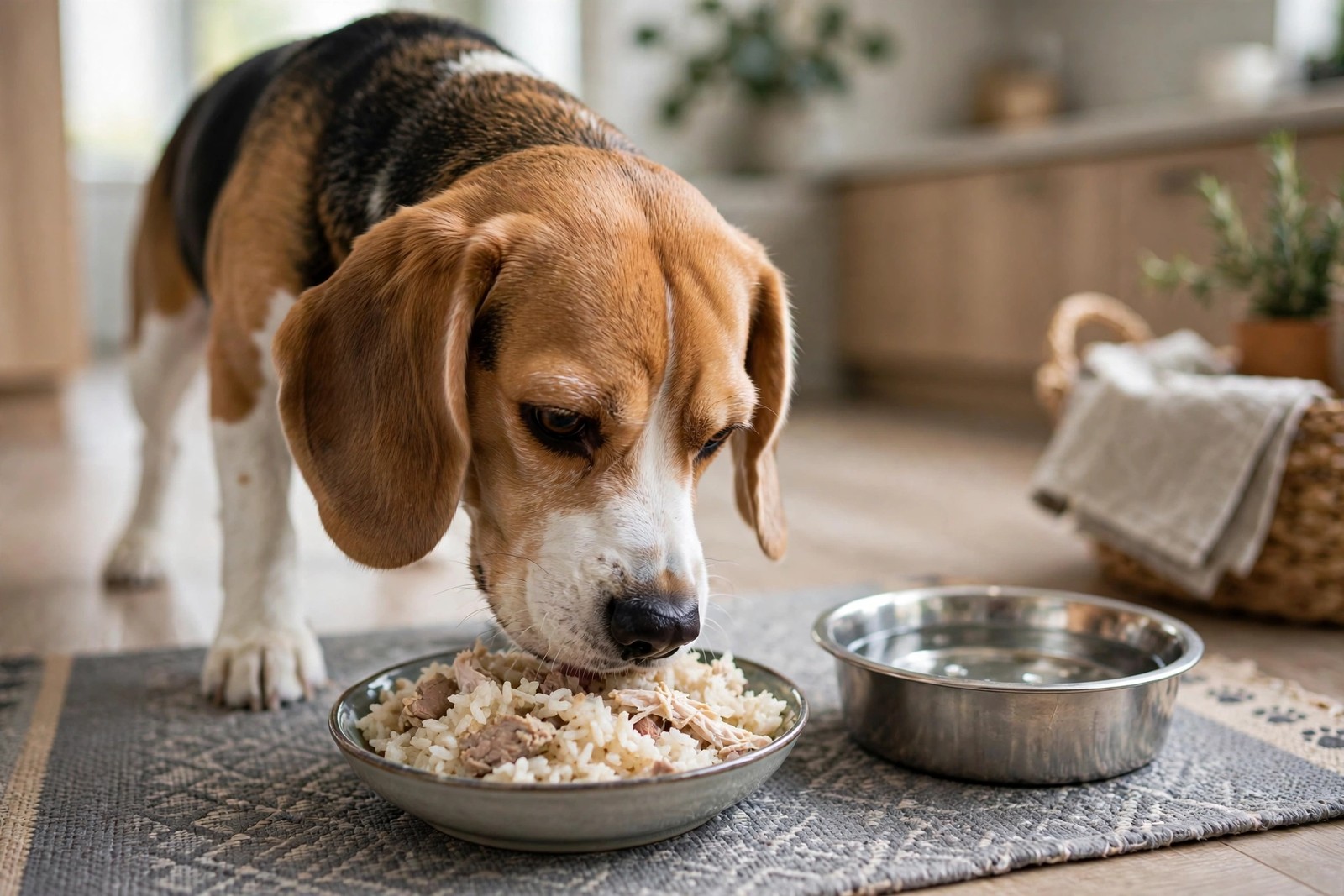
Yes, dogs can eat plain cooked rice, and it is one of the few people foods with a genuine working role in dog care. White rice is the base of the bland diet veterinarians commonly suggest for a day or two when a dog has a mild stomach upset: soft, low in fat, easy to digest, and familiar enough that most dogs eat it willingly when their appetite is fragile. Brown rice is also safe, but it is not simply the healthier swap in every situation, and the difference matters when the stomach is the point.
White Rice Versus Brown Rice
White rice has had its husk and bran removed, which leaves it lower in fibre and quicker to digest. That is exactly what a recovering stomach needs, so white rice is the bland-diet choice. Brown rice keeps its bran layer, bringing more fibre, more nutrients and a longer digestive job. For a healthy dog having rice as an occasional extra, brown rice is perfectly fine, but feed a little less of it and expect firmer stool. Whichever you choose, cook it thoroughly until soft; undercooked rice is hard, swells as it absorbs water, and can cause discomfort.
Instant and flavoured rice products are a different matter. Rice cooked in stock, pilaf mixes, and ready-made savoury rice often contain onion, garlic, salt and oils, and onion and garlic are unsafe for dogs. Cook plain rice in plain water for any portion destined for the bowl.
Rice in a Bland Diet, Step by Step
For a mild upset, many veterinarians suggest small, frequent meals of boiled white rice with a little plain cooked lean meat, offered for a day or two, with fresh water always available. Serve rice warm, not hot, and in modest amounts: a few spoonfuls at a time for a small dog, a cup or so across the day for a large dog, adjusted to appetite. As stool firms and appetite returns, mix increasing amounts of the normal food back in over two or three days rather than switching back in one meal.
Rice is not a treatment. Vomiting that continues, diarrhoea lasting beyond a couple of days, blood in stool, a puppy or elderly dog becoming flat and weak, or any dog refusing water needs a veterinary visit, not another day of rice. Puppies dehydrate quickly and should be seen sooner rather than later.
Everyday Rice and Weight
Outside upset days, rice is an occasional extra, not a dietary foundation. A spoonful or two over normal food is plenty, and dogs who need to lose weight should have rice kept rare, since it is calorie-dense and easy to over-serve from the family pot. Never offer dry uncooked rice, which absorbs water and expands, and store cooked rice in the fridge and use it within a day or two, reheating it thoroughly and letting it cool before serving.
Bland diets fail when one person feeds rice while another quietly serves the usual rich dinner. KinsLe Care Teams lets you set a two-day rice plan with assigned meals and a return-to-normal-food step, so every feeder follows the same gentle schedule.