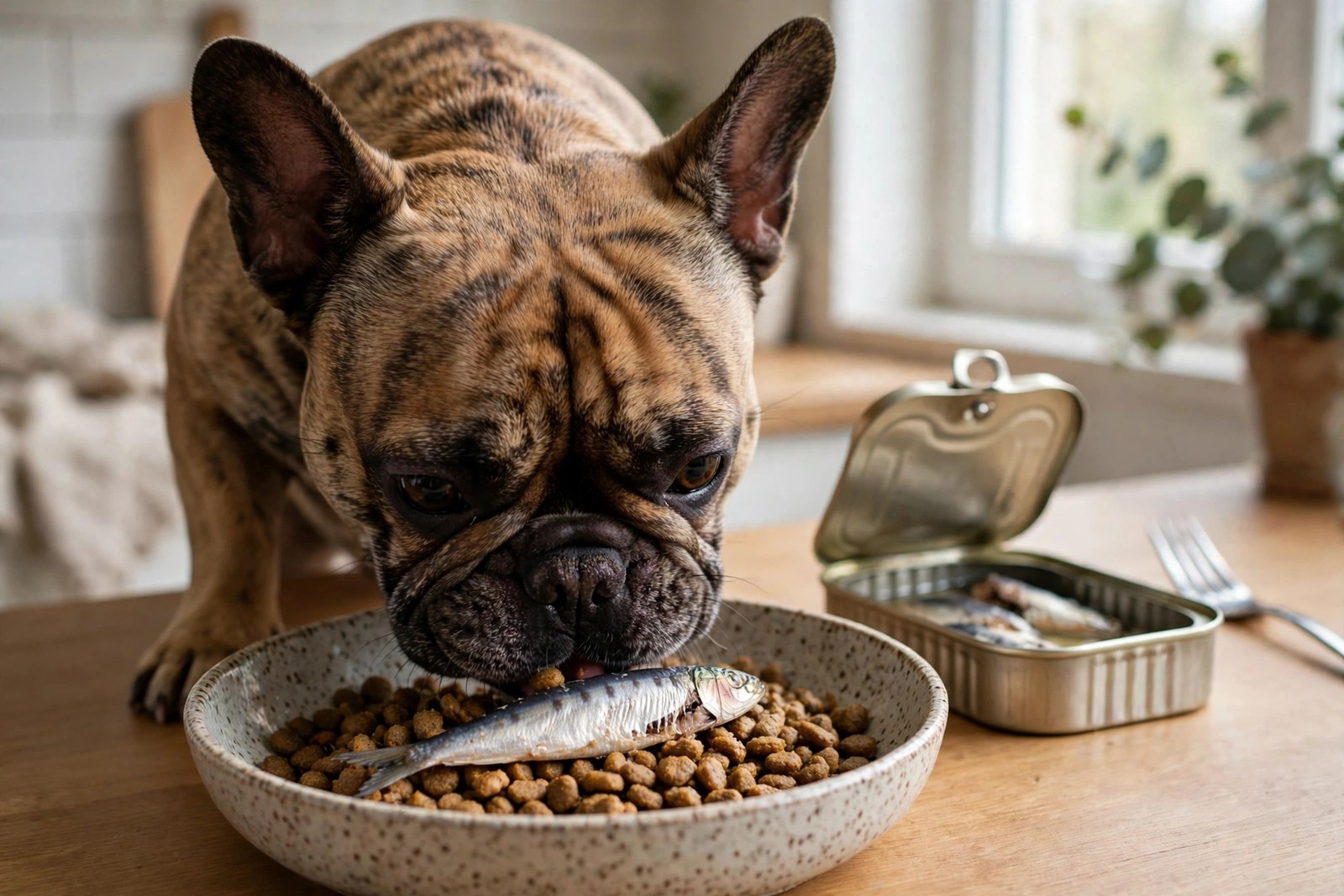
Yes, sardines are one of the best occasional treats a dog can have, and they earn that reputation on several counts at once. They are rich in the omega-3 oils that support skin, coat and joints, their tiny bones soften completely during canning and provide calcium rather than danger, and because sardines are small, short-lived fish, they carry far less mercury concern than large, long-lived species. None of that makes them a free-for-all food, because sardines are also calorie-dense and salty if you choose the wrong tin.
Choosing the Right Tin
Buy sardines packed in water, ideally with no added salt, and drain them before serving. Sardines in plain olive oil are an acceptable second choice if you drain them thoroughly, but the oil adds calories a smaller dog does not need. Avoid sardines in tomato sauce, mustard sauce, chilli or garlic oils and other flavoured dressings; those sauces bring salt, sugar, spices and sometimes onion or garlic, none of which belong in the bowl. Check the tin for a straightforward ingredients list, and once opened, refrigerate leftovers and use them within a couple of days, because oily fish turns quickly and a determined dog will investigate a bin containing the tin.
How Many and How Often
One sardine suits a small dog, one to two a medium dog, and two, occasionally three, a large dog, offered once or twice a week at most. Mash the fish lightly over the normal meal rather than serving it as a standalone course, which spreads the rich flavour and stops a keen dog inhaling a whole fish in one motion. The soft bones need no removal; that is the practical difference between sardines and larger fish. If your dog has never had oily fish, start with half a sardine and watch the stool the next day, since richness alone can loosen it. Dogs on a veterinarian-set low-fat or low-sodium plan should have sardines approved before they join the menu.
Skin, Coat and the Smell Factor
Owners usually try sardines for a dull coat or dry, flaky skin, and any benefit builds over weeks of the once-or-twice-weekly routine, not from a single tin. Keep the rest of the diet unchanged while you trial them, and judge the result after a month. Expect enthusiastic eating and a noticeably fishy bowl, breath and, in some dogs, wind. Feeding sardines at the morning meal rather than last thing at night is a kindness to everyone sharing the room. Store unopened tins away from dog reach; the thin metal of a chewed tin is itself a mouth injury waiting to happen.
Rich treats drift easily from weekly to daily when a dog performs delight this convincingly. KinsLe Care Teams lets you schedule sardine days as recurring assigned duties, twice a week and no more, so the tin opens on plan rather than on request.