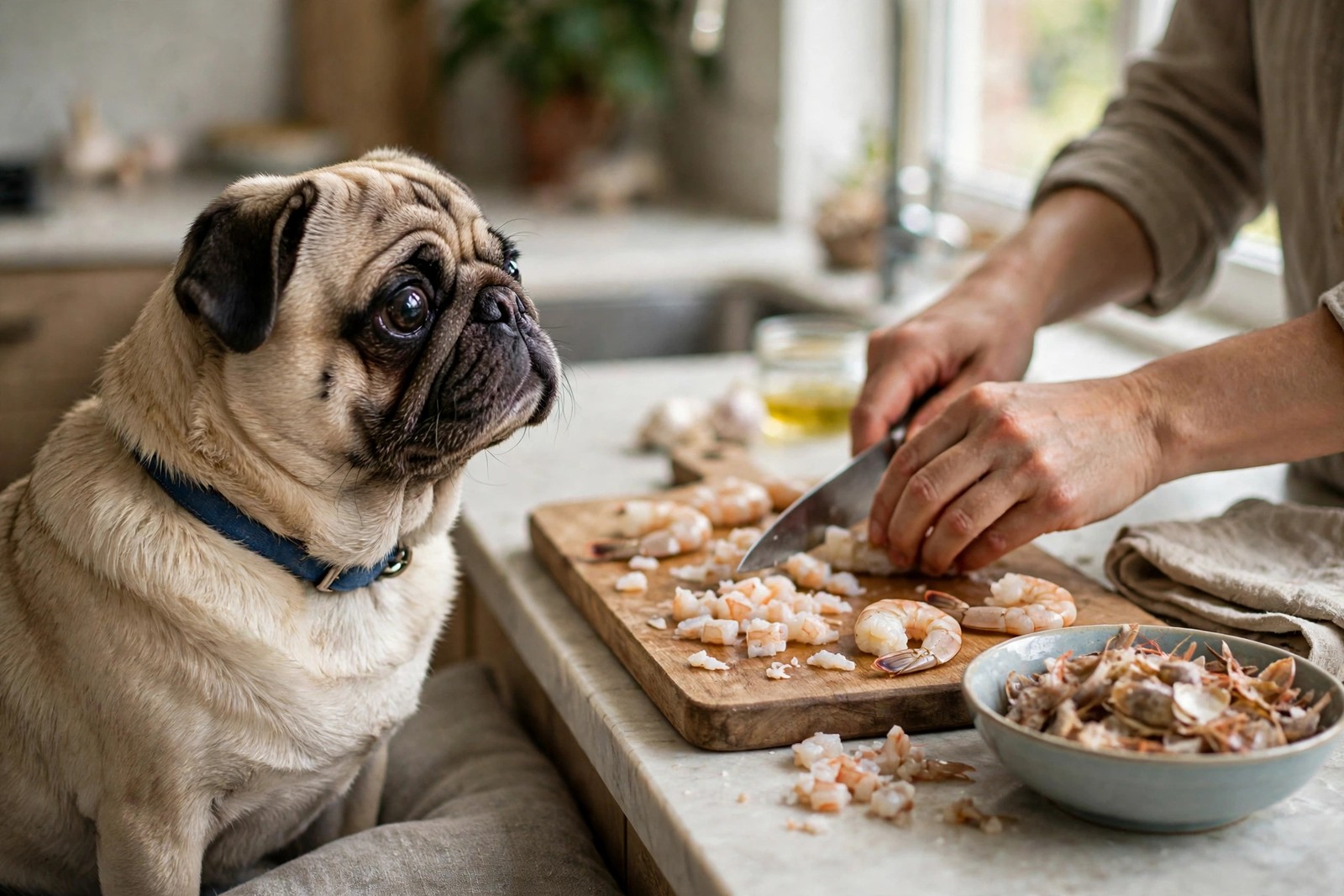
Yes, dogs can eat shrimp in small amounts when it is peeled, plain and cooked all the way through. The flesh itself is lean protein with useful minerals, and most dogs find it intensely interesting, which makes a small piece a high-value reward. Everything attached to that flesh is the problem. Heads, tails and shells must come off, raw shrimp must never be served, and shrimp cooked for people usually arrives wearing butter, garlic, batter or spice that a dog should not have.
Preparing Shrimp for a Dog
Start with plain shrimp, fresh or frozen, and cook it without oil, butter, salt or seasoning until the flesh turns opaque and firm and curls into a loose C shape. Boiling or steaming in plain water is the simplest method. Peel away the shell and tail completely, remove the head if present, and check the back for the dark digestive vein, which is gritty and best taken out. Chop the flesh into pea-size pieces for a small dog or puppy, and halve shrimp for larger dogs who tend to gulp. Serve warm or cooled, never straight off a hot grill.
Keep raw shrimp and raw shellfish entirely away from dogs, as they can carry bacteria that cause nasty gastrointestinal illness, and be careful with thawing liquid and discarded shells in the bin, which smell like food to a dog and deliver all the sharp edges without any of the benefit.
Portions and Occasions
Two or three medium shrimp, chopped, is a generous treat portion for a medium or large dog, and one shrimp is plenty for a small dog. Shrimp is a sometimes food, offered every week or two, not a daily topper. At barbecues, the risk is rarely your careful portion; it is the shrimp skewer seasoned with garlic butter, the battered shrimp passed under the table, and the dropped shell stepped into a dog's mouth. Set aside your dog's plain shrimp before the marinades come out, and let guests know the dog's seafood is already handled.
Allergy and Upset Signs
Shellfish sensitivity is uncommon but real, so the first serving should be a single small piece, with the next hours watched for itching, facial swelling, hives, vomiting or breathing difficulty, which need prompt veterinary attention. More commonly, rich seafood sauces cause the problem rather than the shrimp itself, showing up as loose stool and gas. If plain shrimp repeatedly disagrees with your dog, simply leave it off the menu; it is a treat, not a nutritional requirement, and no dog needs it.
Seafood prep has more steps than most treats, and steps get skipped when several people are cooking. KinsLe Care Teams lets you attach 'shell, tail and head off, plain cooked, chopped, two only' to your dog's feeding notes, so the shrimp that reaches the bowl is the safe version every time.