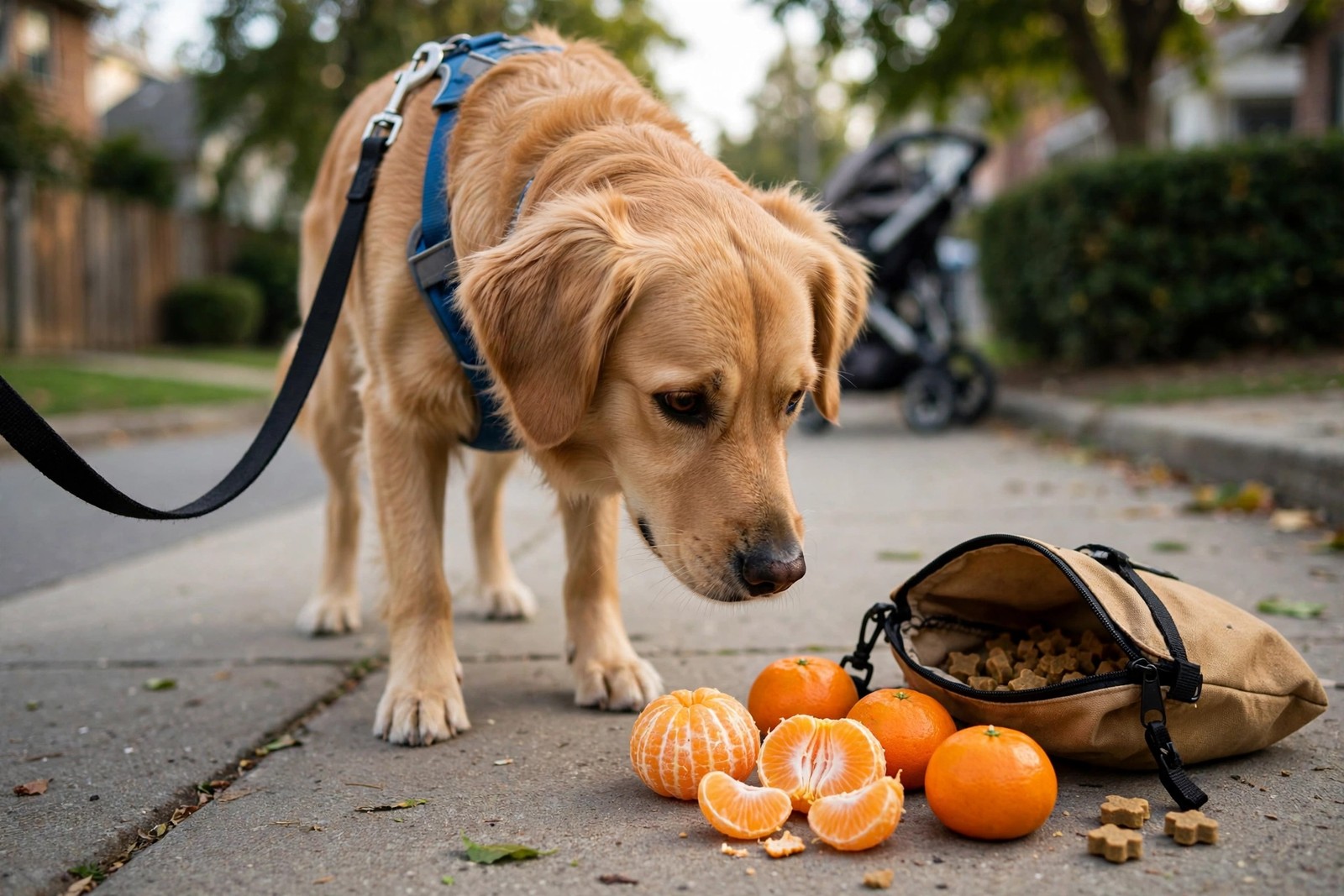
Yes, a dog can eat tangerine, and the serving is small enough to count on one hand. Peel the fruit completely, pick out every pip, pull away the stringy white pith, and offer one or two segments at most on an occasion. A small dog stops at one segment. The flesh itself is the only part that belongs in a dog, and the rest of this article explains how to keep the serving at treat size.
Why the Peel, Pith and Pips Stay Out
Tangerine peel is tough, bitter and hard for a dog to digest, and a swallowed chunk of peel can upset the stomach or obstruct a small dog. The white pith under the peel shares the same problem in milder form, since a dog gains nothing from chewing through it and may bring it back up. Pips are small, hard and easy to miss inside a juicy segment, so run a thumb along each segment and remove any pip before the segment leaves your hand. Wash the fruit before peeling, since residues from handling and storage sit on the skin that your fingers then drag across the flesh. A dropped segment in a toddler's fist is a different matter from a planned serving, and the household rule works better when adults move fruit out of grazing reach instead of policing every dropped piece after the event.
Sugar, Acid and Serving Size
Tangerine flesh carries natural sugar and fruit acid, and those two qualities set the ceiling on the serving. One or two segments deliver the flavour a dog enjoys without turning fruit into a meaningful share of the day's calories. Offer segments one at a time rather than dropping a pile into the bowl, and let the dog chew each piece instead of gulping several at once. Serve fruit apart from the main meal at first, on a day when you can notice the result, and watch for loose stool, gas or a gurgling stomach over the hours that follow. Any of those signs means the next serving shrinks to a single segment or fruit pauses altogether. A dog whose veterinarian manages weight or blood sugar needs that veterinarian's view before sweet extras become a habit, since fruit sugar still counts even when the portion looks tiny. Tangerines are an occasional taste, perhaps on a day when the family eats them too, never a daily fixture and never a substitute for the complete food that carries the dog's nutrition.
Making a Small Treat Stay Small
Cut a segment into two or three pieces for training rewards, and the flavour stretches across several repetitions without adding more fruit. Freeze a peeled segment piece on a hot day only if your dog already tolerates the fruit fresh, and serve the frozen piece under supervision like any hard treat. Keep whole tangerines in a fruit bowl a tall dog cannot reach or inside the fridge, because a stolen whole fruit arrives with peel, pith and pips included. Tell children that sharing means handing over a prepared segment from an adult, never peeling a fruit for the dog themselves, and praise the handover so the safe route also feels like the generous route. A short written limit on the fridge or in the feeding notes ends the guesswork for visitors and sitters. In KinsLe, Care Teams lets you attach that limit to the feeding duty itself, recording who gave the fruit and when, and a helper can check the record before offering a second helping.