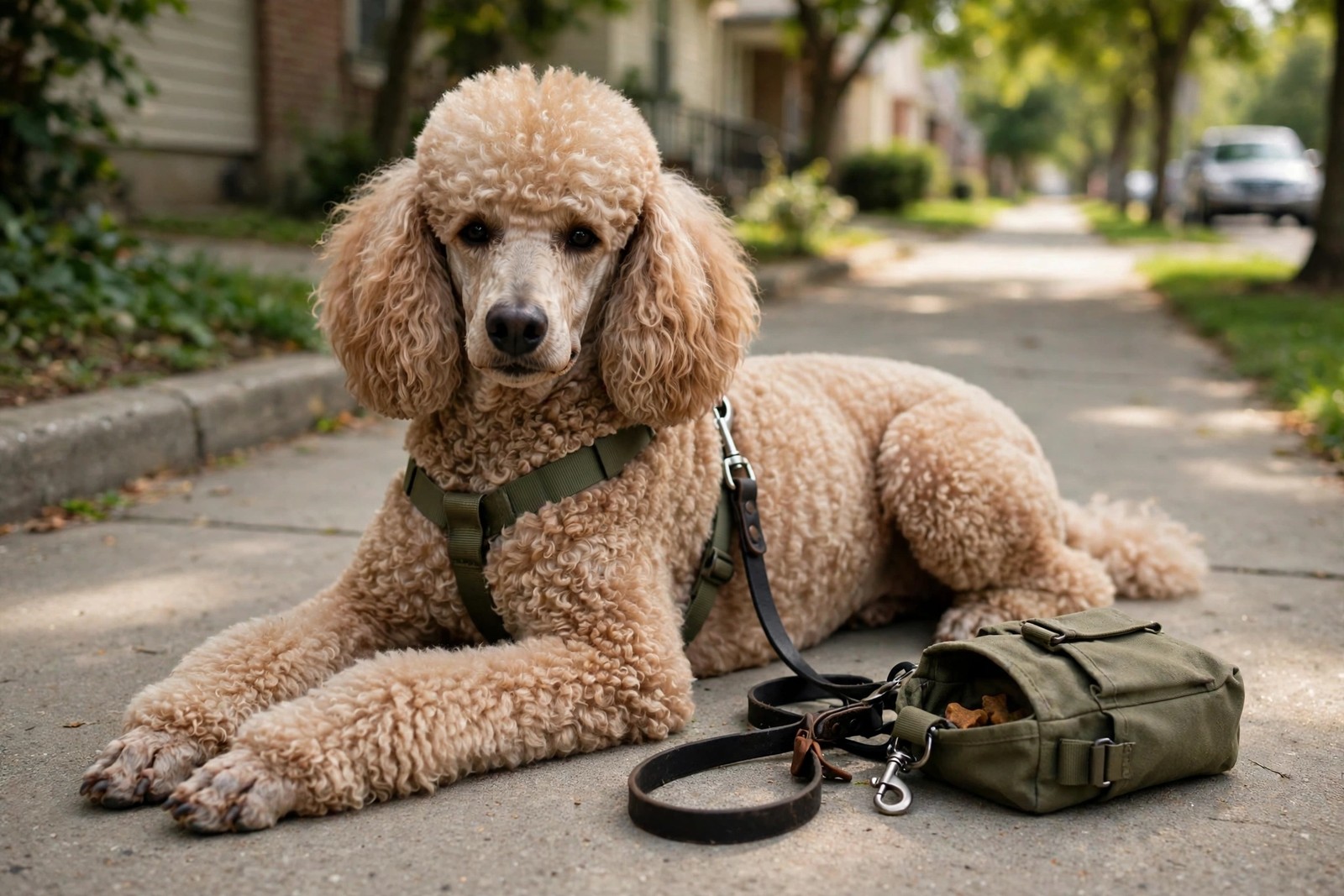
Ask which Poodle before asking how much, since the breed comes in varieties that barely overlap. An adult Standard Poodle typically weighs 20 to 32 kg (44 to 71 lb), with females usually at 20 to 27 kg (44 to 60 lb) and males at 27 to 32 kg (60 to 71 lb). A Miniature Poodle typically weighs about 4.5 to 7 kg (10 to 15 lb), and a Toy Poodle typically weighs about 2 to 3 kg (4 to 7 lb). Quoting a Standard range for a Toy would be absurd, and quoting a Toy range for a Standard would alarm a healthy dog's owner. Name your variety first, and every later judgment gets easier.
Three Dogs Wearing One Breed Name
Standards are tall, athletic dogs built for retrieving work, and a fit Standard shows long legs, a deep chest and a tucked abdomen under the styling. Miniatures keep the same proportions at a scale suited to smaller homes, and Toys shrink the blueprint again while staying sturdy rather than fragile. Crosses and out-of-standard dogs fall outside these tidy bands, and their owners should judge by height, frame and feel with vet guidance rather than by any printed range.
Height sorts confusion faster than weight does. Measure your dog at the shoulder, compare that figure with the variety bands your vet uses, and then ask whether the weight suits the frame you actually own. A tall Miniature can weigh more than a small Toy, and labels on rescue paperwork sometimes disagree with the dog in front of you.
Condition Under the Curls
Poodle coats defeat visual assessment completely. A dog in full coat can look plump while standing lean, and a freshly clipped dog can alarm an owner by revealing a correct, narrow body that was there all along. Part the curls with your fingers down to the skin and feel the ribs directly, expecting a thin fat cover over bone you can find with light pressure. Check the waist from above with hands as well as eyes, and run a palm over the hip bones and shoulder blades to learn your dog's normal landmarks.
Grooming appointments make natural condition checkpoints. Ask the groomer how the dog felt under the coat, weigh on the same day as a clip when the coat weight is gone, and record both notes together. Bath water reveals the true outline for a minute, and a quick photograph then gives you a monthly comparison that memory cannot edit.
Feeding by Variety, Checking by Vet
Portion errors scale with variety. A treat that barely registers for a Standard can equal a meal fraction for a Toy, and a Miniature sits between those worlds. Weigh food for smaller varieties in grams, keep treats tiny and counted, and build exercise around the dog you have, since Standards need real daily work while Toys reach their limit sooner.
Coat length changes a Poodle's apparent weight far more than its real weight, since even a full show coat adds little on the scale compared with the volume it suggests. Weigh before a clip and after it once, learn your dog's coat difference, and then stop letting styling appointments confuse the record.
Ask your vet to set a written target for your dog at the adult check, and revisit it after neutering, after activity changes and in senior years. Sudden weight change in any variety deserves a prompt visit, and a vet can investigate appetite, digestion, hormonal causes and other possibilities. In KinsLe Care Teams, the weigh-in, the grooming-day condition check and the portion review can each belong to a named person, and the timestamps keep a Poodle record tidy across coat changes.