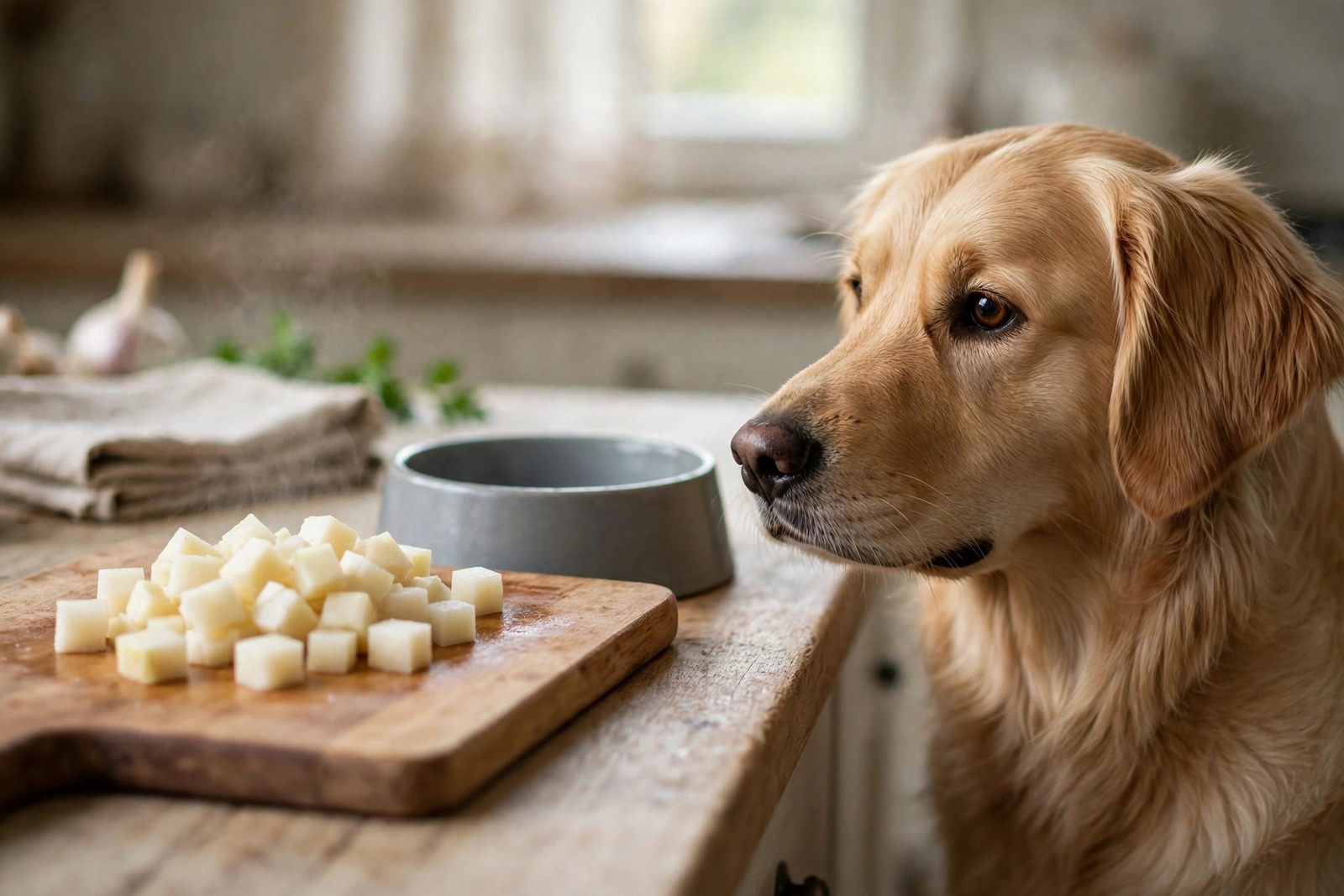
Yes, dogs can eat turnips, served plain and cooked, in small amounts as an occasional extra. Turnip is a mild root vegetable once cooked, soft enough to mash into a meal or offer as small pieces, and most dogs who like vegetables accept it readily. It is an extra, not a staple: complete dog food remains the diet, and turnip simply joins the short list of vegetables that can add variety to the bowl a few times a month.
Cook it: raw turnip is the wrong form
Raw turnip is hard and bitter. A dog offered a raw chunk will often either turn away from the sharp taste or bite off a piece too large and swallow it with minimal chewing, which is hard work for the gut and a poor way to serve any dense vegetable. Cooking solves both problems. Peel the turnip, cut it into even pieces, and boil or steam it plain until fully soft, then cool it before serving. Serve it with nothing added: no butter, no salt, no pepper, no gravy, and no roasting oils or glazes from the family pan.
Portions and first introductions
Start with a few small pieces or a spoonful of mashed turnip for a medium dog, mixed into the regular meal so it reads as part of dinner rather than a separate event. Watch stool, appetite, and comfort over the following day. A large first serving of any new vegetable can produce gas or a soft stool, which usually means the amount outran the introduction, not that turnip disagrees with the dog in general. If the small amount goes down well, the same modest portion can return occasionally. Puppies, tiny dogs, and dogs on a managed diet need proportionally smaller tastes and, for managed diets, their veterinarian's agreement first.
Turnips in stews and leftovers
Dogs usually meet turnip in cooked household food rather than as a planned extra, and that is where care is needed. Turnip cooked in a stew with onions, garlic, rich stock, or heavy seasoning is not the same offer as plain turnip, because the additions, not the turnip, create the problem. If you want to share, set a few pieces aside before the pot is seasoned and cook those plainly for the dog. Mashed turnip mixed with other plain cooked vegetables makes a good food-puzzle filler for a dog who enjoys working for extras.
Turnip greens and other parts of the plant
Owners sometimes ask about the leafy tops as well as the root. The root, peeled and cooked plain, is the part this guidance covers; rich garden greens can be bitter and are more likely to upset a stomach in quantity, so they are not the recommended offer. Turnip grown at home follows the same kitchen rules as store-bought: wash it, peel it, cook it plain, and serve a small amount. Avoid turnip that has been stored until soft or moldy, and skip pickled, spiced, or fermented versions entirely, since the added salt and seasonings change the food completely.
Keeping extras consistent at home
An approved-extras list ends most feeding arguments. Write down which vegetables the household offers, that they are cooked plain, and how much counts as a serving, and keep that list with the feeding instructions where every caregiver sees it. New vegetables get added to the list only after a small, successful introduction. Through KinsLe, Care Teams holds that approved-extras list inside the shared feeding plan, so plain cooked turnip stays a small occasional extra whoever prepares the dog's dinner.