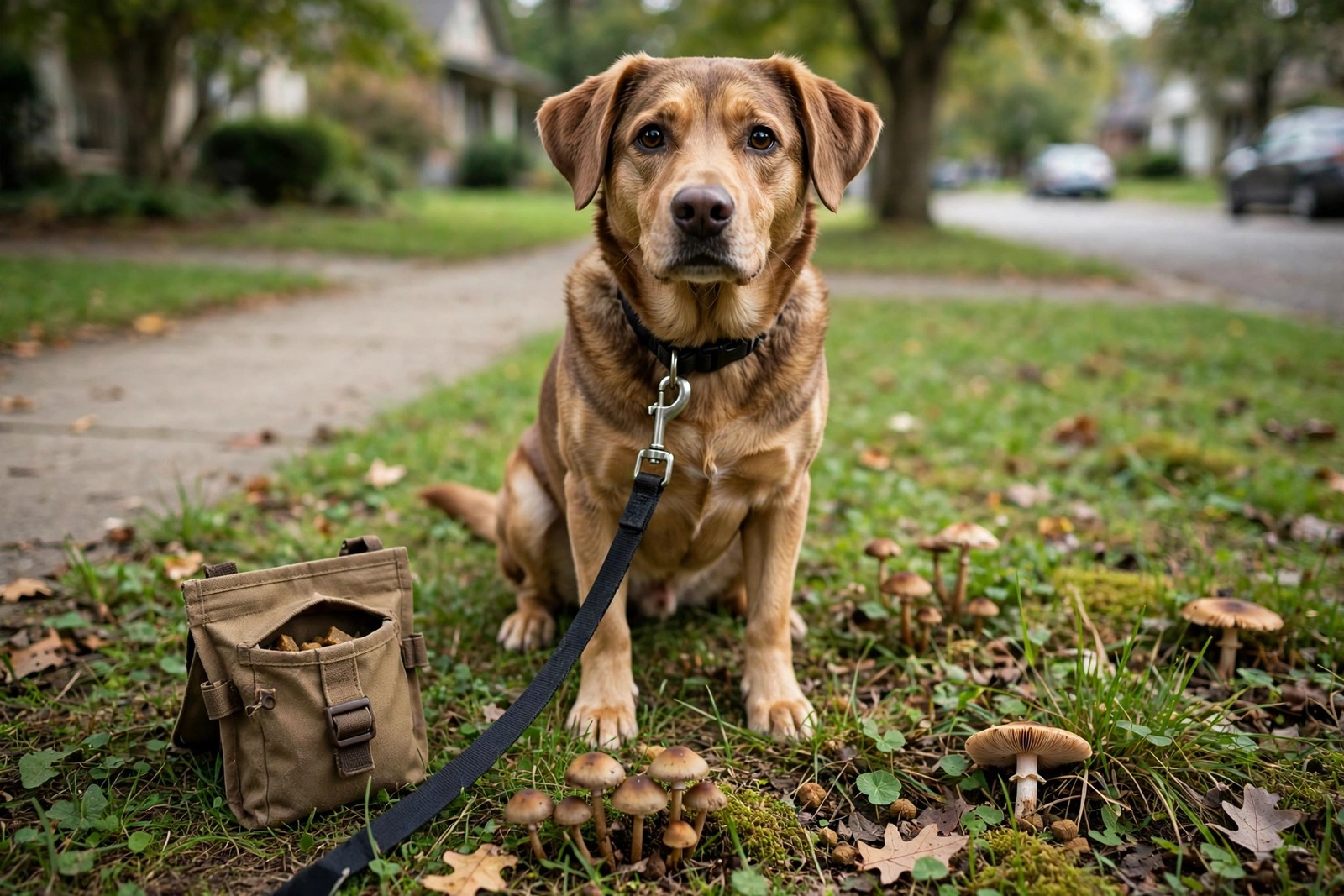
No. A dog must never eat wild mushrooms, and the rule has no exceptions, no safe species list for owners and no tasting test. Some wild species are lethally toxic to dogs, and even experienced people misidentify fungi, so nobody can sort a harmless mushroom from a deadly one on a lawn or during a walk. Culinary mushrooms bought from a shop for human cooking are a separate topic, and that distinction never extends to anything growing wild in a garden, a park or a wood.
Why Identification at Home Cannot Make Wild Mushrooms Safe
Toxic and harmless mushrooms can grow side by side, share a colour and change appearance as they age, dry or take damage from slugs and weather. A photograph on a phone, a field guide and local folklore each fail often enough that veterinarians treat identification by owners as unreliable. A dog also eats fast, usually before an owner can see the shape, the gills or the stem that any identification would need. Puppies explore with the mouth, and older dogs who graze can swallow a cap in one bite along a fence line. Size gives no protection either, since a small dog needs only a small amount of a toxic species to face serious harm, and a large dog can eat several mushrooms in the time a walk pauses. The only workable rule treats every wild mushroom as poisonous until a veterinarian says otherwise about a specific incident, and that judgement belongs to the clinic, never to the garden.
If Your Dog Eats a Wild Mushroom
Treat the incident as an emergency from the first minute. Contact a veterinarian straight away, even when the dog looks completely well, and follow the clinic's instructions on coming in. Do not wait for symptoms, since signs can arrive late, and do not try to make the dog vomit unless a veterinarian tells you to do so. Note where the mushroom grew, the time of the meal and the amount you believe the dog ate. If you can gather a sample safely, place a matching mushroom from the same patch in a bag or a container without handling the flesh more than needed, and take clear photographs of the patch, the cap, the underside and the stem. Bring the sample and the photographs to the clinic, where staff can pass the material to specialists who identify fungi. Possible signs after a toxic meal can include vomiting, drooling, diarrhoea, weakness, wobbling, tremors or collapse, and any of those signs after mushroom access means urgent veterinary care, not home monitoring. Keep other dogs away from the patch until you know more.
Prevention on Walks and in the Garden
Scan a garden after wet weather, since mushrooms can appear overnight in lawns, mulch, compost corners and the soil around tree stumps. Pick each mushroom at the base, bag the pieces and place the bag in an outside bin with a lid, then wash your hands. Check the same spots again over the following days, because a patch often fruits more than once. On walks, keep a grazing dog on a shorter lead through woodland edges, leaf litter and damp grass, and practise a leave cue with a high-value reward so a discovered mushroom loses the contest. Teach children and visiting walkers that no wild mushroom ever goes to the dog as a game or a treat, not even a piece held up for a sniff and a bite. Note known mushroom spots on regular routes and cross the path or change route during the weeks when a patch fruits. In KinsLe, Care Teams can hold a garden-check duty after wet weather, assigned to a named person, and the completed check is recorded so the next walker knows the lawn was cleared that day.