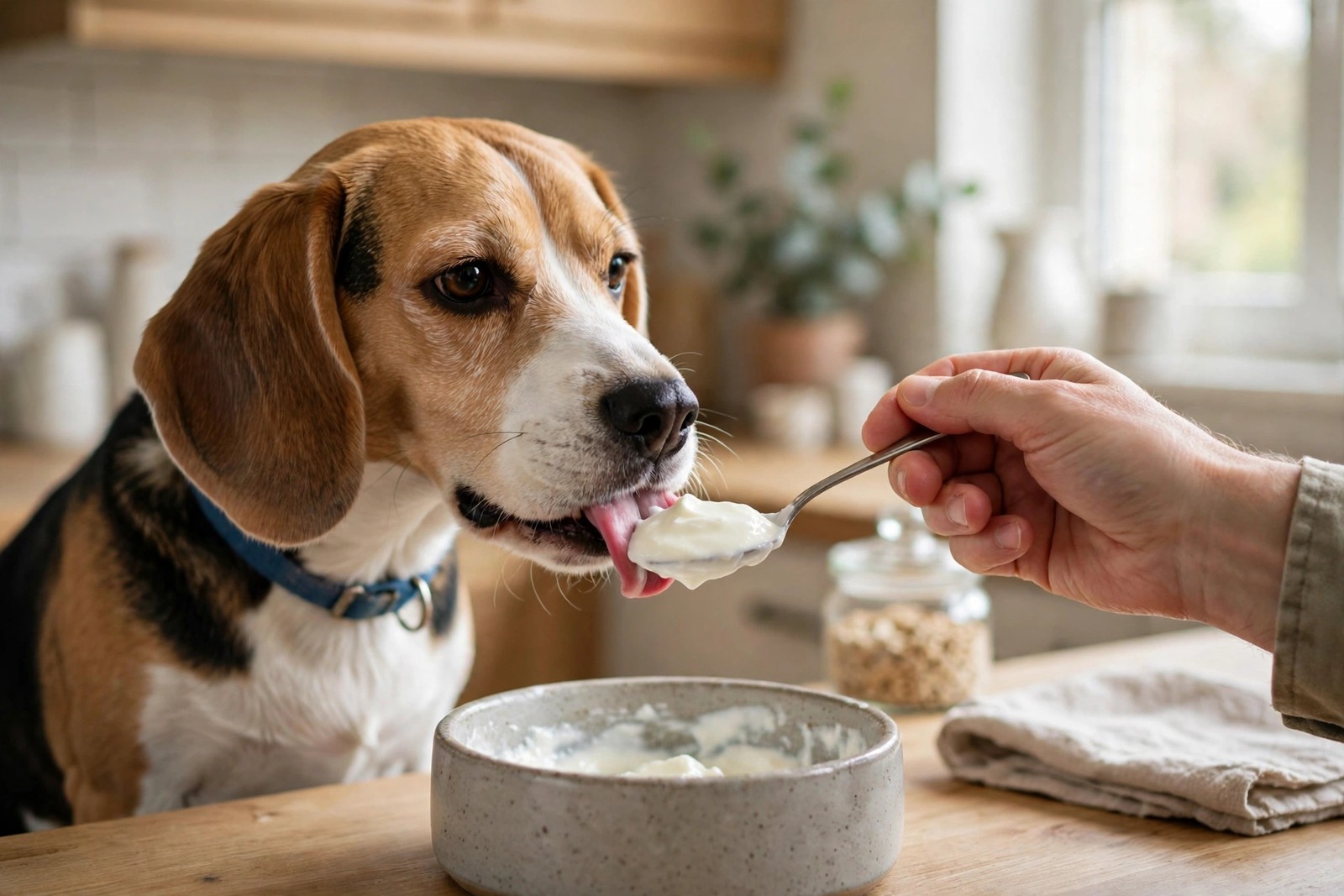
Yes, in spoonfuls. Plain yogurt is one of the gentler dairy foods for dogs because the cultures that make it have already broken down much of its lactose. A spoonful over kibble or frozen into a small treat is fine for many dogs. The safe pot is a specific one, though: plain, unsweetened, and free of xylitol. Reading the label is not a formality with this food; it is the main safety step.
The label check that matters most
Some yogurts, especially low-sugar and high-protein varieties aimed at people watching calories, are sweetened with xylitol, also listed as birch sugar or E967. Xylitol is seriously toxic to dogs even in small amounts, and a sweetened pot licked clean from the counter is a genuine emergency. If a yogurt contains it, it never enters your dog's bowl, and pots like it should be stored where a counter-surfing dog cannot reach them. If your dog does eat yogurt sweetened with xylitol, call a vet immediately rather than waiting for signs.
Beyond that check, plain is the rule. Flavoured yogurts carry added sugar, and fruit varieties can include grapes or raisins in some desserts and layered pots, which are also unsafe for dogs. Full-fat plain yogurt is richer and better in tiny amounts; low-fat plain yogurt is lighter for dogs watching their weight. Either is fine in spoonfuls.
How much, and who should skip it
Offer a teaspoon for a small dog, a tablespoon for a medium dog, and up to two tablespoons for a large dog, a few times a week. Yogurt is a topper, not a serving of dinner. Frozen in a small mould or smeared thinly and frozen on a lick surface, the same spoonful lasts far longer.
Some dogs simply do not handle dairy. Adult dogs produce less lactase than puppies, and for a dog who is sensitive, even yogurt brings rumbling, gas, soft stool, or itchy skin within a day. That reaction is your answer: stop, and do not keep testing a food your dog has already voted against. Dogs with a known milk allergy should skip yogurt entirely, and dogs on antibiotics or with ongoing digestive trouble should only get it if their vet suggests it. Live-culture yogurt is often praised for gut support, and it is a reasonable food, but it is not a treatment for diarrhoea or any other condition.
Honest expectations
Yogurt will not transform a dog's digestion, cure an upset stomach, or replace a complete diet, and probiotic claims on a pot made for people do not transfer neatly to dogs. What it does well is simpler: it makes plain kibble more interesting for a picky eater, carries a crushed tablet more willingly than a dry biscuit for some dogs, and gives an older dog something soft and tasty that asks no chewing. Those are worthwhile jobs for a spoonful.
Keep the pot refrigerated, use a clean spoon rather than one your dog has licked if the pot goes back in the fridge for people, and bin any pot left out at room temperature for hours.
A small food deserves a clean test: one person, one spoonful, one honest look at the result. KinsLe Care Teams supports exactly that by letting you assign the yogurt trial to a single feeder and timestamp the completed duty, so the verdict you get is about the yogurt, not about three unrecorded servings.