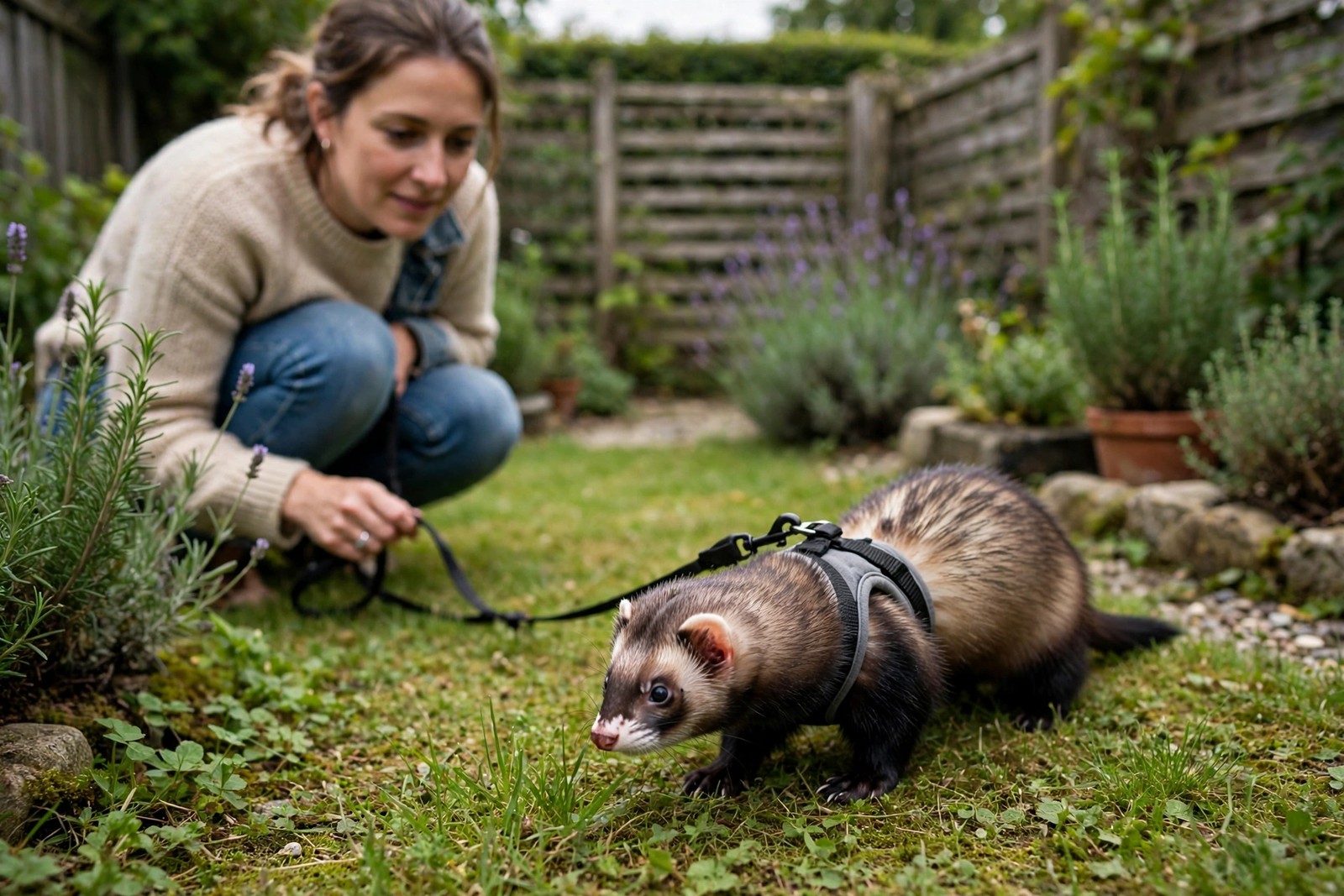
Yes. Ferrets are curious, scent-driven animals, and a short harness outing gives them new smells, grass underfoot, and digging chances that indoor play rarely matches. It works only with the right kit and ground rules, because a ferret is small, fast, heat-sensitive, and a genuine escape risk in the wrong harness. Done well, outings become the highlight of the week. Done casually, they end with a lost ferret or an overheated one.
The harness is the whole game
Never walk a ferret on a collar. Their necks and heads are close in size, a collar slips, and pressure on the throat injures easily. Choose a figure-8 or H-style harness made for ferrets, with straps sitting behind the front legs and around the chest. Fit it snugly: you should just slide one finger beneath the straps, no more. A ferret's ribs compress and their skin is loose, so a harness that looks secure on a still ferret can still be backed out of by a determined one pulling in reverse.
Test the fit indoors across several short sessions. Let your ferret wear the harness in the room, play, and be picked up in it, and watch for the classic backward wriggle. Clip on a light leash indoors and follow rather than lead; ferrets choose the route, investigate in bursts, and often flop down for a rest. Outdoors, you are a supervisor with a safety line, not a dog walker setting a pace.
Weather, ground, and timing
Heat is the hard limit. Ferrets handle cold far better than warmth and can overheat quickly, so keep outings to mild conditions, roughly the cool of morning or evening in summer, and skip them entirely on hot or humid days. Ten to twenty minutes is a full session for most ferrets. Offer water on return, and head home at once for panting, drooling, a flat-out sprawl, or wobbliness.
Choose ground as carefully as weather. Avoid lawns recently sprayed with weedkiller or fertiliser, areas busy with dogs, and places where wild animals or many dogs toilet, since ferrets explore nose-first and lick their paws afterwards. A quiet garden you control is ideal. Keep vaccinations your vet recommends for outdoor ferrets current, and mention outings at check-ups so the advice matches your ferret's real life.
Supervision and other animals
Stay within arm's reach, keep the leash slack but managed, and never tie a ferret to a post and step away. A tangled ferret can panic and injure itself in moments, and a loose dog can reach a ferret faster than you can react. Pick your ferret up the moment an off-lead dog approaches, however friendly its owner says it is. Watch for gaps under fences, drain openings, and deck edges; a ferret who fits head-first will attempt the rest, and their heads fit through surprisingly small spaces.
Some ferrets never enjoy the outdoors. A ferret who freezes, trembles, or scrambles to get back inside has voted, and indoor enrichment, tunnels, dig boxes, and rotated toys serve that ferret better than perseverance.
Outings go smoothly when one person owns them from harness check to home time. In KinsLe, Care Teams lets you assign that outing duty to a single household member and timestamp its completion, so everyone knows the ferret has already had today's adventure and today's weather window has not been pushed twice.