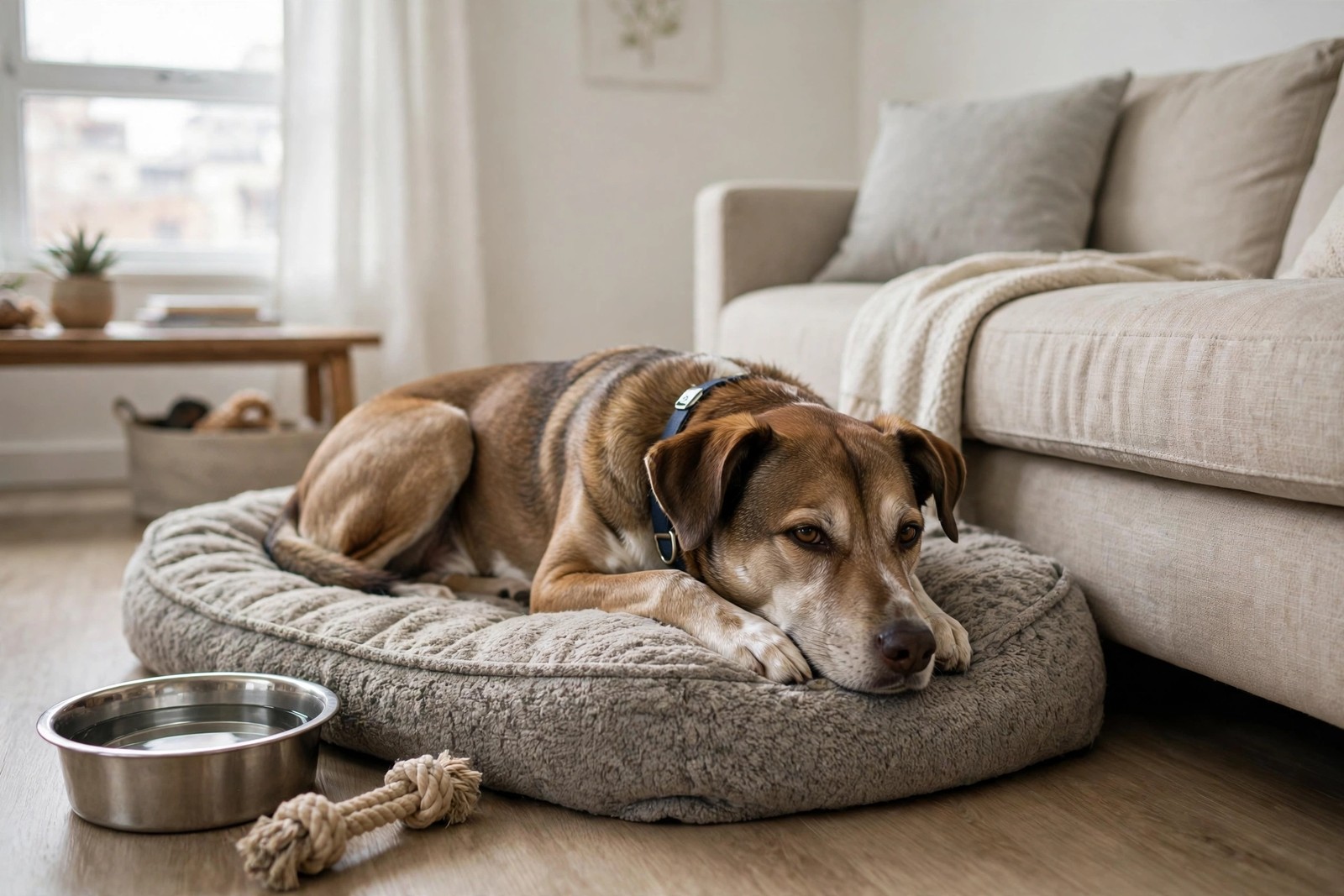
Yes, and millions of well-kept dogs prove it. Full-time work does not disqualify you. What decides the question is narrower and more practical: how long the dog will actually be alone in one stretch, what happens in the middle of the day, and whether the dog you choose fits the life you really have. Answer those three honestly and the rest is organisation.
The longest stretch is the real question
Most adult dogs manage around four to six hours alone comfortably once they are settled, exercised, and toileted. Beyond that, you are asking a lot: a full bladder, a bored mind, and a long, empty wait. Puppies cannot do it at all. A young puppy needs the toilet every hour or two, frequent small meals, and near-constant company and teaching, so a puppy plus a full workday means paid help in the home for months, not a midday pop-in. Adolescent dogs sit in between: physically capable of waiting, mentally the most likely to redecorate your home out of frustration.
Seniors deserve the same honesty. An older dog may sleep through the day contentedly, yet need more frequent toilet chances and medication on a schedule your workday has to bend around.
Build the midday break first
Before choosing a dog, arrange the middle of the day. The working options are a professional dog walker for a real walk, not a doorstep let-out; daycare for one or more days a week, suited to sociable dogs but overwhelming for shy ones; a trusted neighbour, friend, or family member on a fixed rota; coming home at lunch if your commute allows it; or a hybrid, walker on office days and your own break when you work from home. Test the arrangement for reliability, not good intentions. A plan that collapses when one person is ill is not yet a plan.
Shape the ends of the day around the break: a proper walk and play before you leave, not just a toilet trip; a calm departure with a safe chew or food puzzle; and real exercise, training, and company in the evening rather than a dog who gets your tiredest hour.
Choose the dog who fits this life
An adult rescue dog with a known temperament is often the best match for a working household: you can see their energy, their alone-time habits, and their needs as they are, not as a puppy might become. Lower-energy adults, settled seniors, and independent breeds generally cope better than high-drive young dogs bred to work all day. Be honest with a rescue or breeder about your hours; good ones will steer you, and being refused a puppy is useful information, not an insult.
Set up the home for the hours you are gone: a safe, comfortable area with water, a bed, and nothing dangerous to chew; toilet arrangements for the unexpected late train; and a gradual build-up of alone time over your first weeks together, starting with minutes, so the dog learns your leaving predicts your return.
Plenty of working owners do this well, and the dogs are not making do; they are exercised, visited, and adored on a rhythm they can rely on. Family Sharing through KinsLe lets an owner pass profile access for that dog to relatives selected at home, so family who were not there for the morning walk can still open the profile of the dog waiting for the midday break.