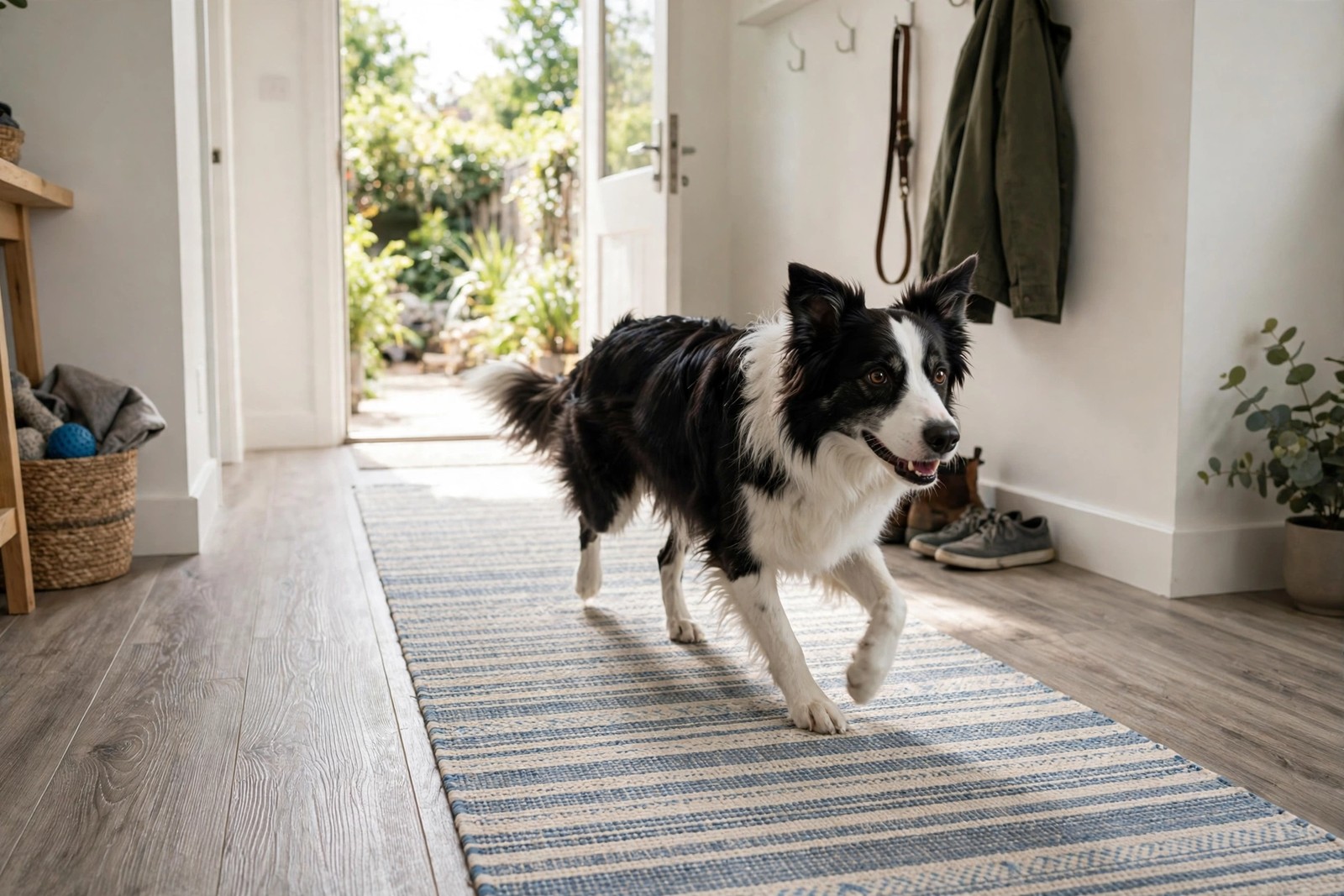
A dog tests a floor in four ways a human never does: claws under acceleration, water and worse soaking in at the seams, a heavy body that needs grip to stand and turn, and daily grit walked in from outside. Judge every flooring option against those four tests, not against how it looks in a showroom.
Luxury Vinyl: The Best All-Rounder
Luxury vinyl plank or tile earns its popularity in dog homes honestly. The wear layer resists claw scratches far better than timber finishes, the material itself is waterproof rather than merely water-resistant, so a missed accident or an overturned bowl does not swell or lift the floor, and a textured surface gives paws something to push against when a dog rises, turns, or races for the door. It is also warmer and quieter underfoot than tile, forgiving to dropped bowls, and cleaned with ordinary mopping. Choose a thicker wear layer and a matte, lightly embossed finish; the glossiest, smoothest vinyls show scratches sooner and grip less.
Porcelain Tile and Sealed Concrete
Porcelain tile is the toughest option of all: effectively waterproof, almost impossible for claws to mark, and indifferent to mud, vomit, and spilled water. Its costs are comfort and grip. Tile is hard for old joints and cold in winter, and polished tile is slippery for any dog, so choose a matte, textured tile and expect to soften key areas with washable rugs. Grout is the weak point, so seal it and reseal it on schedule. Professionally sealed concrete performs similarly well and suits modern interiors, provided the sealant is maintained, since unsealed concrete absorbs stains and odours permanently.
The Surfaces That Struggle
Carpet is the hardest floor to keep honest with dogs: pile traps hair, dander, and odour, liquid accidents reach the underlay where no surface clean follows, and puppies treat corners as serviced toilets. If carpet must stay, confine it to dog-free rooms or choose low-pile, washable rugs instead. Smooth laminate is the deceptive one: it photographs like wood, but its seams swell when moisture gets in, and its slick surface sends dogs skating, which is a genuine injury risk for puppies and seniors. Real hardwood is beautiful and refinishable, yet claws score it, urine left standing blackens it, and a large, young, high-energy dog will write its autobiography across it within a year.
Living Well on the Floor You Choose
Whatever you install, traction decides how safe the floor feels to the dog. Lay washable runners along the routes your dog actually travels, bed to door, door to bowl, and across any open expanse a senior dog must cross, and keep claws trimmed short, since long nails both damage floors and splay the foot, worsening grip. Put mats and a towel at the garden door to strip off grit and wet before they reach the main floor. It helps when the whole household knows which dog needs the runners kept clear and which room is a no-dog zone, and KinsLe's Family Sharing keeps those mobility and house-rule notes on your dog's shared profile, so a returning teenager or visiting sitter resets the runners instead of tidying them away.