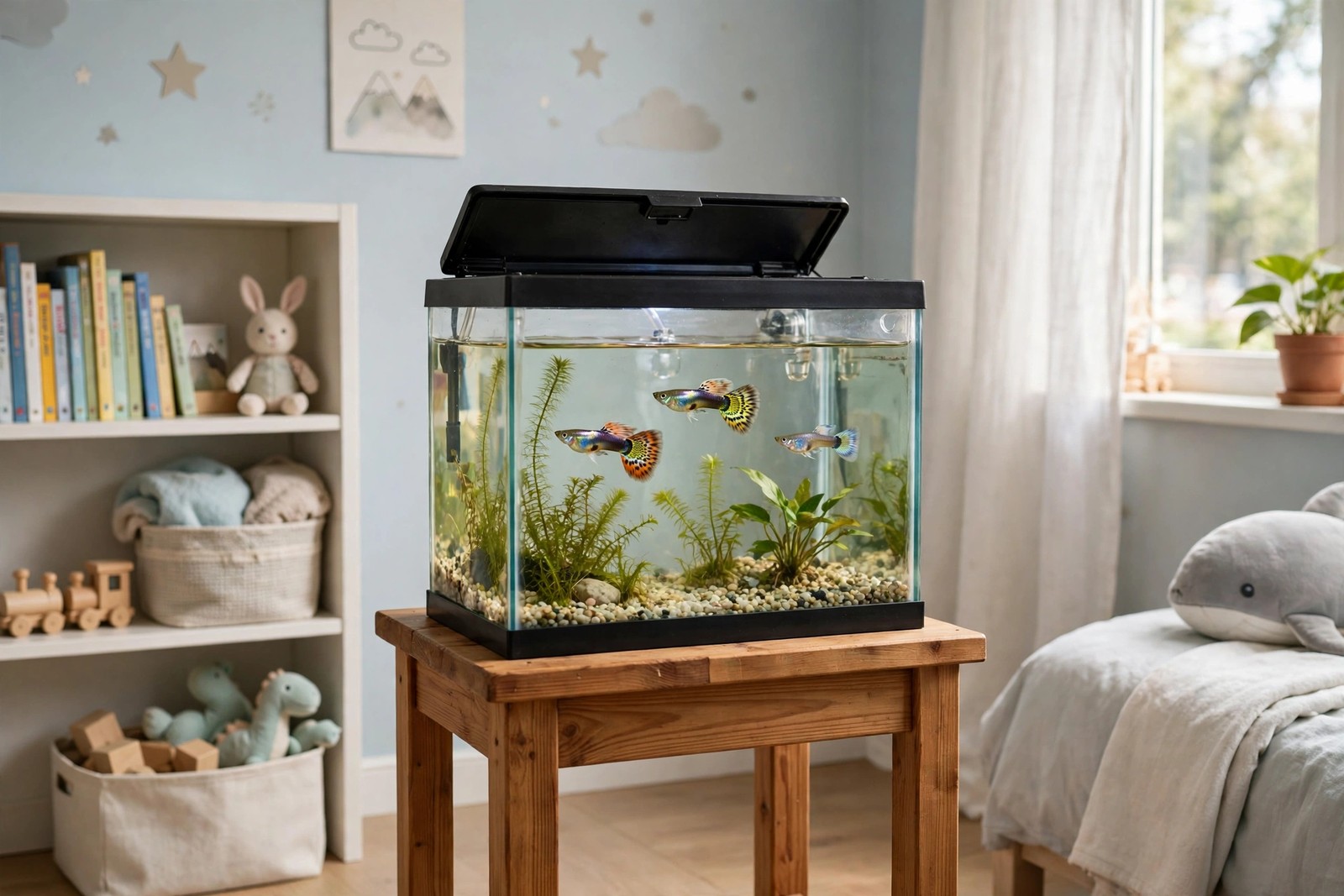
A bedroom tank can be a gentle presence in a child's life: something living to watch at bedtime, a first taste of responsibility, and a calm reason to slow down at the end of the day. It can also put gallons of water, glass, and mains electricity inside the one room where a child climbs, bounces, spills, and sleeps unsupervised. Both things are true at once, and the setups that succeed are the ones planned around the second truth as carefully as the first. Get the stand, the lid, the noise, and the jobs divided correctly, and the tank becomes a pleasure in the room rather than a worry standing in its corner.
A Stand That Carries the Weight, in the Right Spot
Water is heavier than it looks. A filled tank carries its water, gravel, and glass together, and even a small bedroom aquarium can weigh as much as a grown adult once it is full. It belongs on a level, load-bearing stand made for the job, not on a toy shelf, a wobbly dresser, or anything a climbing child can rock. Place it away from the bed, so splashes at water-change time never reach bedding, a knocked ornament cannot fall into the water, and the tank is out of the landing zone for pillows and midnight feet. Keep it out of direct sun, which feeds algae and swings the temperature, and away from radiators for the same reason. Once it is filled, treat its position as final, because a full tank should never be dragged or lifted.
Lid, Noise, and Light at Night
A secure, close-fitting lid is non-negotiable in a child's room. It stops toys, crayons, and curious fingers going in, stops jumping fish coming out, and slows the evaporation that would otherwise need topping up. Sound matters as much as safety once the lights go out. A filter's hum carries in a quiet bedroom, so choose a quiet-running filter, keep the water topped up so the return flow never turns into a trickling waterfall, and deal with any rattle before the first night rather than after a week of broken sleep. Put the tank light on a timer that switches off at bedtime. Fish need a proper dark period too, and a glowing tank beside the bed can keep both the fish and the child awake.
Electrics and Water Changes Stay Adult Jobs
Everything electrical around the tank is an adult's responsibility, without exceptions for helpful children. Plugs, sockets, and power strips sit where splashes cannot reach them, with cables arranged so any drips run down and away from the socket rather than along the wire into it. A child never plugs in, unplugs, or switches tank equipment, and never handles the heater or light fittings. Water changes are adult work as well: buckets and siphons are heavy, spill easily, and belong in adult hands. A child can watch, count fish, hold a towel, and learn the routine that way. Hands get washed after any contact with tank water, and cleaning supplies live somewhere else entirely, not beside the bed.
Feeding With Supervision, Every Time
Feeding is where a bedroom tank usually goes wrong, because a child who loves their fish will feed them again and again if they can. The fish food stays stored outside the child's reach, and feeding happens with an adult present, who measures the small portion and watches it eaten. One named feeder per day, marked on a simple chart on the wall, stops the well-meant second and third dinners that foul the water. Talk about why more food is not more love: uneaten food rots, the water clouds, and the fish suffer for the kindness. Older children can graduate to measuring the portion themselves with the adult still in the room, which keeps the pride of the job and removes its risk.
A profile for the tank on KinsLe can be opened by family the owner picks, because Family Sharing passes profile access to chosen relatives rather than leaving the bedroom fish known to one adult alone.