
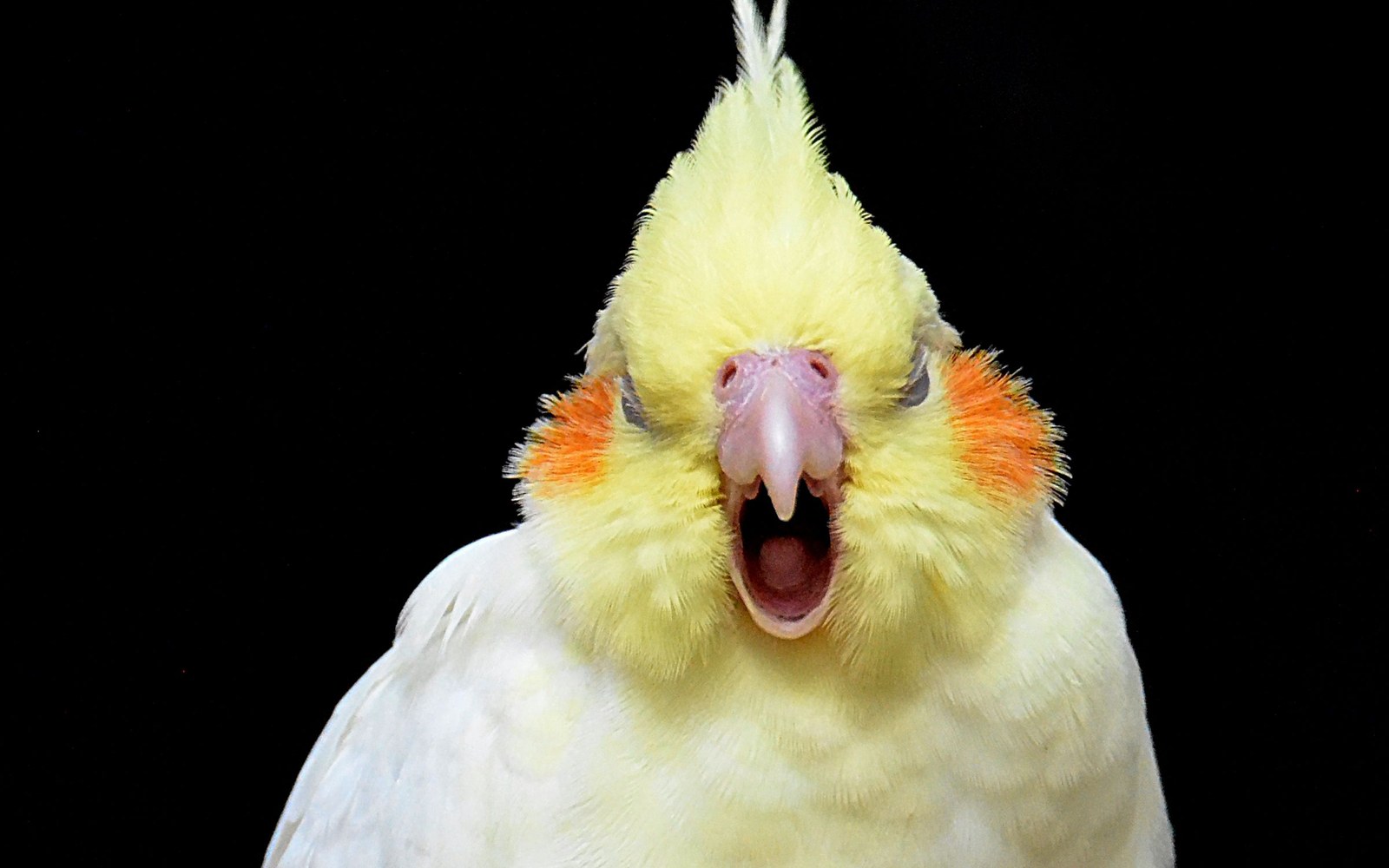
Yes — many budgies and male cockatiels genuinely learn to mimic words and whistle tunes, and budgies in particular can build surprisingly large vocabularies for such small birds. Success depends on short, cheerful repetition, one phrase at a time, and rewarding every attempt, because talking is a social game for birds, not a lesson to master. Some individuals will chatter up a storm; others will always prefer whistles and household sounds. Both outcomes are normal, healthy birds.
Who Learns What
Male cockatiels are the famous whistlers, often picking up wolf whistles, phone ringtones, and whole cartoon themes, and some learn a few words in a raspy little voice. Budgies of both sexes can talk, with males often chattier, and their rapid, gravelly speech rewards close listening — many owners only realize their budgie is talking when they slow down and pay attention. Female cockatiels tend to vocalize less and mimic less often, though exceptions exist. A single bird housed with a chatty human often learns faster than one bonded to other birds, but companionship should never be sacrificed for speech.
Sessions That Actually Work
Keep sessions to five or ten minutes, ideally in the morning when your bird is naturally most vocal, and repeat at the same times daily. Choose one short phrase — “pretty bird” or your bird's name — and say it with exaggerated enthusiasm, the same way every time, close to the cage. For whistling, start with a two- or three-note tune you can repeat perfectly. Reward attempts, not accuracy: a mumbled approximation gets praise and a millet nibble, because perfectionism kills the game. Record progress on your phone; week-to-week clips reveal improvement your ears miss day to day.
Methods and Myths to Skip
Playing a loop recording for hours is far less effective than live interaction, because birds learn speech socially, from a flock member paying attention to them. Do not withhold food to force performance, do not drill a frustrated bird, and be skeptical of anyone promising any bird will talk by a deadline. Mirror toys marketed as speech teachers mainly teach a bird to bond with its reflection. If your bird prefers mastering the microwave beep and the doorbell over “hello,” enjoy the repertoire it chose — mimicry of any kind means an engaged, stimulated mind.
Enrichment Beyond Talking
Talking practice should sit inside a rich daily life: foraging toys, shredding material, out-of-cage flight time in a bird-safe room, and regular social time whether or not words are involved. A bored bird may scream instead of chattering, while an enriched bird practices its sounds during contented morning and evening sessions. Rotate toys weekly, hide treats in paper and cardboard, and let your bird overhear normal household conversation — many budgies absorb phrases from ambient chatter once the mimicry switch flips on.
How KinsLe Helps
Half the fun of a talking bird is comparing notes, and KinsLe's Circle of Love is the community of pet lovers around every profile — Pet Lovers join free, and bird owners can swap favorite phrases, first-word stories, and training wins with other talking-bird households. It is encouragement on the slow weeks and applause on the breakthrough days. Circle of Love on KinsLe connects budgie and cockatiel households swapping first-word stories, morning practice routines, and encouragement during quiet weeks.