
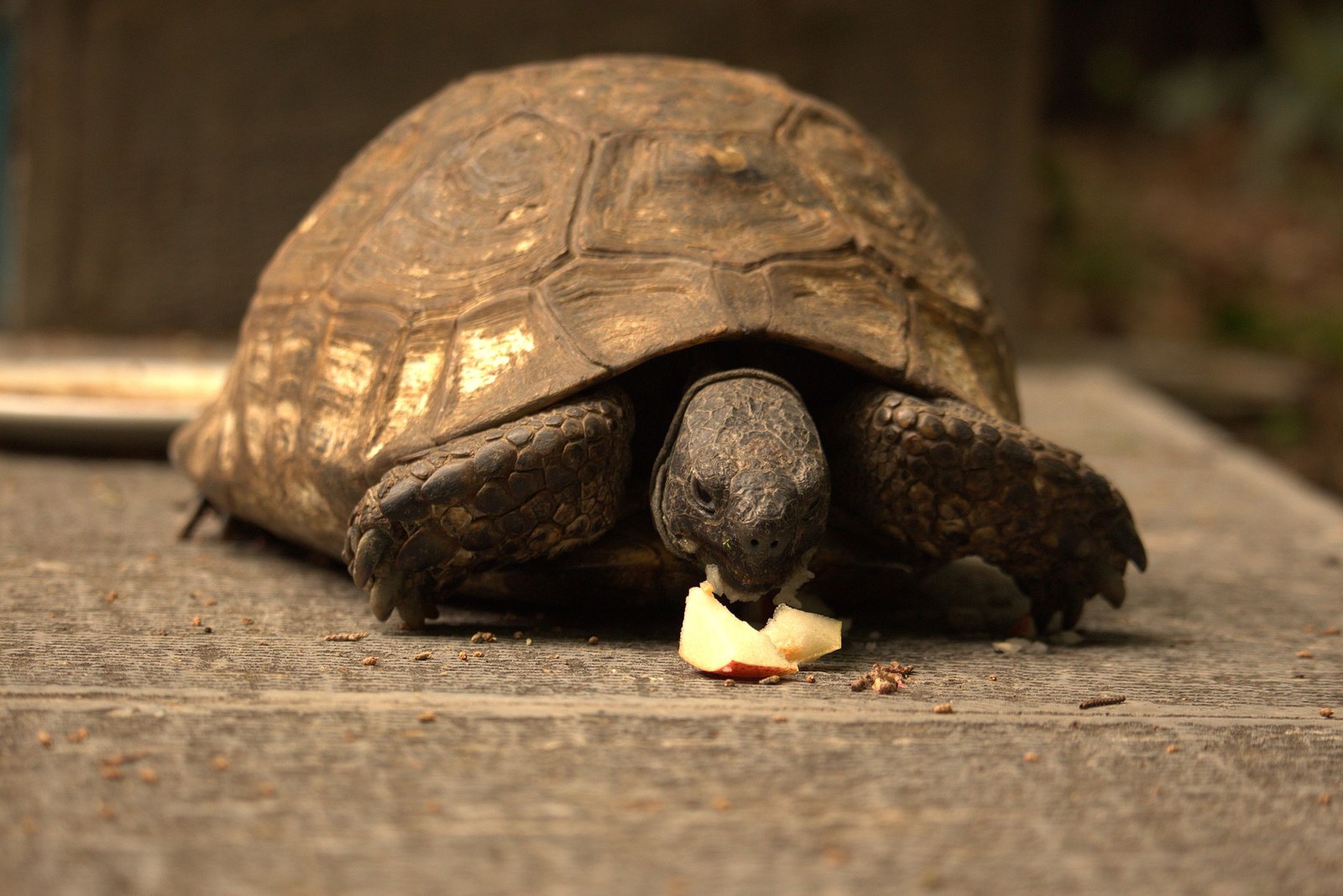
Yes, your tortoise can eat some fruit — but for most species it should be a rare treat, not a regular menu item. Grassland and Mediterranean species like Russian, Hermann's, and Greek tortoises are built to graze on fibrous weeds and grasses, and their gut bacteria handle sugar poorly. Too much fruit can cause runny droppings, gas, and a parasite-friendly gut. Forest species are the exception: red-footed and yellow-footed tortoises eat fallen fruit in the wild and can have it as a small, regular part of a varied diet.
It Depends on the Species
The single most important question is not "fruit or no fruit?" but "what kind of tortoise do I have?" A sulcata grazing on melon several times a week is being fed against its biology — that species evolved on dry grasses and should get fruit only occasionally, if at all. A red-foot, by contrast, might reasonably get fruit a few times a week alongside leafy greens, vegetables, and a little protein. If you are not sure which category your tortoise falls into, treat fruit as an occasional treat until you have confirmed the species' natural diet.
Safer Fruits and Portions
When you do offer fruit, choose options that bring something beyond sugar:
- Berries — strawberries, blueberries, and raspberries are widely accepted and easy to portion.
- Melon and papaya — popular with forest species; papaya is a red-foot staple for many keepers.
- Apple and pear — offer small pieces with seeds removed.
- Banana — very sugary and sticky; keep it to a tiny, infrequent nibble.
A sensible portion for a treat day is a piece roughly the size of your tortoise's head, offered once every week or two for grassland species. Wash fruit well, remove pits and seeds, and skip anything canned, sweetened, or sprayed.
Signs You Are Overdoing It
Watch the droppings. Loose, watery, or unusually smelly stool after fruit days is your tortoise telling you the sugar load is too high. A tortoise that starts refusing its greens while holding out for fruit is another red flag — fruit should never displace the fibrous staples that keep the gut and beak in good shape. Weigh growing juveniles periodically; steady, slow growth is the goal, not rapid weight gain driven by sugary treats.
A Note on Safety
Never feed fruit or weeds gathered from areas treated with pesticides or herbicides, and supervise outdoor grazing on lawns you do not control. If your tortoise stops eating altogether, becomes lethargic, or has persistent diarrhea, that is a job for a reptile veterinarian rather than a diet tweak at home.
Keeping the Rules Straight With KinsLe
Tortoise feeding rules are species-specific, and that is exactly the kind of detail that gets lost when a neighbor or family member helps out. KinsLe's Pet Passport is your tortoise's records packet — vaccines, medications, allergies, and documents in one place — and it is the natural home for your species' do-and-don't food list, so anyone feeding your tortoise can check before offering a strawberry. The Passport is shareable with vets and sitters, which keeps the rules consistent wherever your tortoise is cared for. Pet Passport on KinsLe holds that species-specific feeding list alongside health records, so whoever offers a strawberry first sees which fruits suit your tortoise and how often.