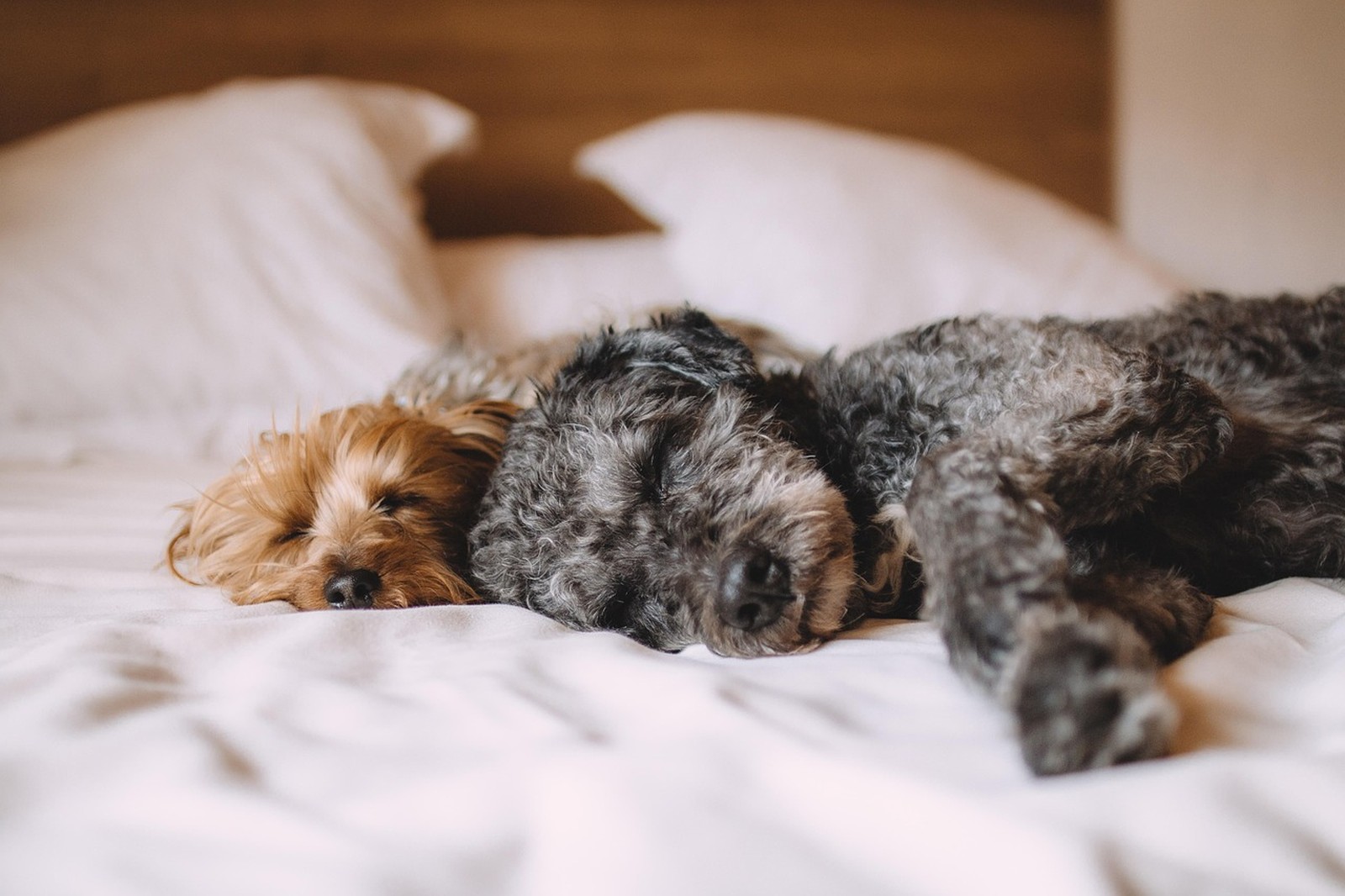
Sometimes, and the word that carries the answer is earned. Two dogs who curl up together on the sofa beside you are showing you supervised behaviour. Alone, with no person to interrupt, redirect, or calm things down, small frictions can escalate: a prized chew, a startling noise at the door, one dog guarding the good sleeping spot. Many pairs graduate to safe shared freedom. Getting there is a staged process, not a leap of faith.
Prove compatibility before you test absence
Look honestly at the pair's history. Have they ever fought, guarded food or toys from each other, or needed separating during play? Does one dog pester, mount, or crowd the other, who merely tolerates it while you are watching? Are both adults with settled temperaments, or is one a young adolescent still learning manners? Warning growls that one dog respects are healthy communication; stiffening, hard staring, snapped warnings ignored by the other dog, or any fight that drew blood are stops, not stages. Pairs with that history should stay separated when unsupervised, permanently if needed, and there is no failure in that. Plenty of dogs live happily in one home with a gate between them while the house is empty.
New pairings need the longest runway. A dog who arrived last month is still negotiating status, and introductions that look smooth in week two can wobble in month two as confidence grows.
Stage the freedom
Build up in steps. First, leave the pair together while you are home but out of sight, listening from another room. Then brief absences: five minutes while you step outside, returning calmly, with nothing dramatic made of it. Extend gradually over weeks, and watch early real absences on a camera if you can. What you want to see is boring footage: both dogs settling, sleeping, and ignoring each other. Pacing, whining at the door, hovering over the other dog, or guarding a spot on camera means the pair is not ready, whatever they show you while you are home.
Set the room up for peace
Before any shared absence, remove the classic triggers. Pick up high-value chews, bones, food toys, and the one beloved toy they both want. Feed before you leave, in their usual separate places, and leave nothing edible down. Provide two good resting spots rather than one prime bed, water for both, and a room free of hazards: no access to bins, counters, or doors to rooms where trouble lives. Dogs who dislike being confined should not be crated as a shortcut; use gates or separate rooms they already accept calmly, and make sure collars cannot snag on anything if a scuffle or panic occurs.
Age and health adjust the plan. A frail senior does not belong alone with a boisterous youngster who plays with his whole body, and a dog recovering from surgery, in season, or on medication that changes mood goes back to separate quarters until life is normal again.
When the stages are passed and the footage is dull, you have your answer for this pair, in this house. KinsLe Family Sharing helps hold that answer steady by putting each dog's profile, known triggers, and the current alone-time rules in front of family and sitters alike, so a well-meaning helper never reunites two dogs who are supposed to be resting apart.