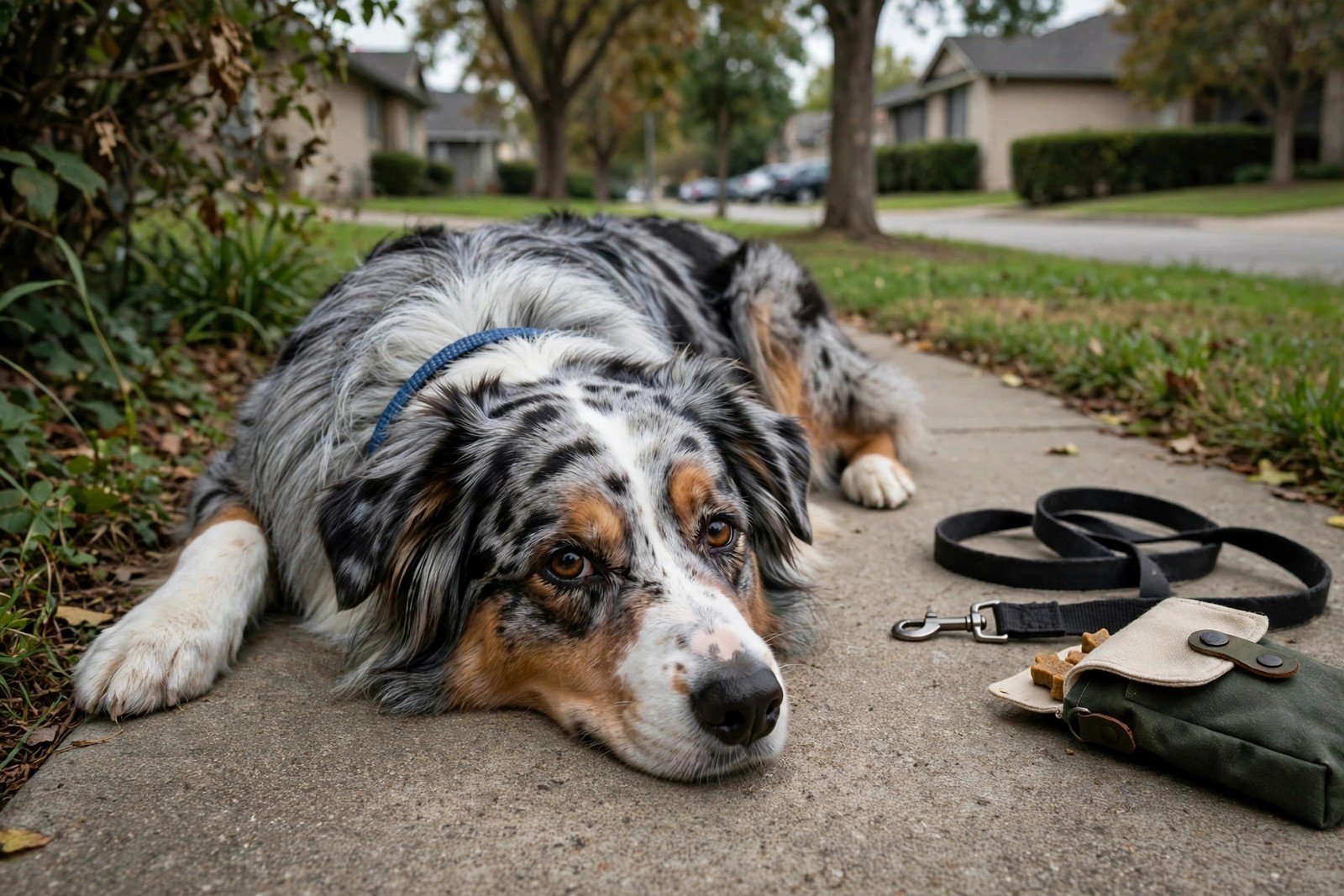
Yes, Australian Shepherds are among the more vocal herding breeds, and their barking is rarely random. This is a dog developed to work livestock all day, control movement with eye, body, and voice, and keep watch over the farm in between. Barking was part of the job description. A pet Aussie keeps the same instincts in a suburban house, so the honest question is not how to silence the breed, but what its barking is reporting and whether the dog's day gives it anything better to do.
What sets an Aussie off
Movement is the biggest trigger: joggers, cyclists, squirrels, delivery vans, children racing past the fence, and other dogs on the move all read as stock to be monitored or moved. Change comes second: a visitor at the door, a car parking where no car usually parks, furniture rearranged, a neighbour in their own garden at an unusual hour. Aussies notice everything, which makes them superb watchdogs and tiring neighbours. The third trigger is the one owners control: boredom and pent-up energy. An Aussie who has had a lead walk around the block and then eight empty hours will bark at leaves, because the dog has a working brain idling in neutral and the leaves are the only work available.
Individual dogs vary. Some lines are chattier than others, some dogs bark mainly at the door and settle, and adolescents are typically at their loudest as their confidence and territorial sense arrive together.
The fix starts with a job, not a muzzle
Barking built on unused energy does not respond to being told off; it responds to being spent properly. A working-bred Aussie needs substantial daily exercise, an hour or more of real activity for most adults, and just as importantly, mental work: training sessions, scent games, puzzle feeding, fetch with rules, trick learning, or a dog sport such as agility, herding, or flyball where the breed's talents are the point. Scatter part of the day's food in grass to be hunted, rotate challenges, and build a clear off-switch routine indoors, with a mat, a chew, and calm praise for settling. Owners routinely find that the fence barking they were fighting fades once the dog's mornings involve actual work.
Then teach quiet as its own skill
Let the dog bark two or three times at a genuine alert; that is the watchdog doing its job, and fighting it entirely is unfair. Then say your cue, such as thank you, quiet, in a calm voice, and the moment the dog pauses, reward with something excellent. Practise first with staged, mild triggers, not the full excitement of the real delivery van. Never shout along, since a barking household sounds, to a dog, like everyone joining in. Manage the easy wins too: block the view through the front window or fence gaps if passers-by are the main show, and bring the dog in from the garden when the school-run parade passes rather than letting rehearsal run daily.
Sudden changes in an adult dog's barking deserve a vet visit, since pain, hearing change, and anxiety can all lower the threshold. Puppies, meanwhile, need early, positive exposure to the ordinary world, people, traffic, visitors, other dogs, so that fewer things register as news worth announcing later.
An Aussie's bark is information, and a well-worked dog delivers less of it, more accurately. With KinsLe Care Teams, the morning run, midday training game, and evening settle routine can be assigned between household members and timestamped as each happens, giving your shepherd the full working day that keeps its alarm honest.